- English
- Español
- Português
- русский
- Français
- 日本語
- Deutsch
- tiếng Việt
- Italiano
- Nederlands
- ภาษาไทย
- Polski
- 한국어
- Svenska
- magyar
- Malay
- বাংলা ভাষার
- Dansk
- Suomi
- हिन्दी
- Pilipino
- Türkçe
- Gaeilge
- العربية
- Indonesia
- Norsk
- تمل
- český
- ελληνικά
- український
- Javanese
- فارسی
- தமிழ்
- తెలుగు
- नेपाली
- Burmese
- български
- ລາວ
- Latine
- Қазақша
- Euskal
- Azərbaycan
- Slovenský jazyk
- Македонски
- Lietuvos
- Eesti Keel
- Română
- Slovenski
- मराठी
- Srpski језик

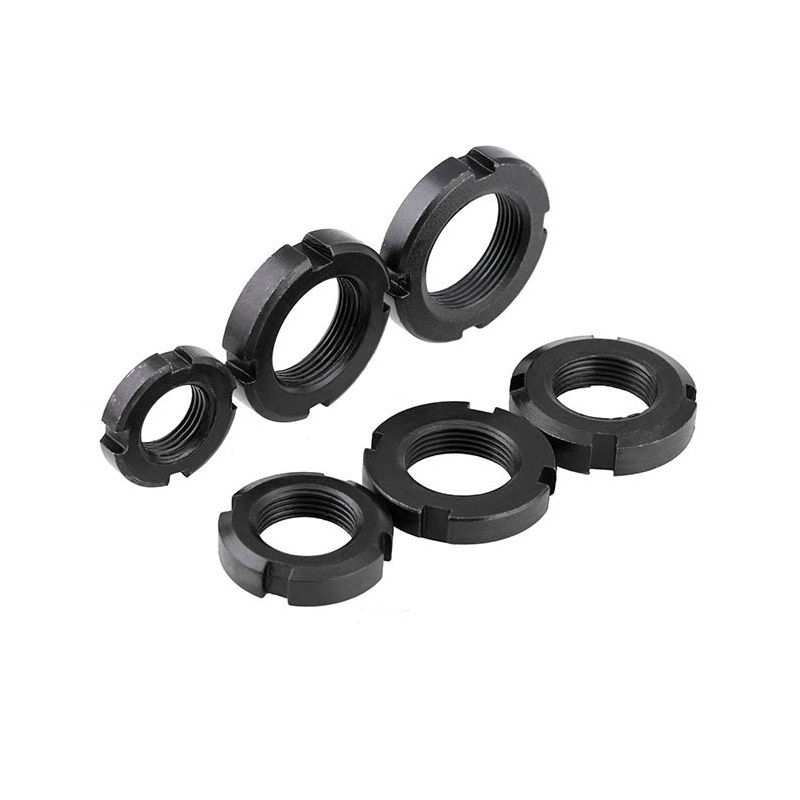
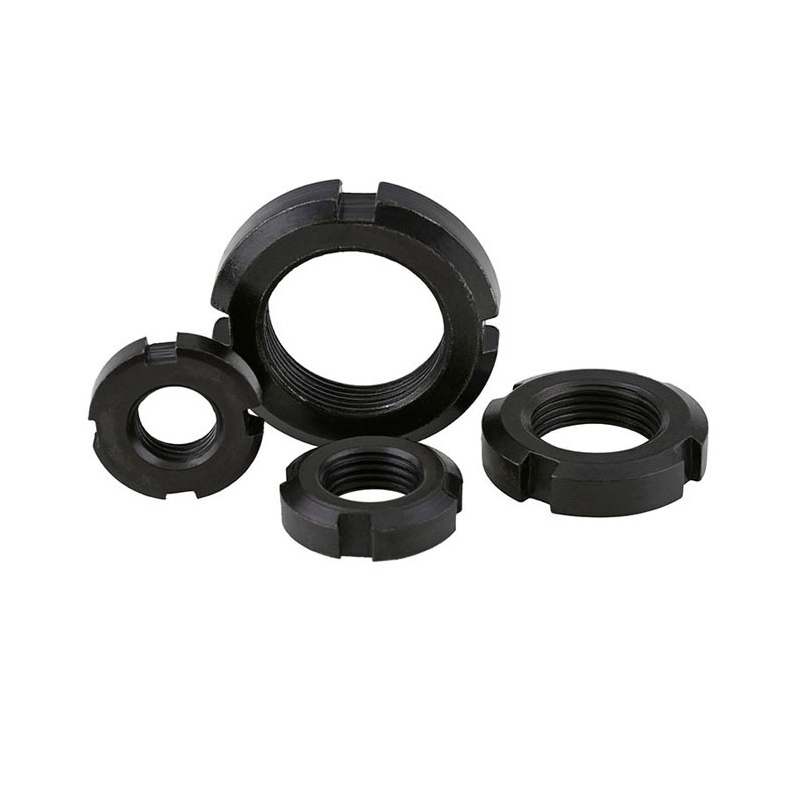
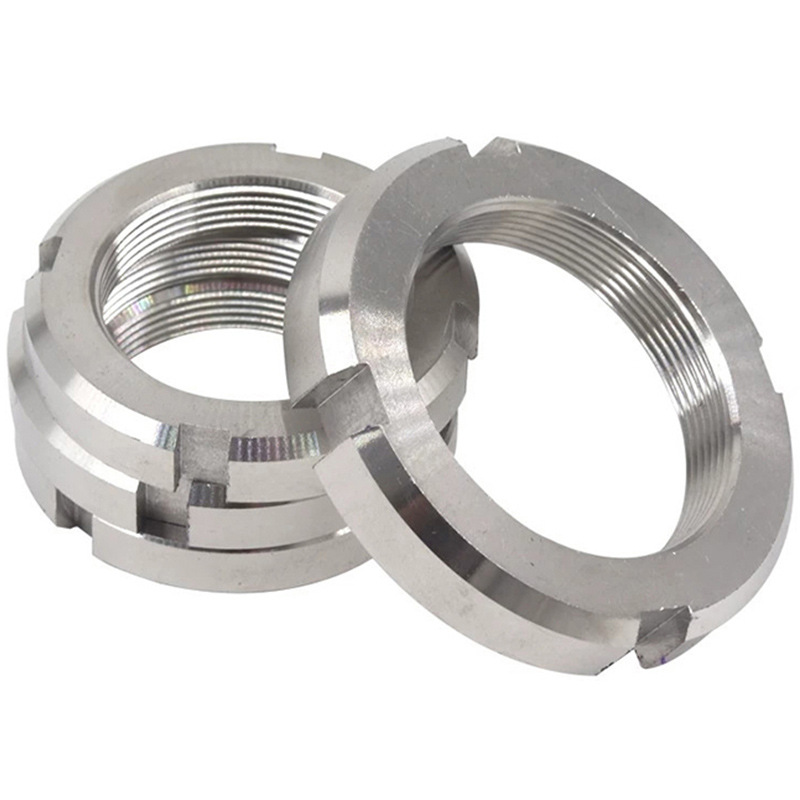
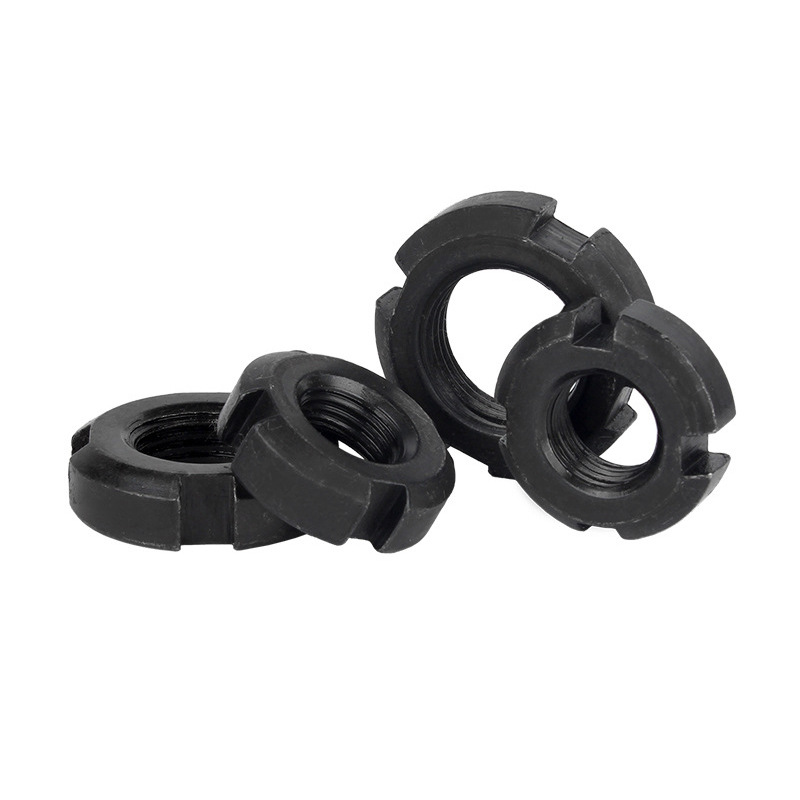
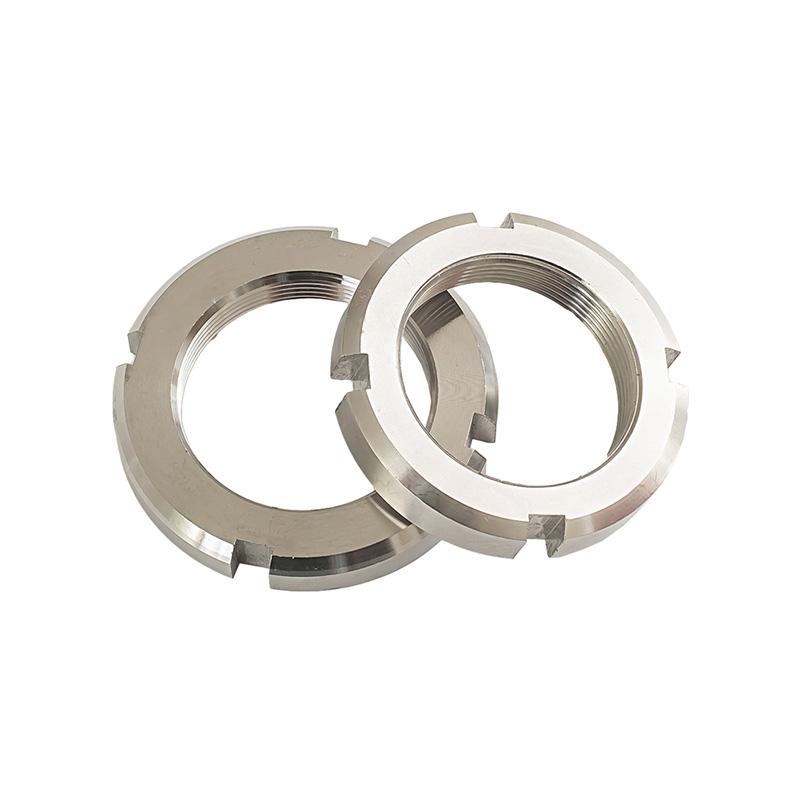
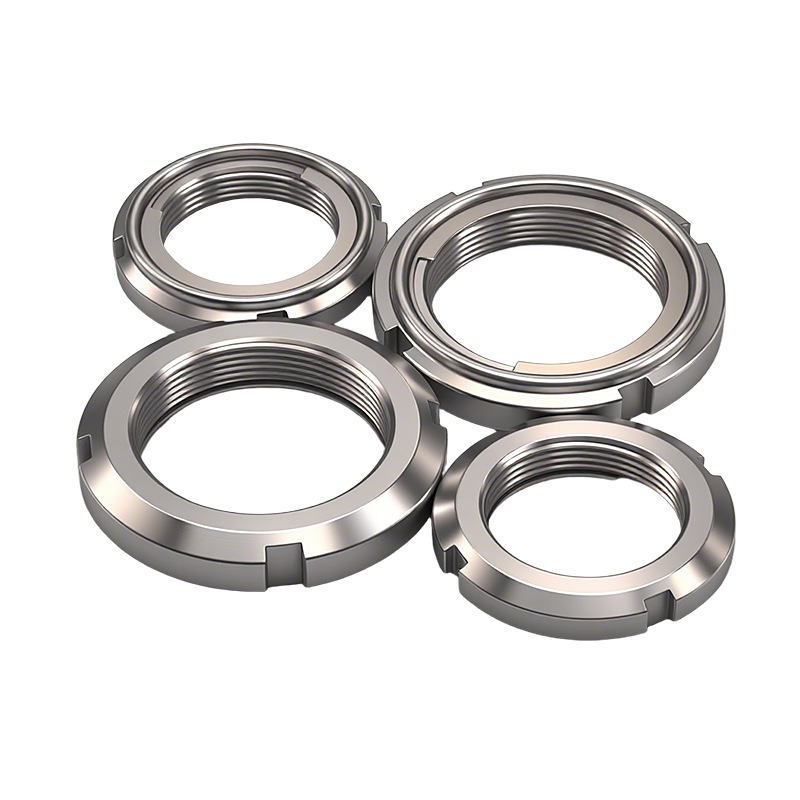
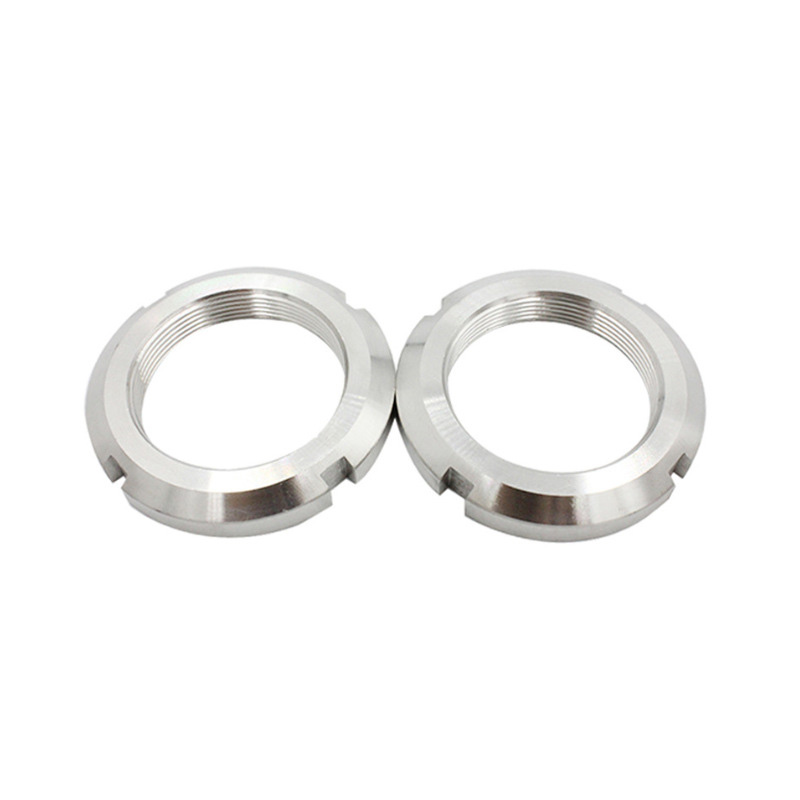
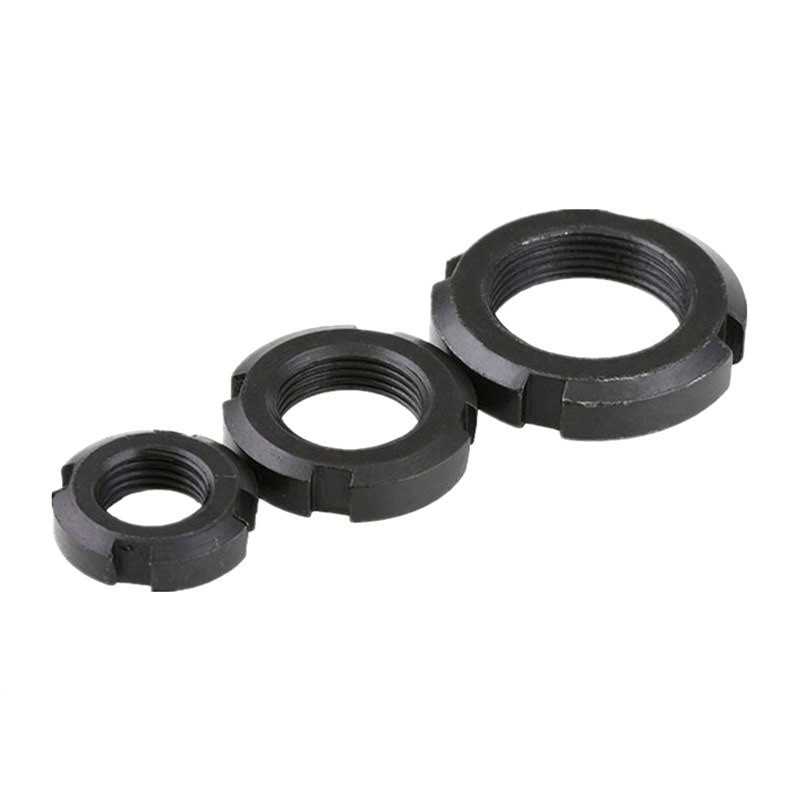
Slotted Round Lock Nut
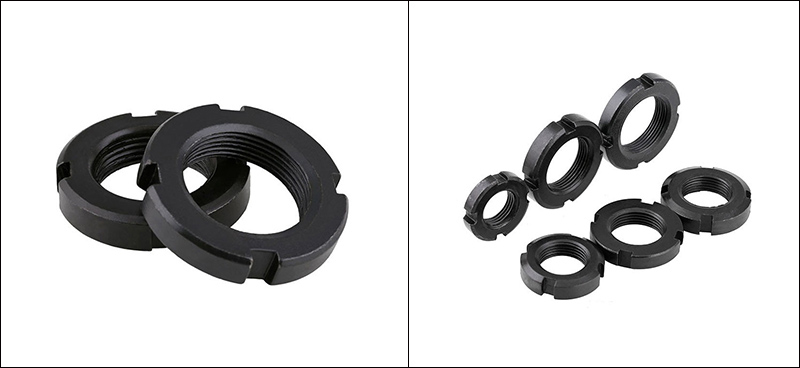
The core feature of the China supplier Xiaoguo® Slotted round lock nut is its reliable anti-loosening performance. The locking principle is mechanical, and it can provide physical obstruction when combined with a split pin. Slotted round lock nut is in stock and ready to ship. Therefore, if you require excellent anti-loosening performance, I highly recommend that you choose our product.
Send Inquiry
Product Description
How to choose the appropriate material
The material of the slotted round lock nut is diverse. Different materials have different functions in corresponding scenarios. So you should make your choice based on your needs.
(1)The primary consideration for the usage environment: ordinary indoor, outdoor, corrosive outdoor, or marine environment. The environment will directly influence the choice of materials.
For instance, in outdoor settings, stainless steel (especially type 316) is recommended.
(2)Match performance requirements: Choose based on the load and vibration conditions the equipment is subjected to. For normal loads, carbon steel can be selected; for high loads/high vibration, alloy steel is required.
(3)Meet special requirements: For instance, electronic devices need conductivity, so brass can be chosen; for aerospace applications that require lightweight materials, aluminum alloys or titanium alloys can be selected.
(4)Balancing costs: Carbon steel is the most economical, stainless steel is medium-priced, and special alloys are the most expensive. Make the choice that offers the best value for money based on the overall budget and importance.
The characteristics of various materials
We will identify the most essential and prominent features of the various materials of the slotted round lock nut, enabling you to make comparisons and selections.
| Material | Strength | Corrosion Resistance | Weight | Cost | Special Advantages |
| Carbon steel | High | Poor (requires coating) | Heavy | Low | Cheap General-purpose |
| Alloy steel | High | Poor (requires coating) | Heavy | Moderate | Resistant to impact and fatigue |
| Stainless steel | Medium | Excellent | Weight | Medium-high | Does not rust, hygienic |
| Brass | Low | Good | Heavy | Middle | Conductive Explosion-proof |
| Aluminum alloy | Medium-low | Good | Light | Medium | Light weighting |
| Titanium alloy | High | Excellent | Medium | Very high | Light + Strong + Corrosion-resistant |
| Plastic | very low | excellent | very light | low | insulating and self-lubricating |
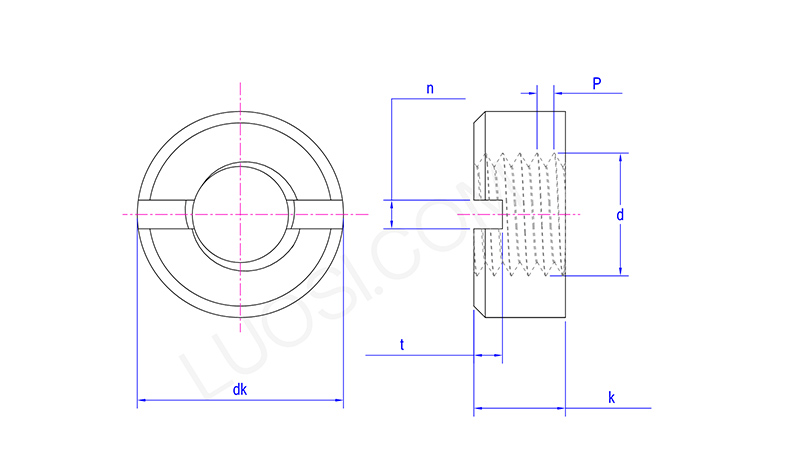
| Mon | M3.5 | M4 | M5 | M6 | M8 | M10 | M12 | M14 | M16 | M18 | M20 |
| P | 0.6 | 0.7 | 0.8 | 1 | 1.25 | 1.5 | 1.75 | 2 | 2 | 2.5 | 2.5 |
| dk max | 7 | 8 | 9 | 11 | 14 | 18 | 21 | 24 | 26 | 29 | 32 |
| dk min | 6.64 | 7.64 | 8.64 | 10.57 | 13.57 | 17.57 | 20.48 | 23.48 | 25.48 | 28.48 | 31.38 |
| k max | 3 | 3.5 | 4.2 | 5 | 6.5 | 8 | 10 | 11 | 12 | 13 | 14 |
| k min | 2.75 | 3.2 | 3.9 | 4.7 | 6.14 | 7.64 | 9.64 | 10.57 | 11.57 | 12.57 | 13.57 |
| n min | 1.46 | 1.46 | 2.06 | 2.56 | 3.06 | 3.57 | 4.07 | 4.07 | 4.07 | 4.07 | 5.07 |
| n max | 1.71 | 1.71 | 2.31 | 2.81 | 3.31 | 3.87 | 4.37 | 4.37 | 4.37 | 4.37 | 5.37 |
| t min | 1 | 1.2 | 15 | 2 | 2.5 | 3.2 | 3.8 | 3.8 | 3.8 | 4.8 | 4.8 |
| t max | 1.40 | 1.60 | 1.90 | 2.4 | 3 | 3.7 | 4.3 | 4.3 | 4.3 | 5.5 | 5.5 |
Applications corresponding to different materials
We have compiled the main application industries and characteristics of slotted round lock nut of different materials for you.
(1) Carbon steel: General machinery, ships, railways, construction machinery, heavy machinery
Features: Cost-effective, capable of meeting the strength requirements of most conventional industries.
(2) Alloy steel: Rail transportation (high-speed rail), wind power, aerospace, automobiles, heavy machinery
Features: High strength, shock resistance, fatigue resistance, capable of withstanding extreme dynamic loads
(3) Stainless steel: Food/pharmaceuticals, chemicals, marine engineering, environmental protection, precision instruments
Features: Excellent rust and corrosion resistance, ensuring hygiene and durability
(4) Brass: Electrical, electronic, communication, explosion-proof, instrument and metering equipment; conductive, heat conductive
Features: No sparks during operation
(5) Aluminum alloy: Aerospace, racing cars, precision instruments, automation equipment
Features: Lightweight, the preferred choice for achieving lightweight in equipment
(6) Titanium alloy: High-end racing cars, deep-sea probes, chemical processing equipment, medical devices; extremely high strength and very light, with top-level corrosion resistance
(7) Plastic/Nylon: Electronics, electrical appliances, consumer goods, food processing, experimental equipment
Features: Insulating, non-corrosive, non-magnetic, and will not scratch the installation surface
Hot Tags: Slotted Round Lock Nut, China, Manufacturer, Supplier, Factory
Related Category
Hexagon Nut
Square Nut
Hexagon Flange Nut
Lock Nut
Cap Nut
Hexagon Slotted Nut
Hand Screw The Nut
Round Nut
Hubs Nuts
T-nut
Reed Nut
Other Nuts
Send Inquiry
Please Feel free to give your inquiry in the form below. We will reply you in 24 hours.