- English
- Español
- Português
- русский
- Français
- 日本語
- Deutsch
- tiếng Việt
- Italiano
- Nederlands
- ภาษาไทย
- Polski
- 한국어
- Svenska
- magyar
- Malay
- বাংলা ভাষার
- Dansk
- Suomi
- हिन्दी
- Pilipino
- Türkçe
- Gaeilge
- العربية
- Indonesia
- Norsk
- تمل
- český
- ελληνικά
- український
- Javanese
- فارسی
- தமிழ்
- తెలుగు
- नेपाली
- Burmese
- български
- ລາວ
- Latine
- Қазақша
- Euskal
- Azərbaycan
- Slovenský jazyk
- Македонски
- Lietuvos
- Eesti Keel
- Română
- Slovenski
- मराठी
- Srpski језик

DIN 981 Nut
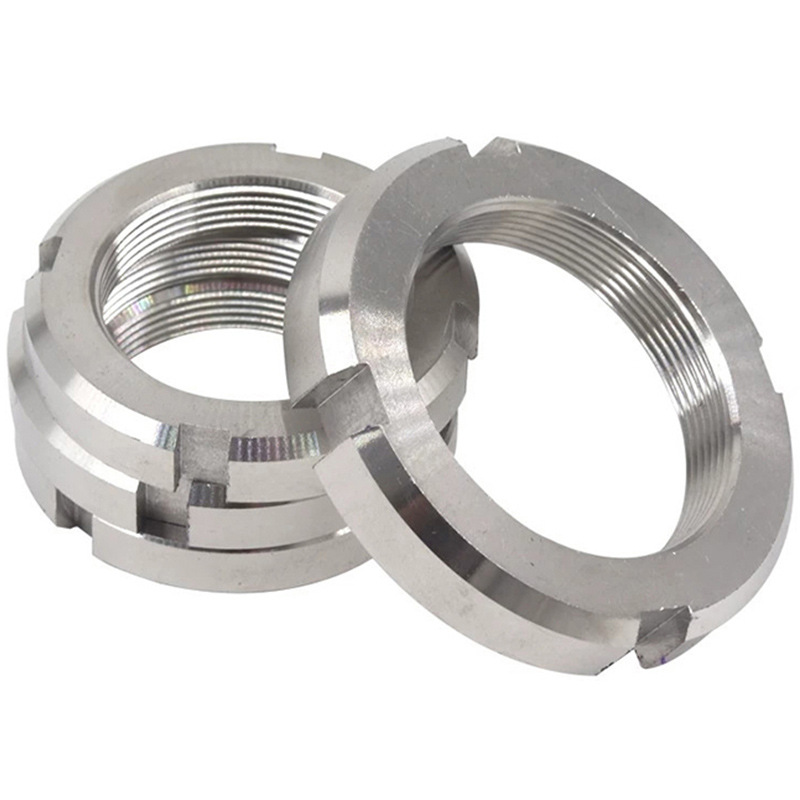
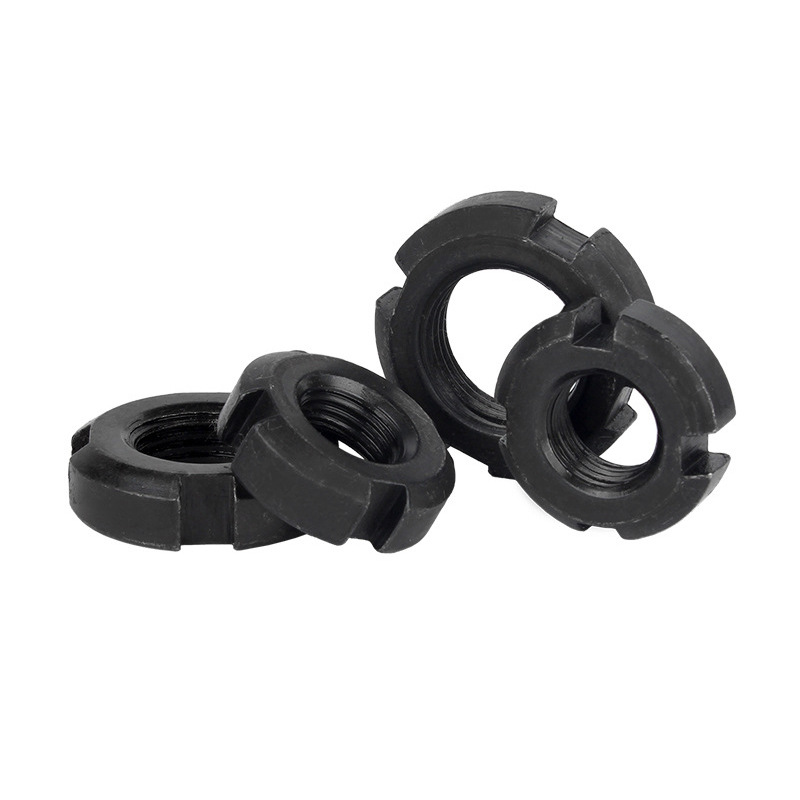
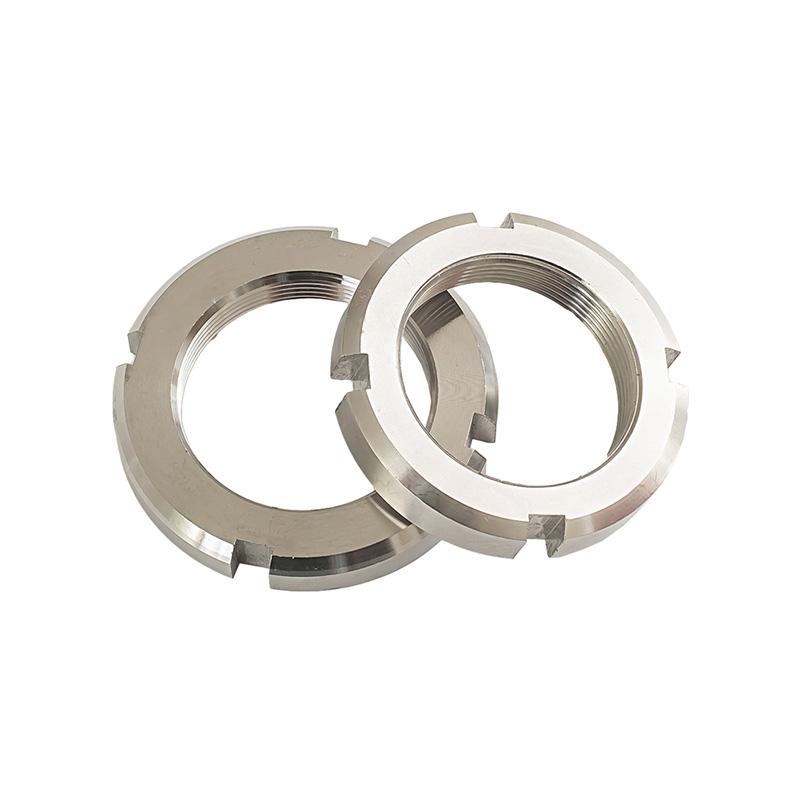
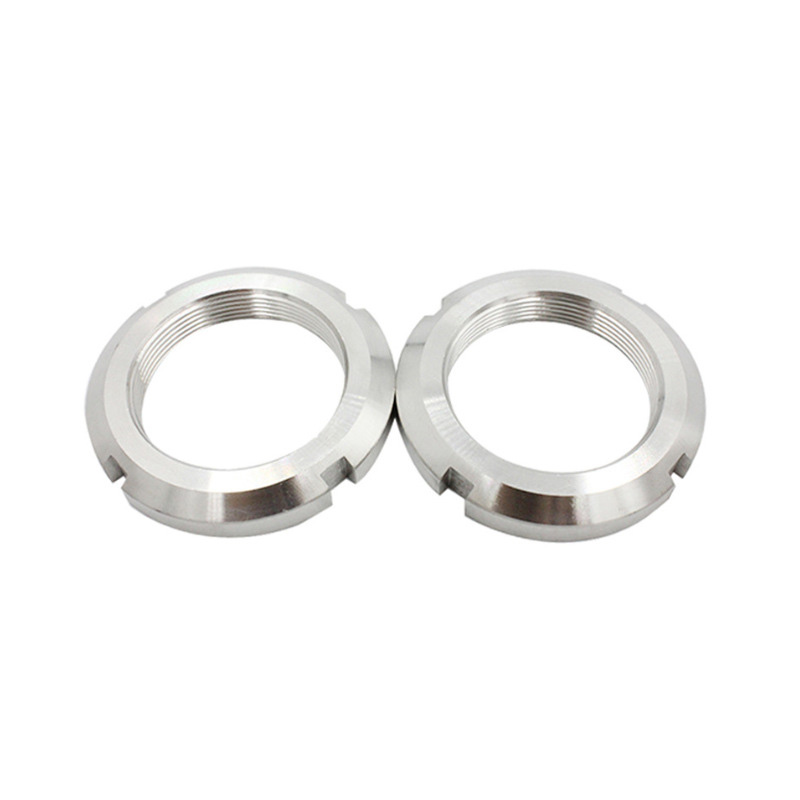
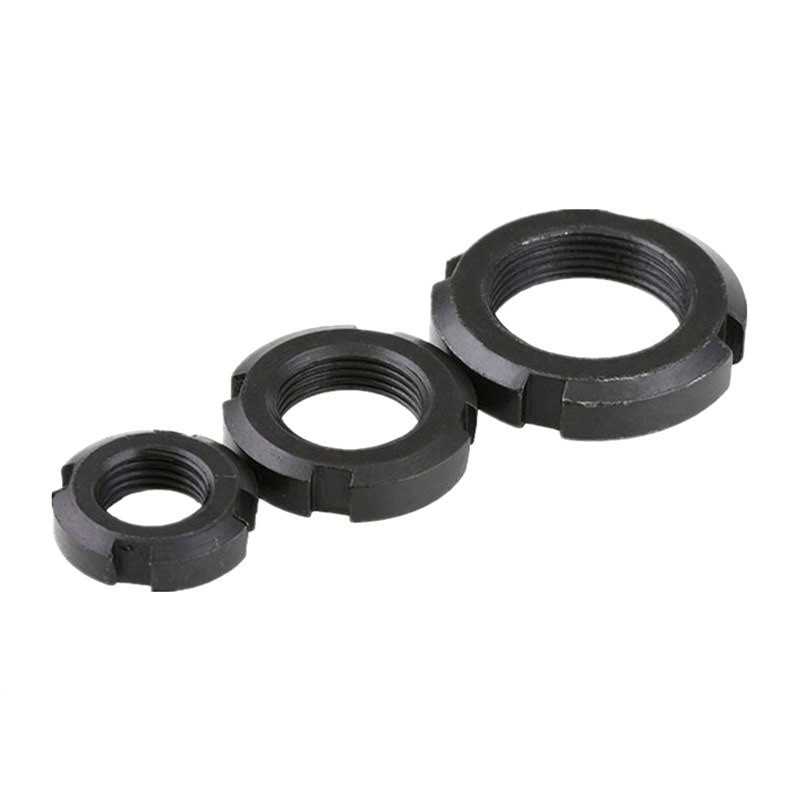
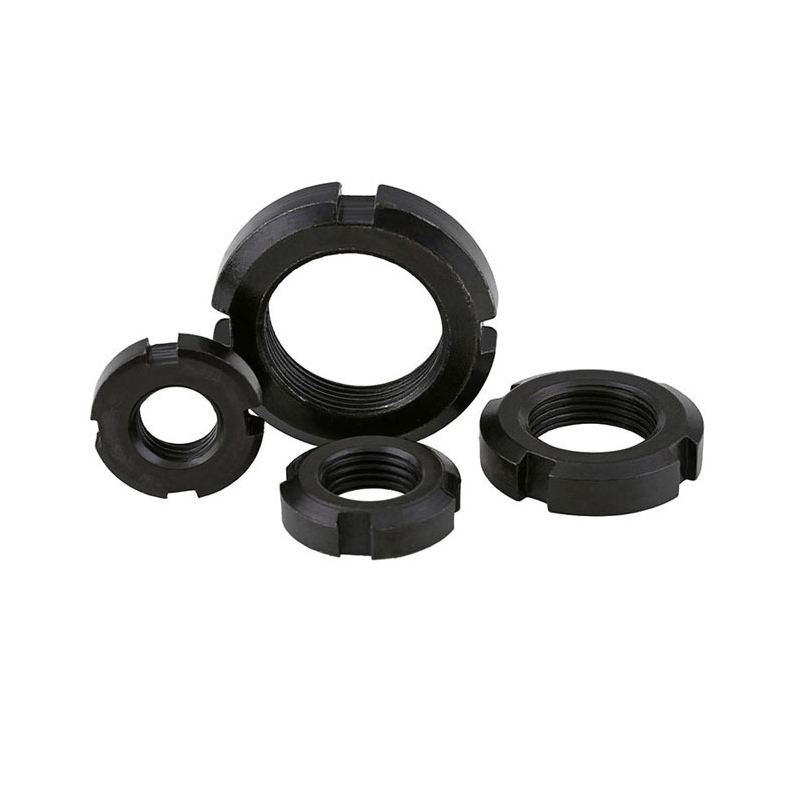
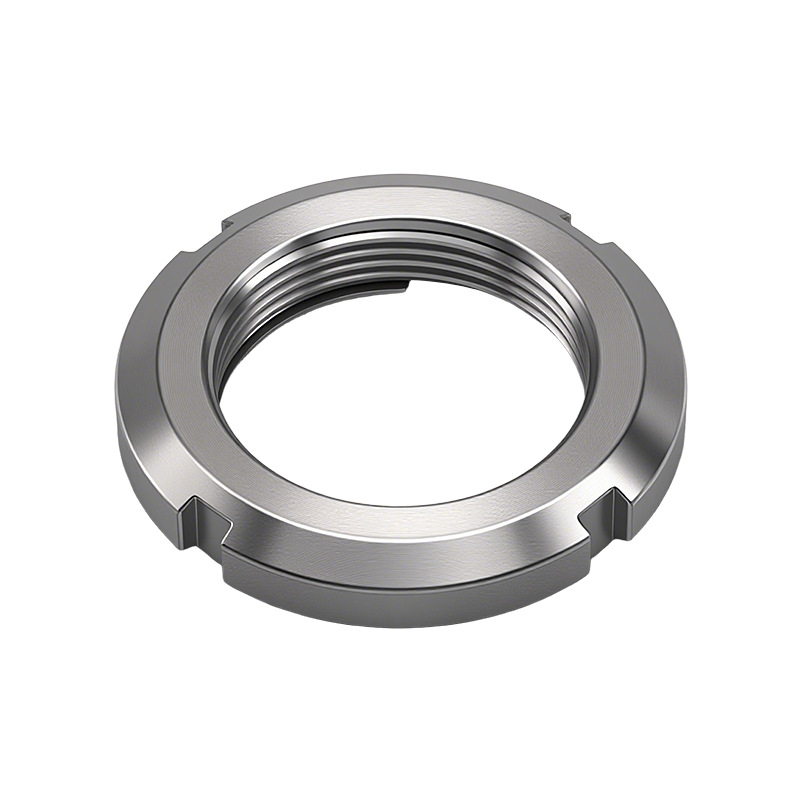
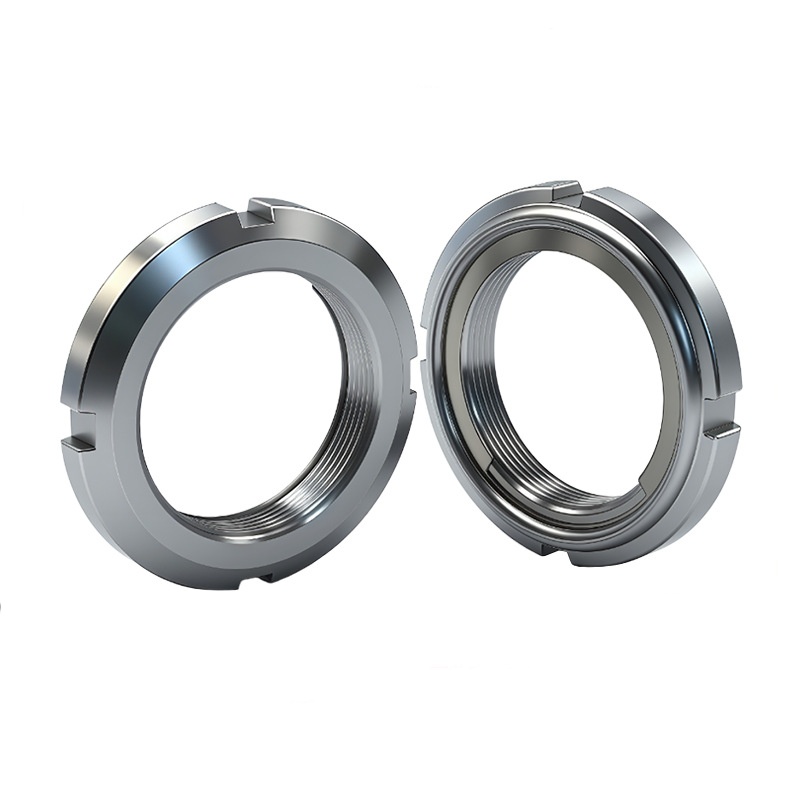
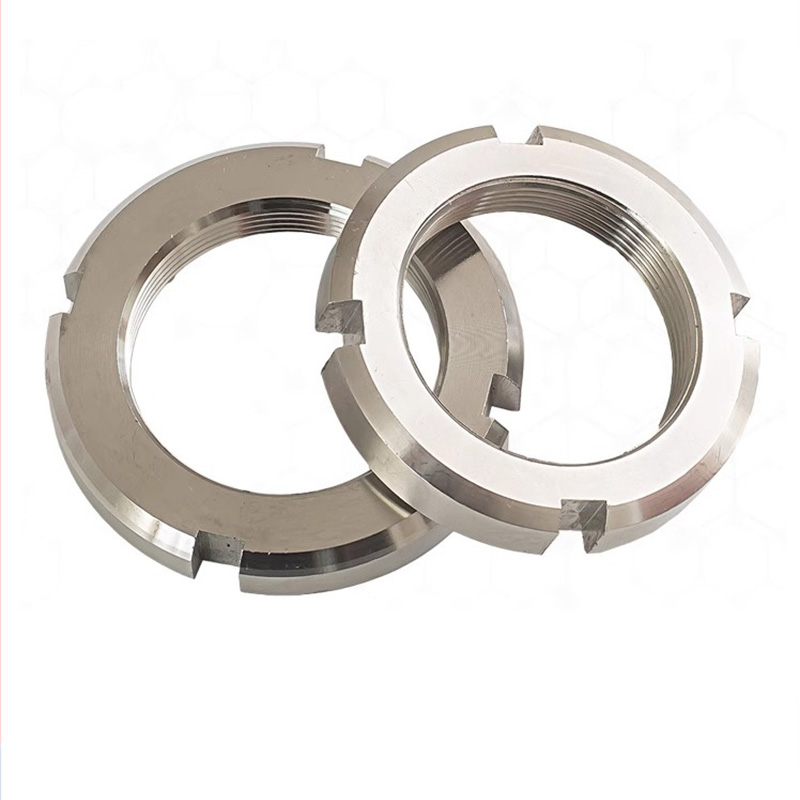
China supplier Xiaoguo® provides DIN 981 nut that has a circular shape. During operation, it makes the whole structure more compact, saves more space, and is suitable for precision equipment with specific installation space requirements. Buying the DIN 981 nut will be beneficial for you in many aspects.
Send Inquiry
Product Description
Core Strengths
The core advantage of DIN 981 nut lies in their design, which is specifically tailored for the precise fixation of rolling bearings on shafts. Their unique design has demonstrated advantages in terms of precision, reliability, convenience, and load-bearing capacity.
(1)Design Principles and Professionalism
The design of the DIN 981 nut strictly adheres to the exclusive standards, achieving precise compatibility with rolling bearings.
The distinctive slotting and fine-tooth design:
Anti-loosening slot: Uniformly distributed slots on the outer circle of the nut. During use, it needs to be installed and disassembled in conjunction with the matching hook-shaped wrench or special tools.
Precision fine thread: Utilizing fine-threaded design, it not only offers better self-locking performance but also enables more precise axial displacement adjustment.
(2)Core usage advantages
High-precision manufacturing standards: As standard fasteners, the key dimensions such as thread accuracy and end face runout of these components have strict tolerance requirements.
Installation and maintenance are simple: Using standard hook-shaped tools, this design enables flexible operation even in limited installation spaces.
(3)The wide adaptability of the product
Rich material options: To accommodate different environments, a variety of material choices are provided, such as high-strength carbon steel, A2/A4 stainless steel (304/316), etc.
Various surface treatments: Through surface treatments such as galvanization, blackening, and dactron, the corrosion resistance can be enhanced, making it suitable for harsh conditions like humidity and salt fog.
How to extend the service life
To extend the service life of DIN 981 nuts, the core idea can be summarized as: precise selection, standardized installation, and regular maintenance. Here are some key practical methods:
(1)precise selection
Choose surface treatment based on the environment: The salt spray test duration for the Dacromet coating can exceed 2,000 hours, which is four times that of traditional galvanization.
Choose the material based on the working environment: For high-frequency vibration conditions, a higher-grade alloy steel (such as grade 8 in terms of strength) should be selected; for normal loads, standard carbon steel is sufficient.
(2)standardized installation
Use the correct tool: Make sure to use the standard crescent wrench and ensure that its size perfectly matches the slot of the nut.
Master the installation sequence: First, manually turn the nut in a few full turns. Then, use the tool to tighten it in the prescribed order (such as symmetrically step by step).
Maintain a clean environment: Before installation, ensure that the threads and contact surfaces are clean and free of any foreign substances.
(3)regular maintenance
Proper lubrication: Regularly apply an appropriate amount of lubricating grease to the threaded surfaces, which can reduce friction, prevent wear and seizing.
Regular inspection: It is recommended that the product undergo a torque check every 3 to 6 months. At the same time, visually inspect whether the threads are intact, and check if the nuts have any cracks, wear or signs of corrosion.
Regularly update the auxiliary parts: A new stop ring should be replaced after each disassembly.
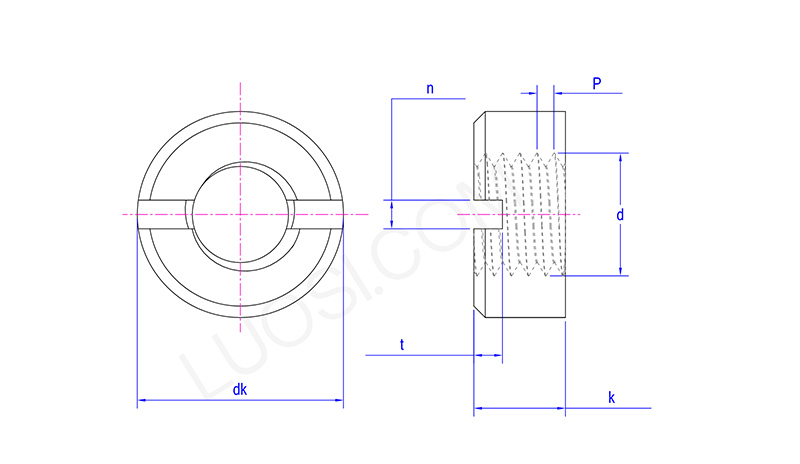
| Mon | M3.5 | M4 | M5 | M6 | M8 | M10 | M12 | M14 | M16 | M18 | M20 |
| P | 0.6 | 0.7 | 0.8 | 1 | 1.25 | 1.5 | 1.75 | 2 | 2 | 2.5 | 2.5 |
| dk max | 7 | 8 | 9 | 11 | 14 | 18 | 21 | 24 | 26 | 29 | 32 |
| dk min | 6.64 | 7.64 | 8.64 | 10.57 | 13.57 | 17.57 | 20.48 | 23.48 | 25.48 | 28.48 | 31.38 |
| k max | 3 | 3.5 | 4.2 | 5 | 6.5 | 8 | 10 | 11 | 12 | 13 | 14 |
| k min | 2.75 | 3.2 | 3.9 | 4.7 | 6.14 | 7.64 | 9.64 | 10.57 | 11.57 | 12.57 | 13.57 |
| n min | 1.46 | 1.46 | 2.06 | 2.56 | 3.06 | 3.57 | 4.07 | 4.07 | 4.07 | 4.07 | 5.07 |
| n max | 1.71 | 1.71 | 2.31 | 2.81 | 3.31 | 3.87 | 4.37 | 4.37 | 4.37 | 4.37 | 5.37 |
| t min | 1 | 1.2 | 15 | 2 | 2.5 | 3.2 | 3.8 | 3.8 | 3.8 | 4.8 | 4.8 |
| t max | 1.40 | 1.60 | 1.90 | 2.4 | 3 | 3.7 | 4.3 | 4.3 | 4.3 | 5.5 | 5.5 |
Hot Tags: DIN 981 Nut, China, Manufacturer, Supplier, Factory
Related Category
Hexagon Nut
Square Nut
Hexagon Flange Nut
Lock Nut
Cap Nut
Hexagon Slotted Nut
Hand Screw The Nut
Round Nut
Hubs Nuts
T-nut
Reed Nut
Other Nuts
Send Inquiry
Please Feel free to give your inquiry in the form below. We will reply you in 24 hours.