- English
- Español
- Português
- русский
- Français
- 日本語
- Deutsch
- tiếng Việt
- Italiano
- Nederlands
- ภาษาไทย
- Polski
- 한국어
- Svenska
- magyar
- Malay
- বাংলা ভাষার
- Dansk
- Suomi
- हिन्दी
- Pilipino
- Türkçe
- Gaeilge
- العربية
- Indonesia
- Norsk
- تمل
- český
- ελληνικά
- український
- Javanese
- فارسی
- தமிழ்
- తెలుగు
- नेपाली
- Burmese
- български
- ລາວ
- Latine
- Қазақша
- Euskal
- Azərbaycan
- Slovenský jazyk
- Македонски
- Lietuvos
- Eesti Keel
- Română
- Slovenski
- मराठी
- Srpski језик

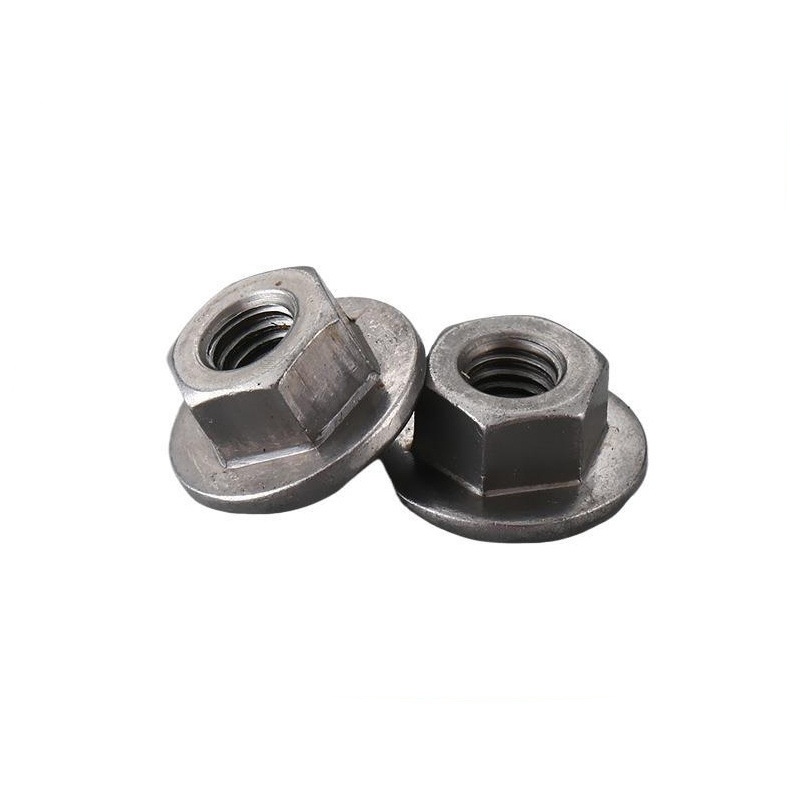
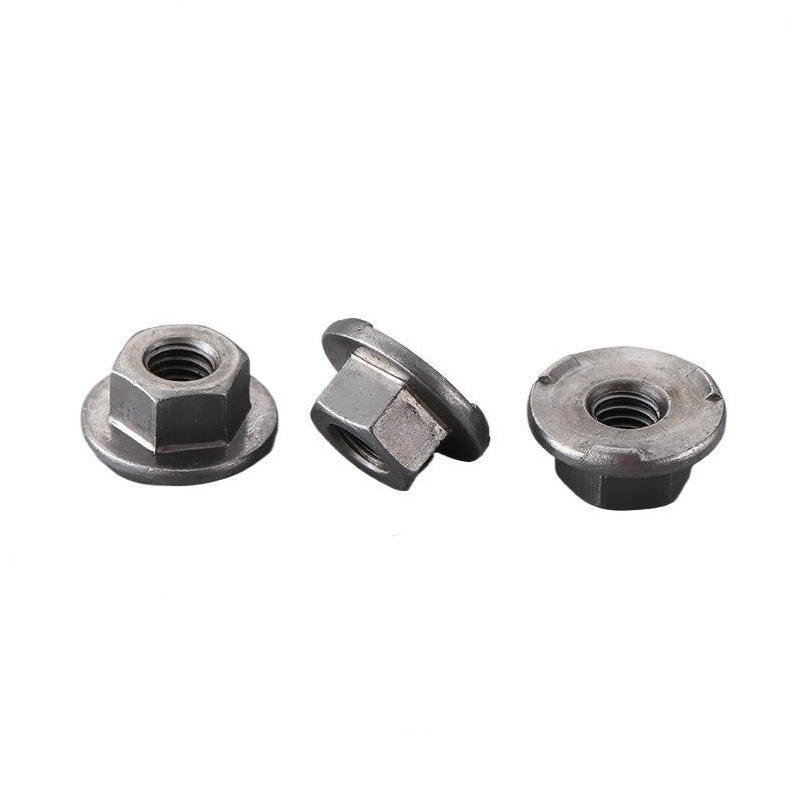
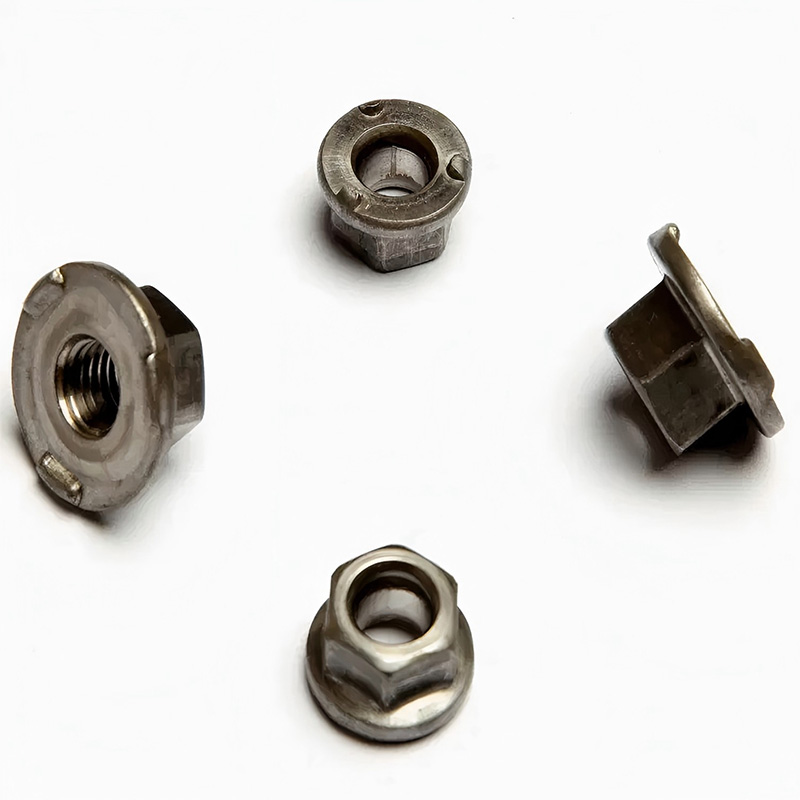
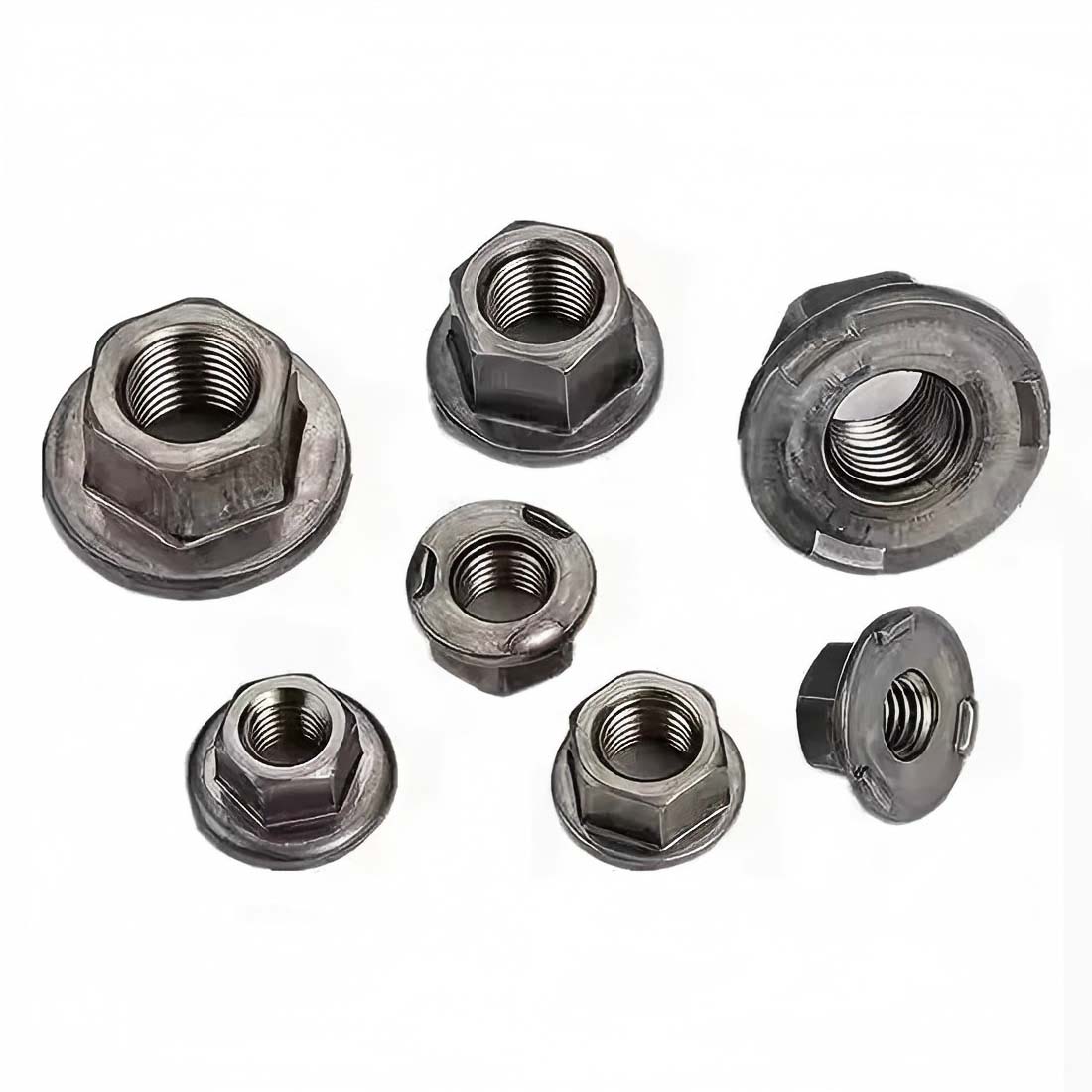
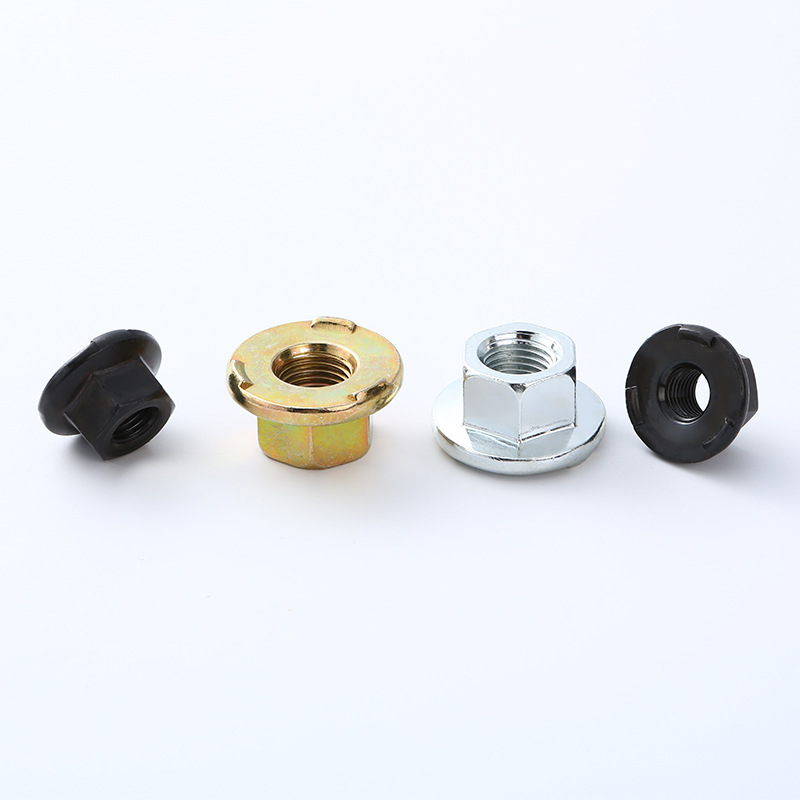
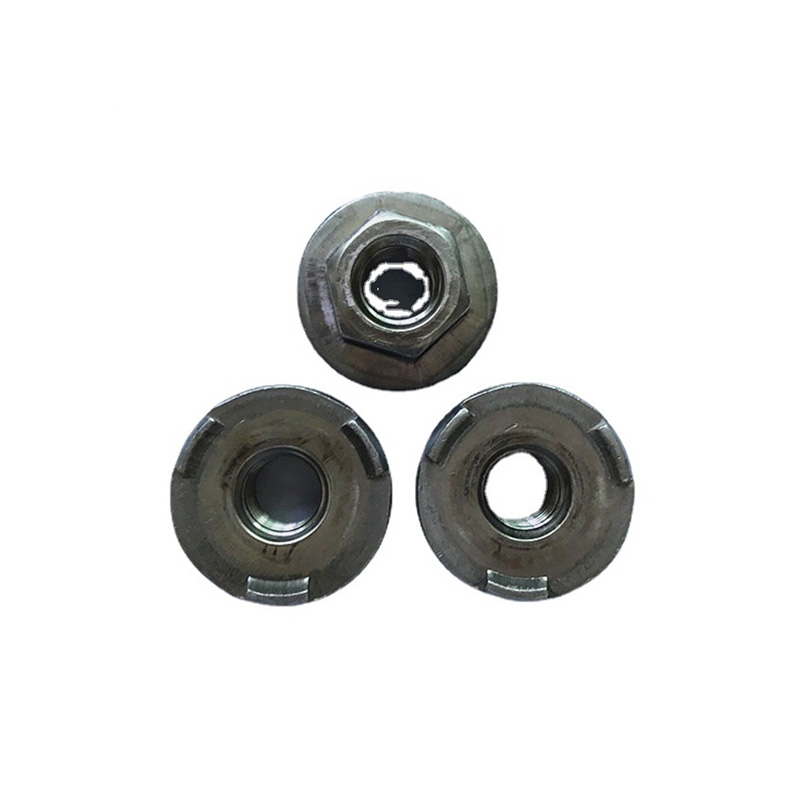
Hex Weld Nut with Flange
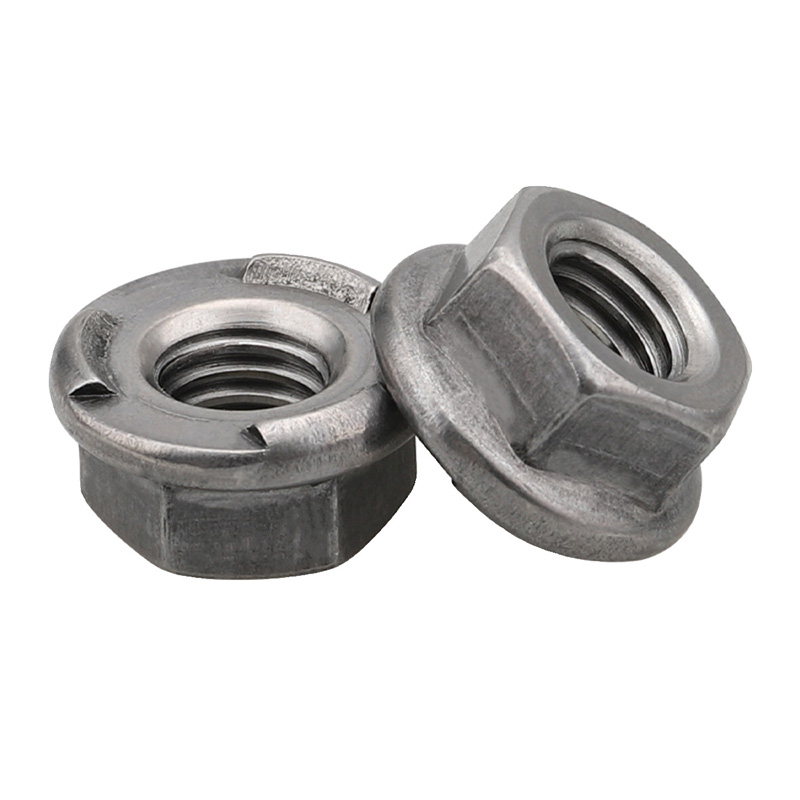
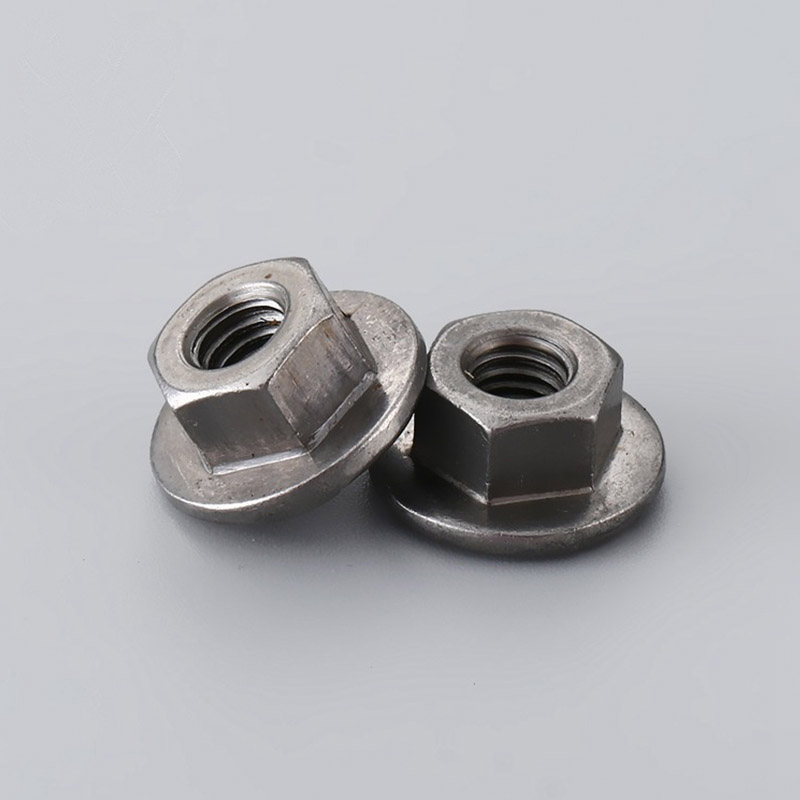
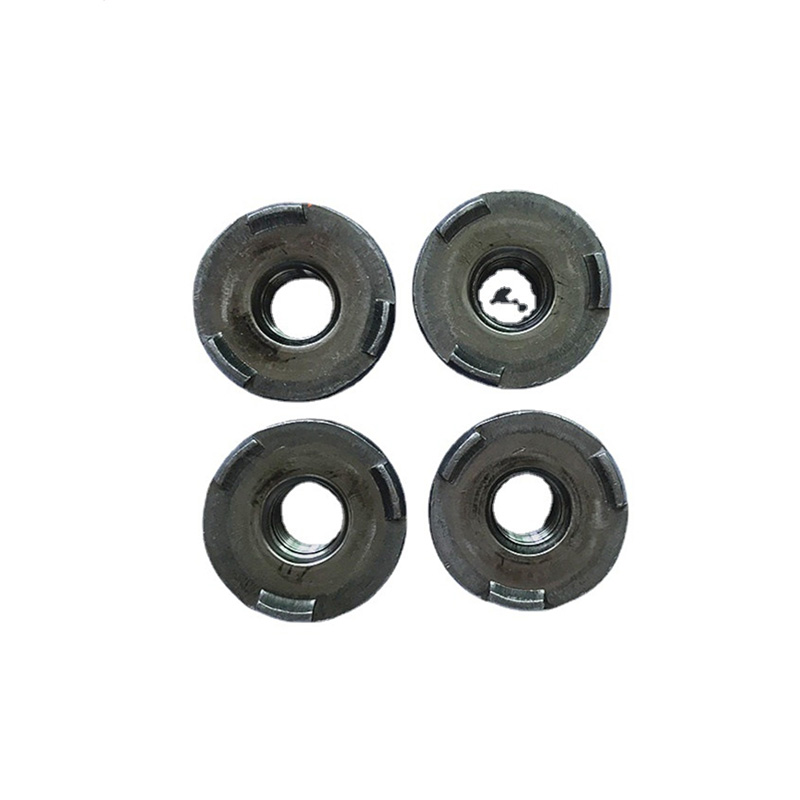
China manufacturer Xiaoguo® 316 stainless steel Hex weld nut with flange can effectively resist corrosion in harsh working environments. The salt spray test can last for over 1,000 hours. The factory currently has a large number of samples available for preliminary testing.
Send Inquiry
Product Description
Material Classification and Characteristics
Let me introduce to you in detail the different materials of Hex weld nut with flange and their corresponding characteristics.
Material category Welding performance Corrosion resistance Cost Typical applications
Low-carbon steel Optimal Needs coating (requires coating) Low cost Automobile body panels, household appliance shells, general sheet metal work
Medium carbon steel/alloy steel Good Needs coating (requires coating) Medium Truck cab, construction machinery, heavy-duty structure
Stainless steel 304 Better Outstanding Moderate to high costs Food equipment, medical appliances, outdoor cabinets
Stainless steel 316 Better Optimal High cost Ocean engineering, chemical equipment, coastal facilities
The ranking of the welding performance of Hex weld nut with flange: Low carbon steel is the best (C ≤ 0.20%), stainless steel comes next (parameters need to be appropriately adjusted), medium carbon steel/alloy steel has a higher carbon content and thus requires controlling the cooling speed to prevent cracks.
The key to choosing materials
To assist you in making the right choice of the appropriate Hex weld nut with flange material, we have summarized the following principles for your reference.
(1)Give priority to weldability
For resistance spot welding (the most commonly used method), low-carbon steel (with C ≤ 0.20%) is the best choice, as it has stable weld cores and less spatter.
When welding medium-carbon steel/alloy steel, hardening structures are prone to form, so it is necessary to strictly control the welding current and time.
The stainless steel (304/316) has good weldability, but the galvanized or oil-coated surfaces need to be cleaned.
(2)Strength requirement selection level
Light load (< 400 MPa): 4.8 grade low carbon steel.
Medium load (400 - 600 MPa): Grade 6.8 low carbon steel.
Heavy-duty (over 600 MPa): 8.8 or 10.9 grade medium carbon steel/alloy steel Hex weld nut with flange (note: adjust the welding process).
(3)Choose the corrosion-resistant solution based on the environment.
Indoor dry environment: Electro-galvanized low-carbon steel (low cost).
Damp or outdoor use: Dacromet coating or hot-dip galvanized low-carbon steel.
Highly corrosive (coastal/chemical): Stainless steel 316 (A4-70).
Food/Healthcare: Stainless Steel 304 (A2-70).
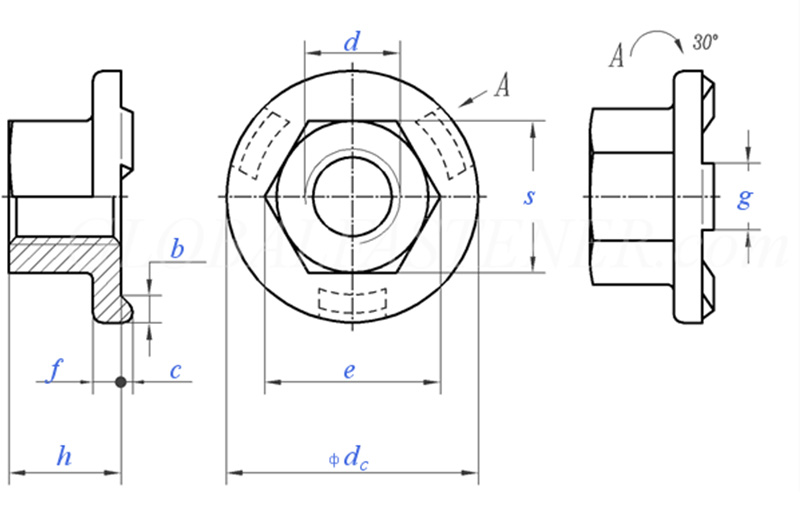
| Thread Sized | M5 | M6 | M8 | M10 | M12 | M14 | M16 | ||
| d | |||||||||
| P | Coarse Thread Pitch | 0.8 | 1 | 1.25 | 1.5 | 1.75 | 2 | 2 | |
| Fine Thread Pitch | / | / | / | / | 15 | 1.5 | 1.5 | ||
| C | Nominal Size | ±0.1 | 0.8 | 0.8 | 1 | 1.2 | 1.2 | 1.2 | 1.2 |
| dc | max | 15.5 | 18.5 | 22.5 | 26.5 | 30.5 | 33.5 | 36.5 | |
| min | 14.5 | 17.5 | 21.5 | 25.5 | 29.5 | 32.5 | 35.5 | ||
| e | min | 8.2 | 10.6 | 13.6 | 16.9 | 19.4 | 22.4 | 25 | |
| max | 8.5 | 10.9 | 14 | 17.5 | 20 | 23 | 26 | ||
| f | Nominal Size | ±0.25 | 1.7 | 2 | 2.5 | 3 | 3 | 4 | 4 |
| g | Nominal Size | ±0.1 | 4 | 5 | 6 | 7 | 8 | 8 | 8 |
| m | min | 4.7 | 6.64 | 9.64 | 12.57 | 14.57 | 16.16 | 18.66 | |
| max | 5 | 7 | 10 | 13 | 15 | 17 | 19.5 | ||
| S | max | 8 | 10 | 13 | 16 | 18 | 21 | 24 | |
| min | 7.64 | 9.64 | 12.57 | 15.57 | 17.57 | 20.48 | 23.48 | ||
| b | max=nominal size | 2.2 | 2.7 | 2.7 | 2.95 | 3.2 | 3.45 | 3.7 | |
| min | 2 | 2.5 | 2.5 | 2.75 | 3 | 3.25 | 3.5 | ||
| per 1000 unitsskg | / | 5.7 | 12.2 | 21.8 | 29.4 | 45.8 | / | ||
FAQ
(1)What are the differences between a Hex weld nut with flange and a regular welding nut?
The main difference lies in the flange base. The bottom of a regular welding nut is flat, while the bottom of a Hex weld nut with flange has a circular flange disc. The function of the flange is to increase the pressure-bearing area and replace the flat washer.
(2)Which international standards do your products comply with?
We strictly follow ISO 21670 (international standard), DIN 977 (German standard) and GB/T 13681.2 (Chinese national standard).
(3)Will the coating be damaged after welding? How to prevent rusting?
The coating in the raised area during welding will be melted, and the surrounding coating may change color due to high temperature. After welding, you can apply a cold galvanizing spray or rust preventive paint to reapply it locally to the weld seam.
Hot Tags: Hex Weld Nut with Flange, China, Manufacturer, Supplier, Factory
Related Category
Hexagon Nut
Square Nut
Hexagon Flange Nut
Lock Nut
Cap Nut
Hexagon Slotted Nut
Hand Screw The Nut
Round Nut
Hubs Nuts
T-nut
Reed Nut
Other Nuts
Send Inquiry
Please Feel free to give your inquiry in the form below. We will reply you in 24 hours.