- English
- Español
- Português
- русский
- Français
- 日本語
- Deutsch
- tiếng Việt
- Italiano
- Nederlands
- ภาษาไทย
- Polski
- 한국어
- Svenska
- magyar
- Malay
- বাংলা ভাষার
- Dansk
- Suomi
- हिन्दी
- Pilipino
- Türkçe
- Gaeilge
- العربية
- Indonesia
- Norsk
- تمل
- český
- ελληνικά
- український
- Javanese
- فارسی
- தமிழ்
- తెలుగు
- नेपाली
- Burmese
- български
- ລາວ
- Latine
- Қазақша
- Euskal
- Azərbaycan
- Slovenský jazyk
- Македонски
- Lietuvos
- Eesti Keel
- Română
- Slovenski
- मराठी
- Srpski језик

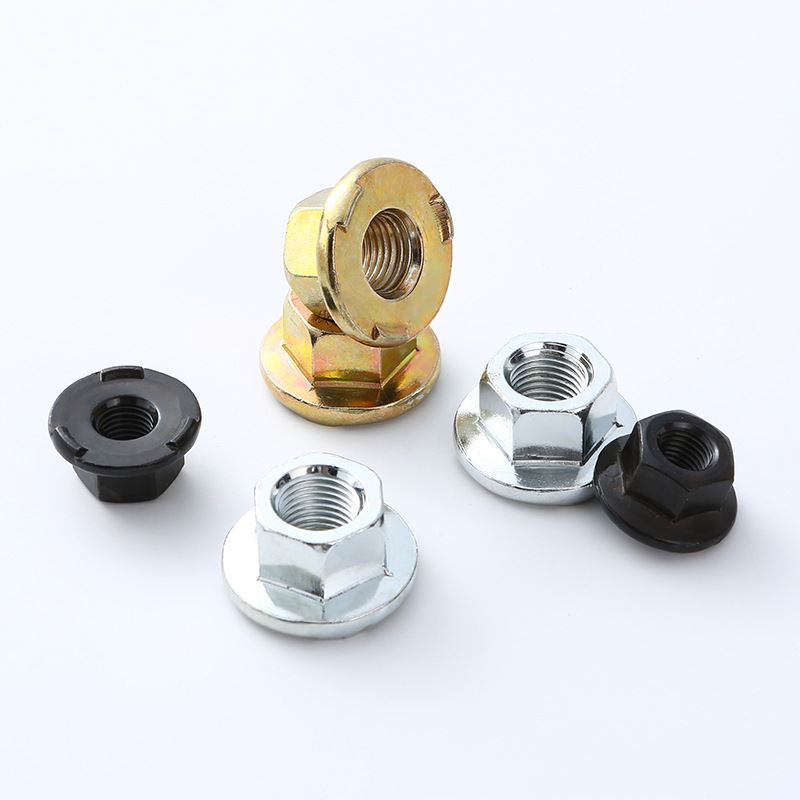
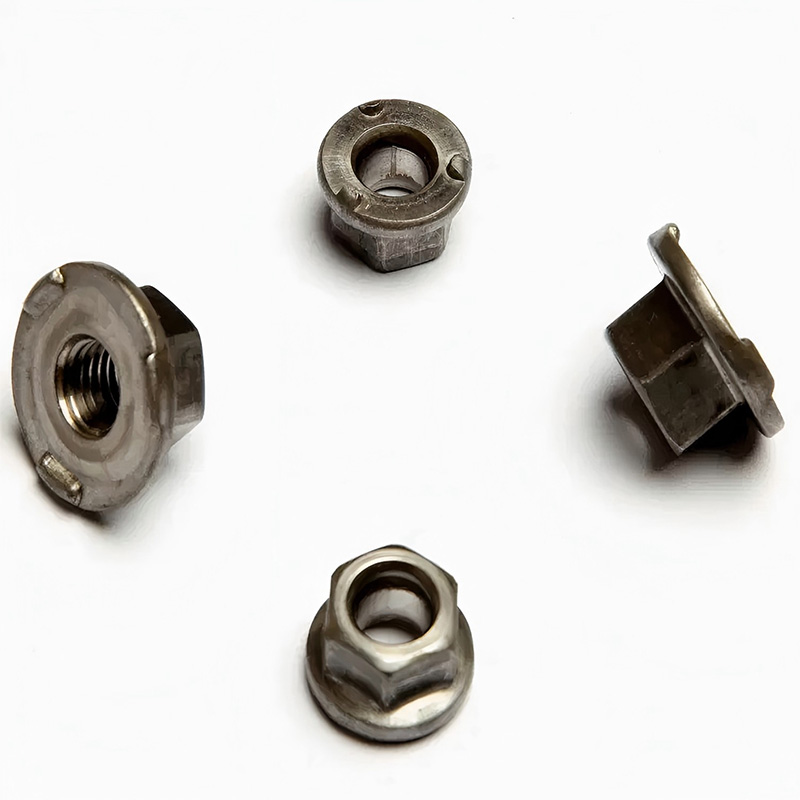
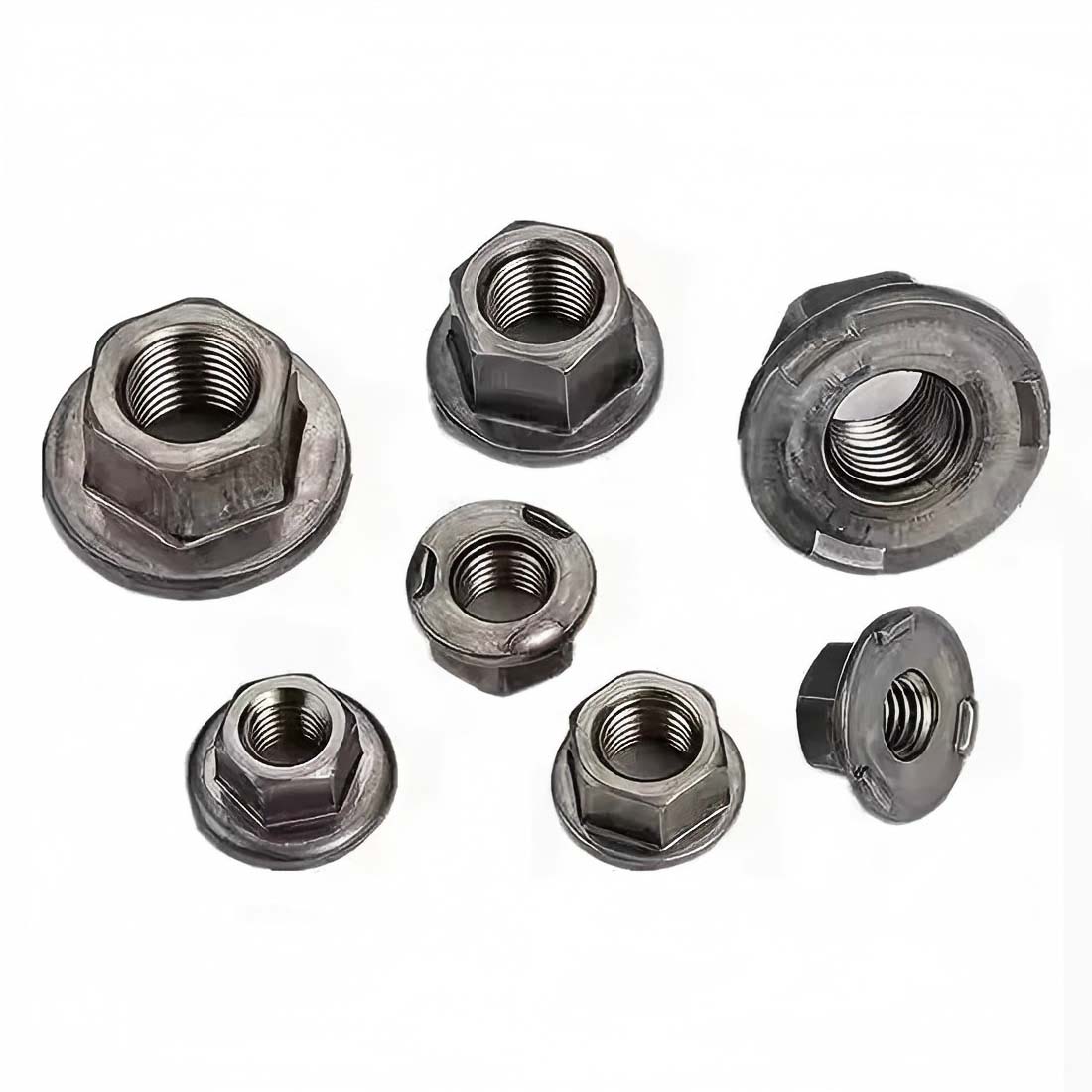
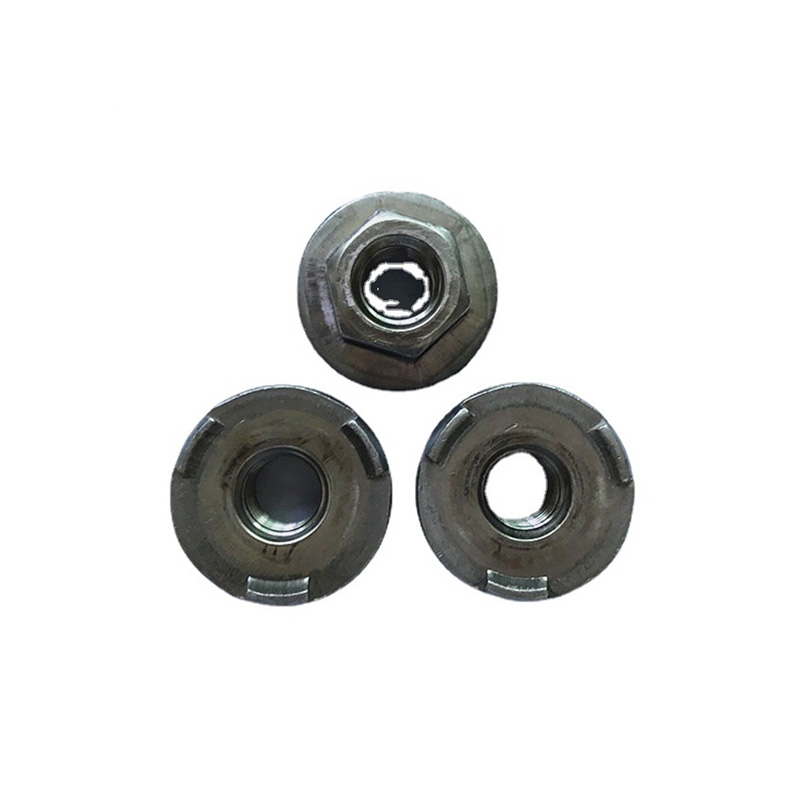
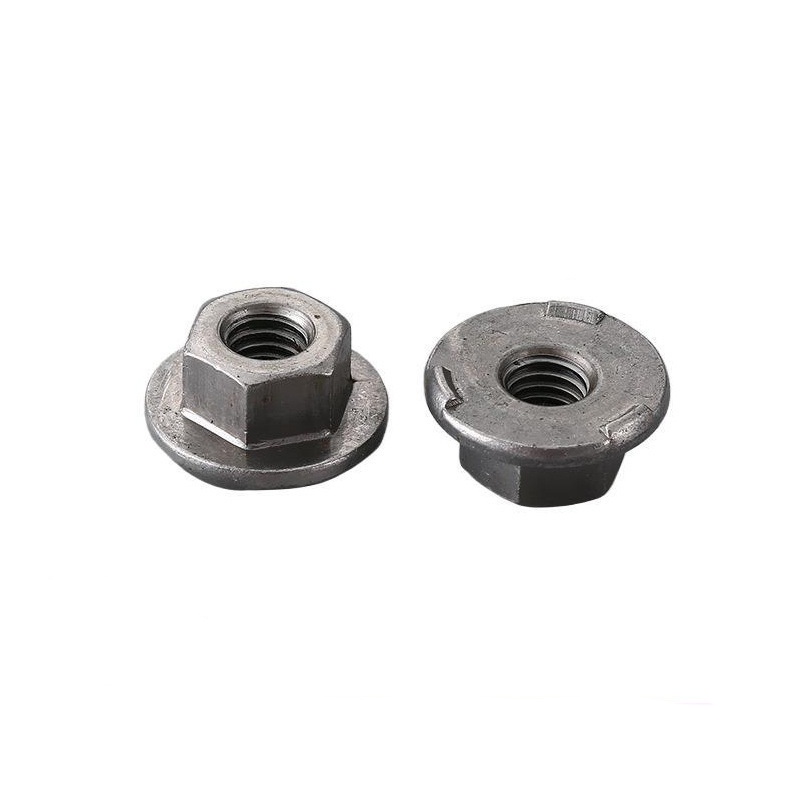
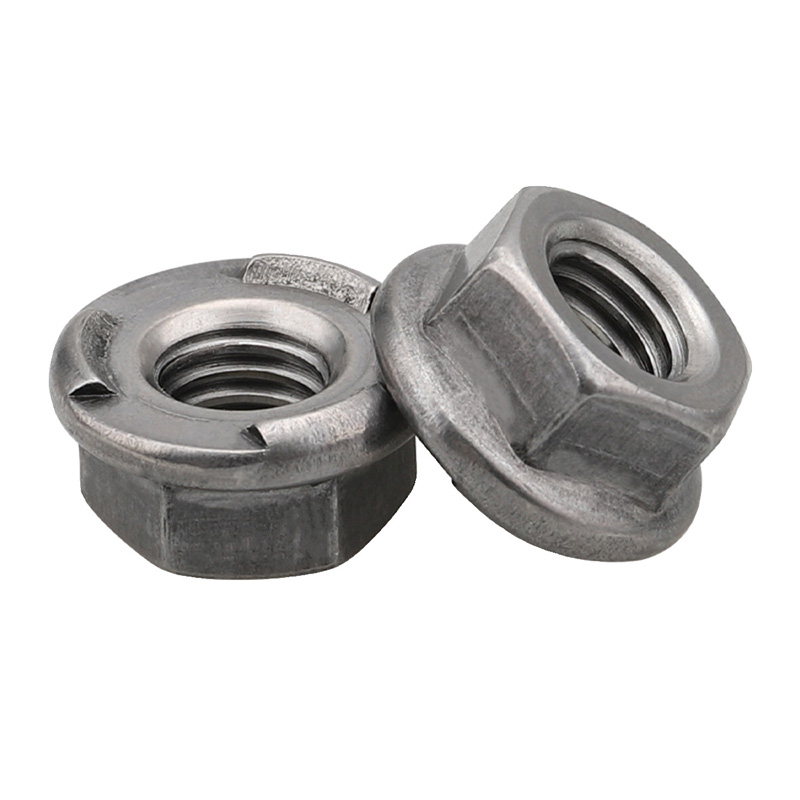
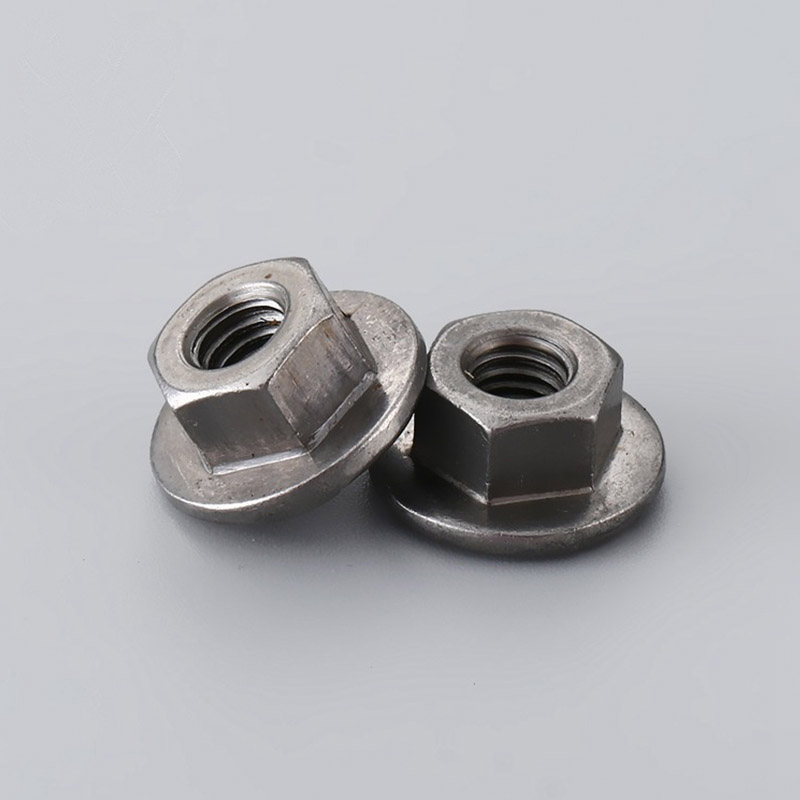
Hex Flange Welding Nuts
The flange surface of Xiaoguo® from China Hex flange welding nuts replaces the flat gasket during operation, saving the procurement and assembly process of gaskets. The overall cost of the product is reduced by 30%. It is the preferred choice for engineering procurement. If you are interested, please leave a message and we will provide the price list.
Send Inquiry
Product Description
Welding process
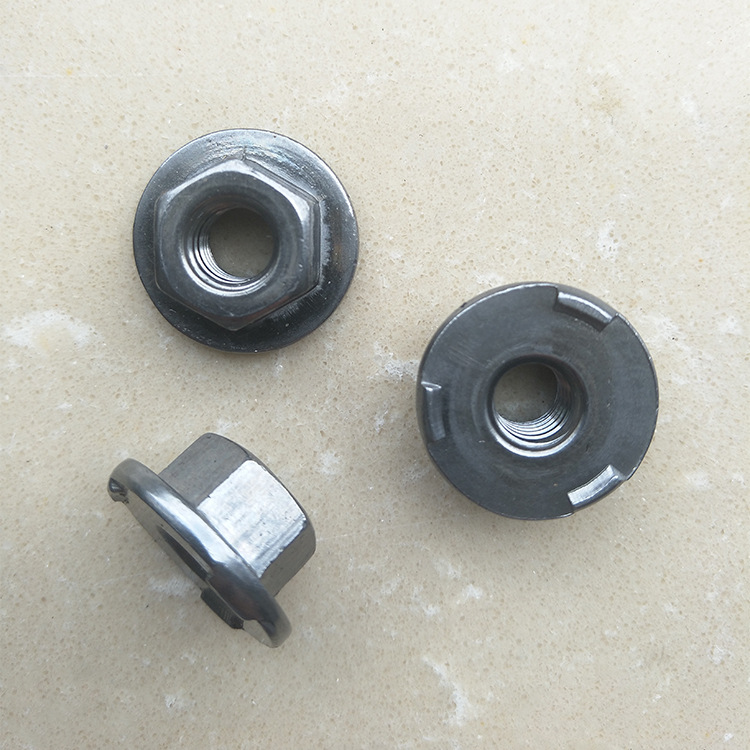
The core welding process of the Hex flange welding nuts is resistance spot welding. It is an efficient and reliable connection method. The working principle is ingenious: The flange surface of the nut is equipped with carefully designed protrusions. When the welding current passes through, these protrusions become the areas with the highest concentration of resistance. Under the immense pressure, they rapidly melt, thereby forming a strong weld core. The working process can be divided into four steps:
(1)Positioning and Pressurization
The automatic feeding system precisely positions the Hex flange welding nuts on the base material. The upper and lower electrodes apply the preset pressure, ensuring a tight fit between the nut and the sheet metal.
(2)Electric heating
A current of several thousand amperes passed through the protrusions in an instant, causing the area beneath them to rapidly melt.
(3)Pressure retention and crystallization
After the current is cut off, the electrode pressure continues to be maintained, allowing the molten metal to cool and crystallize under pressure, forming a dense weld core.
(4)Reset and Completion
The electrode is lifted, and one welding cycle is completed. The welded nut is integrated with the sheet metal, and its thread strength is usually higher than that of the base material itself.
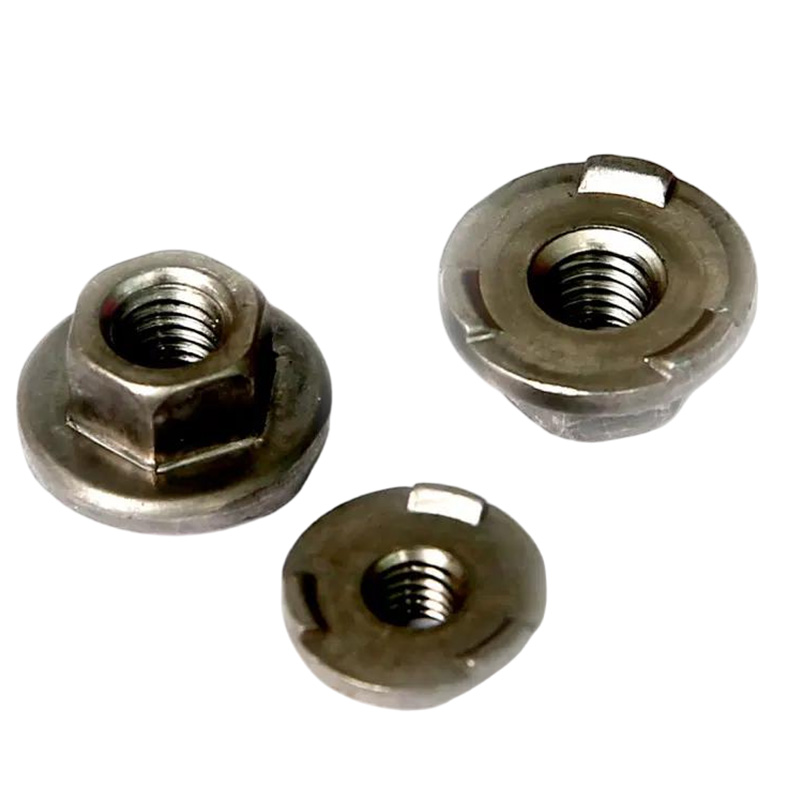
Key process parameters
In order to achieve the most ideal welding quality for the Hex flange welding nuts, precise control over the following three key parameters is of vital importance:
(1)Welding current
This is the primary factor affecting the welding strength. If the current is too low, it will result in incomplete welding; if it is too high, it may cause spatter or even "burn-through" of the Hex flange welding nuts.
(2)Electrode pressure
It is necessary to provide sufficient pressure to ensure that the workpiece is tightly in contact, but excessive pressure may prematurely crush the protrusions, thereby weakening the welding effect.
(3)Welding time
It is usually very short (a few tens of milliseconds) and is used to control the heat input, preventing the nut from overheating.
Take the welding of a 1.5mm low-carbon steel plate with a common M8 Hex flange welding nuts as an example. The reference parameters are:
Electrode pressure: 2.5 - 4.0 kN
Welding current: 8 - 11 kA
Welding time: 8 - 15 cycles (approximately 0.16 - 0.3 seconds)
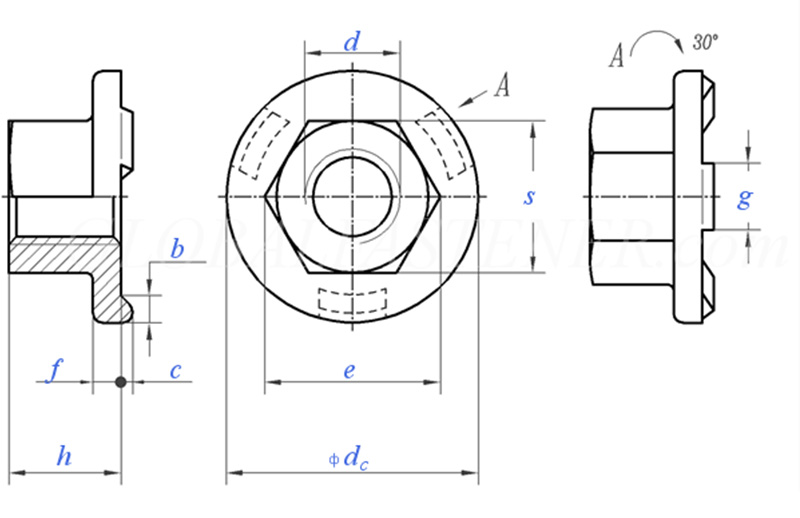
| Thread Sized | M5 | M6 | M8 | M10 | M12 | M14 | M16 | ||
| d | |||||||||
| P | Coarse Thread Pitch | 0.8 | 1 | 1.25 | 1.5 | 1.75 | 2 | 2 | |
| Fine Thread Pitch | / | / | / | / | 15 | 1.5 | 1.5 | ||
| C | Nominal Size | ±0.1 | 0.8 | 0.8 | 1 | 1.2 | 1.2 | 1.2 | 1.2 |
| dc | max | 15.5 | 18.5 | 22.5 | 26.5 | 30.5 | 33.5 | 36.5 | |
| min | 14.5 | 17.5 | 21.5 | 25.5 | 29.5 | 32.5 | 35.5 | ||
| e | min | 8.2 | 10.6 | 13.6 | 16.9 | 19.4 | 22.4 | 25 | |
| max | 8.5 | 10.9 | 14 | 17.5 | 20 | 23 | 26 | ||
| f | Nominal Size | ±0.25 | 1.7 | 2 | 2.5 | 3 | 3 | 4 | 4 |
| g | Nominal Size | ±0.1 | 4 | 5 | 6 | 7 | 8 | 8 | 8 |
| m | min | 4.7 | 6.64 | 9.64 | 12.57 | 14.57 | 16.16 | 18.66 | |
| max | 5 | 7 | 10 | 13 | 15 | 17 | 19.5 | ||
| S | max | 8 | 10 | 13 | 16 | 18 | 21 | 24 | |
| min | 7.64 | 9.64 | 12.57 | 15.57 | 17.57 | 20.48 | 23.48 | ||
| b | max=nominal size | 2.2 | 2.7 | 2.7 | 2.95 | 3.2 | 3.45 | 3.7 | |
| min | 2 | 2.5 | 2.5 | 2.75 | 3 | 3.25 | 3.5 | ||
| per 1000 unitsskg | / | 5.7 | 12.2 | 21.8 | 29.4 | 45.8 | / | ||
Hot Tags: Hex Flange Welding Nuts, China, Manufacturer, Supplier, Factory
Related Category
Hexagon Nut
Square Nut
Hexagon Flange Nut
Lock Nut
Cap Nut
Hexagon Slotted Nut
Hand Screw The Nut
Round Nut
Hubs Nuts
T-nut
Reed Nut
Other Nuts
Send Inquiry
Please Feel free to give your inquiry in the form below. We will reply you in 24 hours.