- English
- Español
- Português
- русский
- Français
- 日本語
- Deutsch
- tiếng Việt
- Italiano
- Nederlands
- ภาษาไทย
- Polski
- 한국어
- Svenska
- magyar
- Malay
- বাংলা ভাষার
- Dansk
- Suomi
- हिन्दी
- Pilipino
- Türkçe
- Gaeilge
- العربية
- Indonesia
- Norsk
- تمل
- český
- ελληνικά
- український
- Javanese
- فارسی
- தமிழ்
- తెలుగు
- नेपाली
- Burmese
- български
- ລາວ
- Latine
- Қазақша
- Euskal
- Azərbaycan
- Slovenský jazyk
- Македонски
- Lietuvos
- Eesti Keel
- Română
- Slovenski
- मराठी
- Srpski језик

Bearing Lock Nut
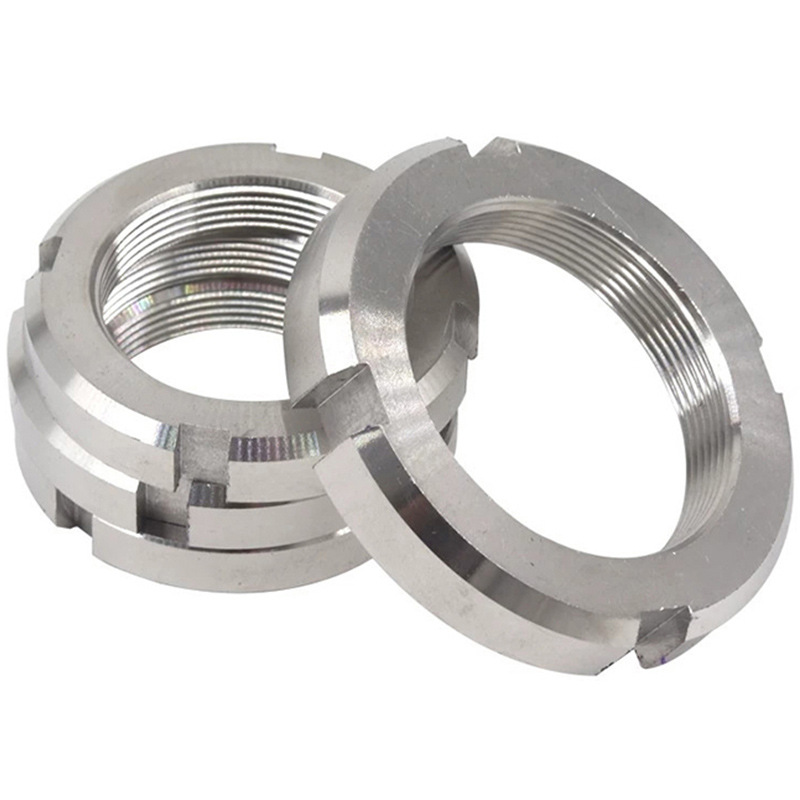
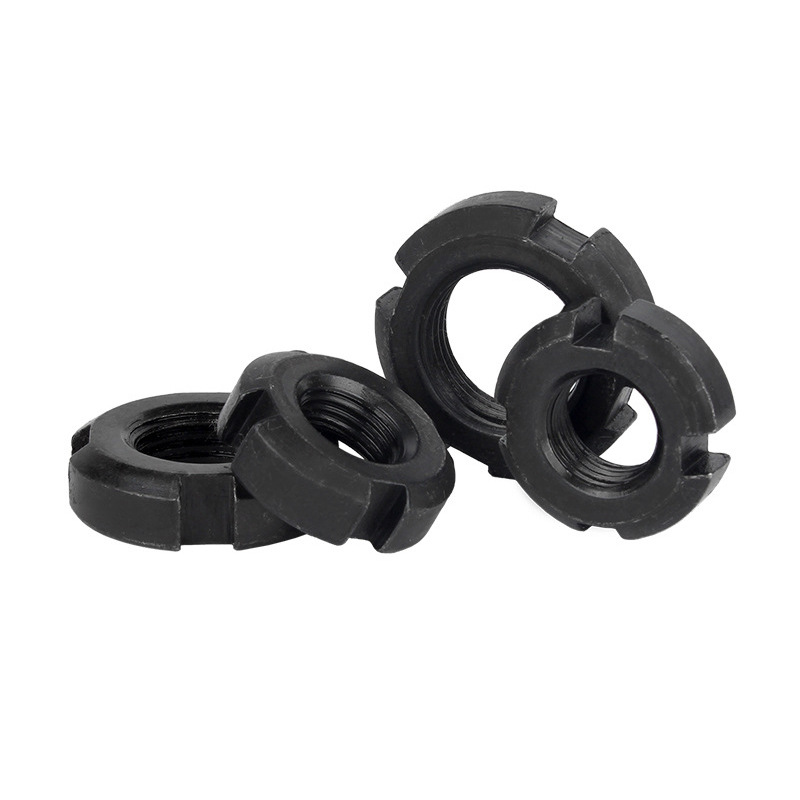
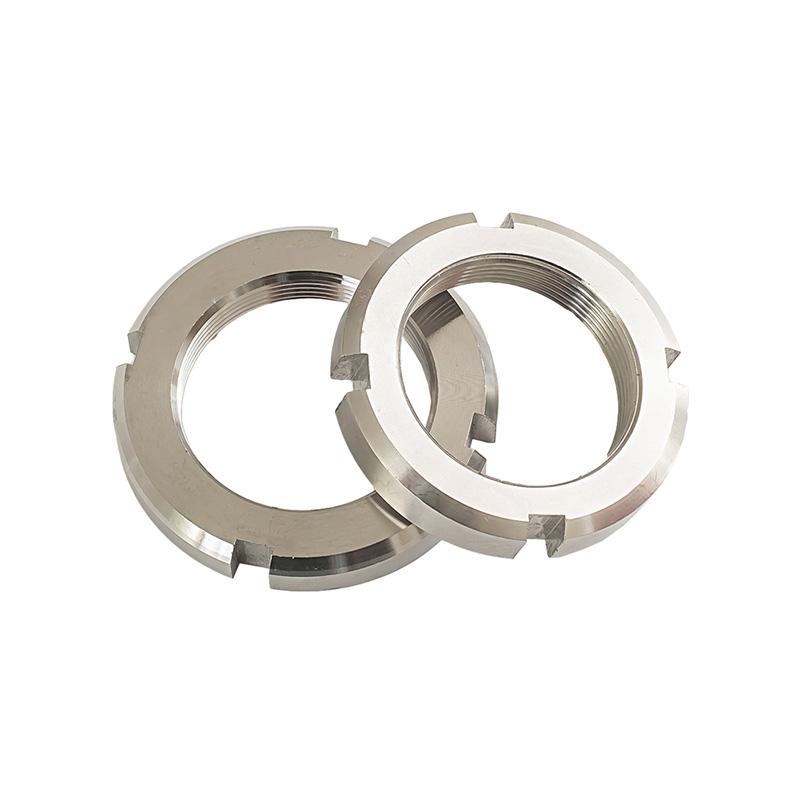
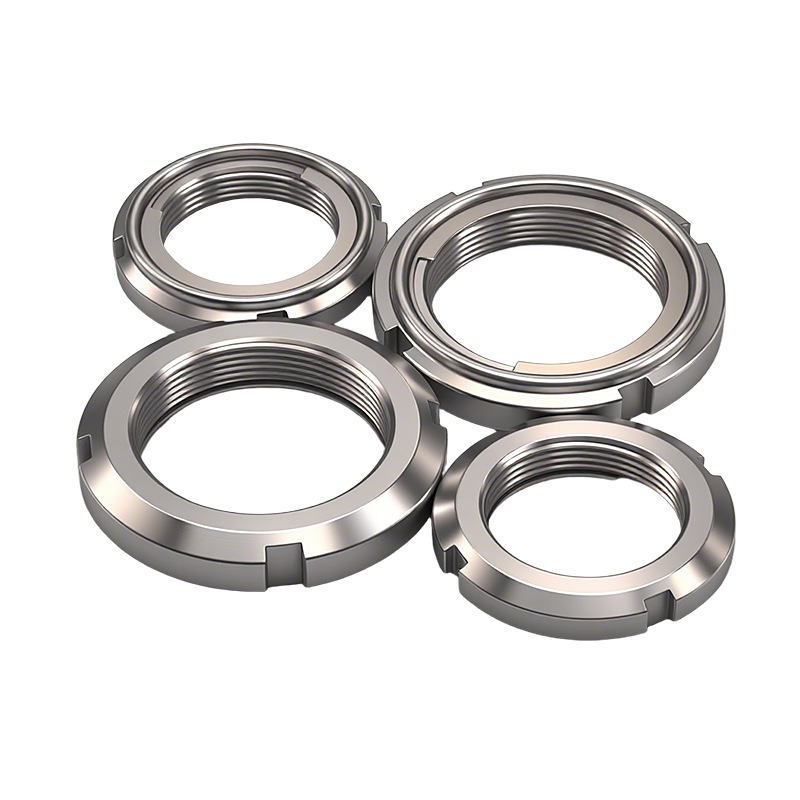
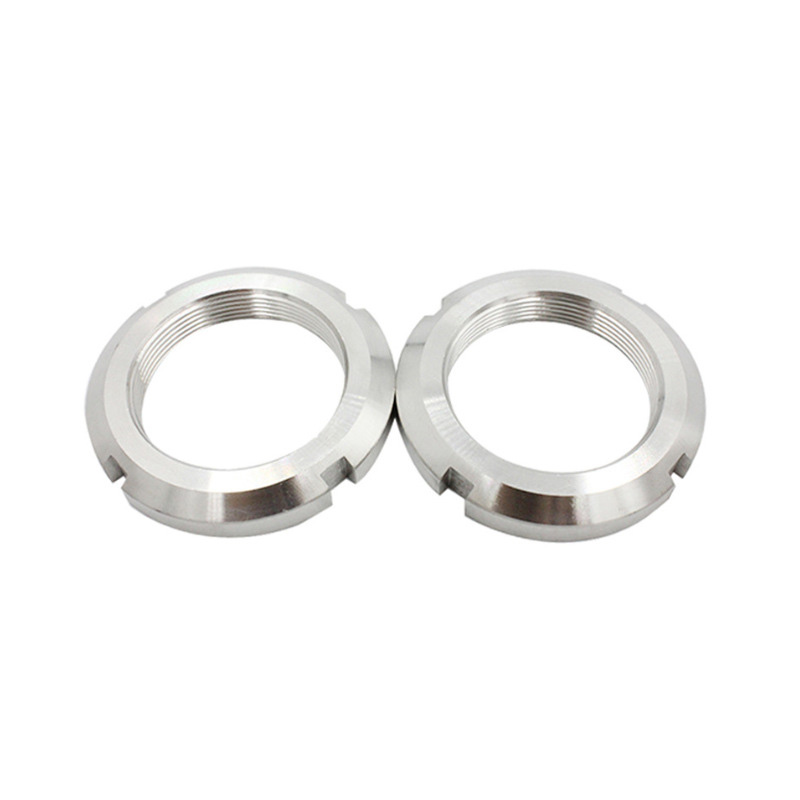
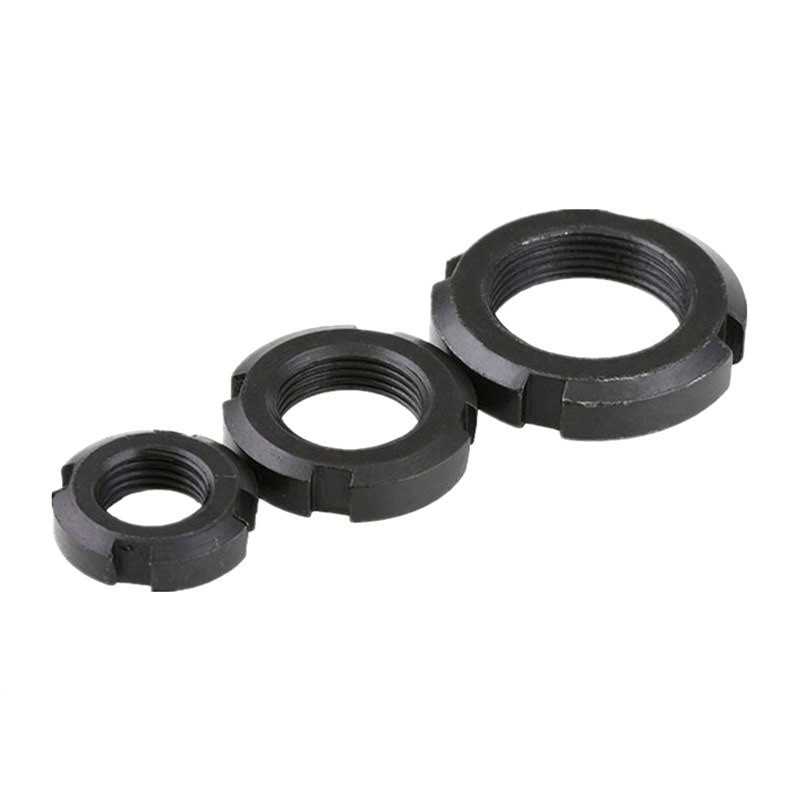
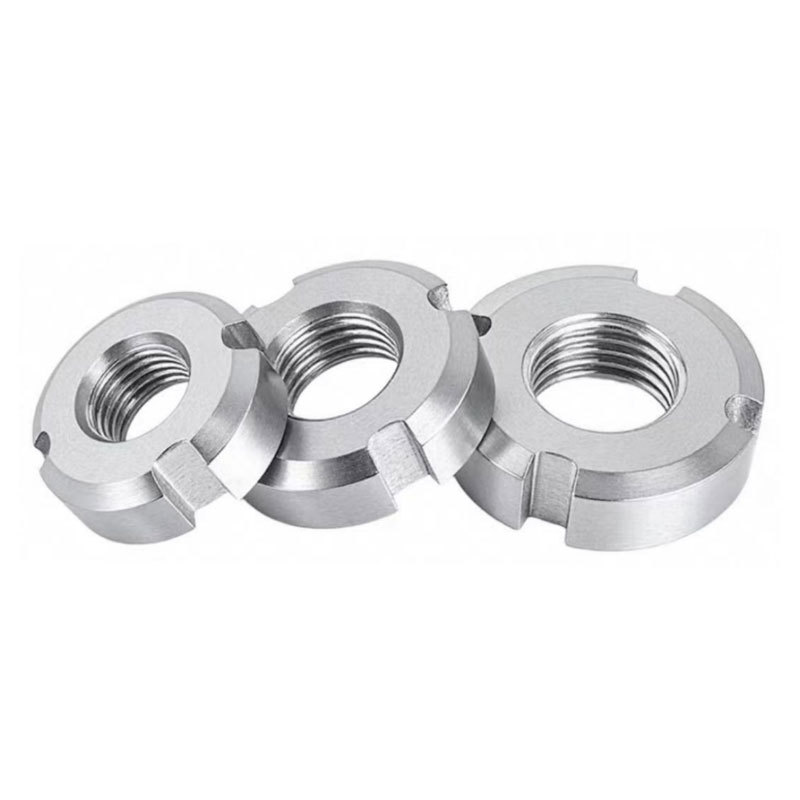
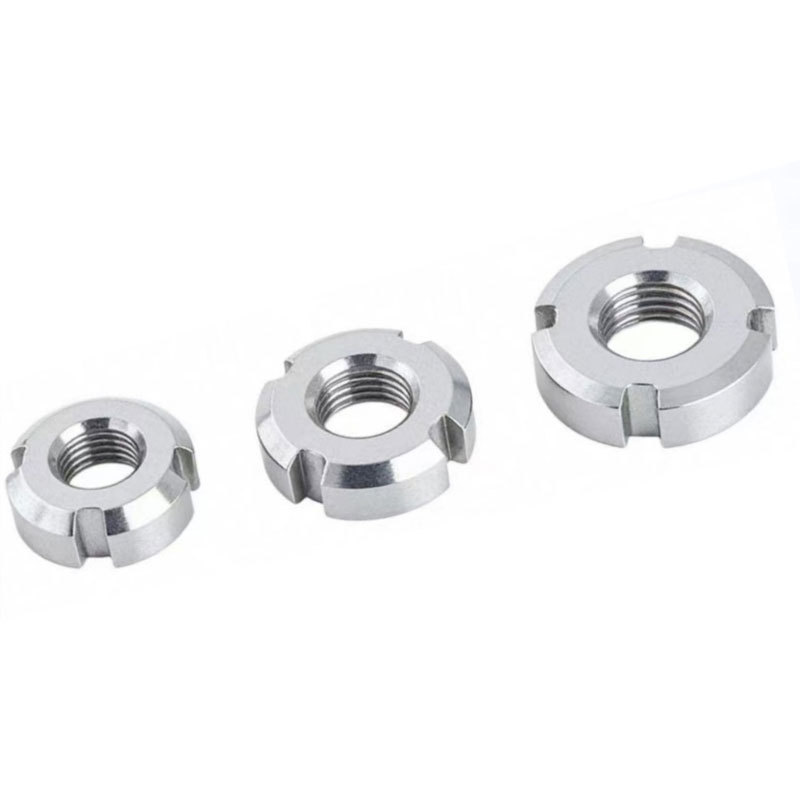
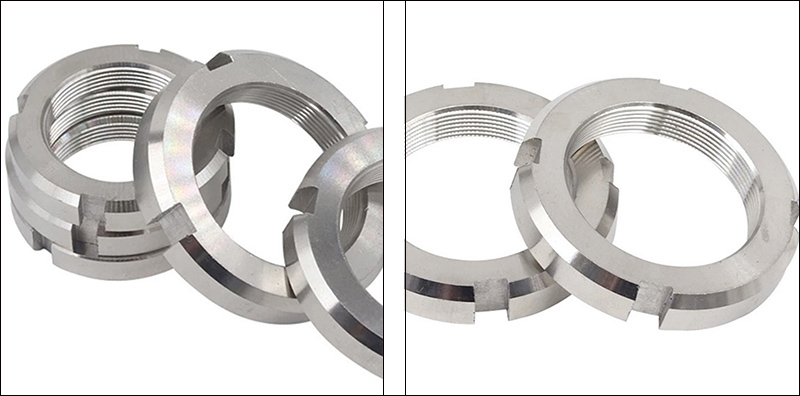
China Xiaoguo® Bearing lock nut features a precisely designed slot that creates a very fine axial clearance when the bearing components are fitted together, achieving the optimal mating condition. The manufacturing process of the Bearing lock nuts produced by the factory in China is extremely precise.
Send Inquiry
Product Description
How to choose the appropriate size?
To ensure that the Bearing lock nut can be used properly, the following points are recommended for selection:
(1) Determine the thread specification: This is the primary prerequisite. For metric systems, refer to the M value; for imperial systems, refer to inches. [Note: This product uses fine-threaded screws exclusively. When choosing, be sure to check the pitch (such as M16×1.5) to avoid selecting the coarse-threaded specification.]
(2) Check key dimensions: Verify the outer diameter (dk) and thickness (m) to ensure that the nut has sufficient installation space within the equipment.
(3) Define standards: Clearly specify the standards of the product, such as "National Standard GB/T 812" or "German Standard DIN 981", to ensure that all dimensions have the required tolerances and accuracies.
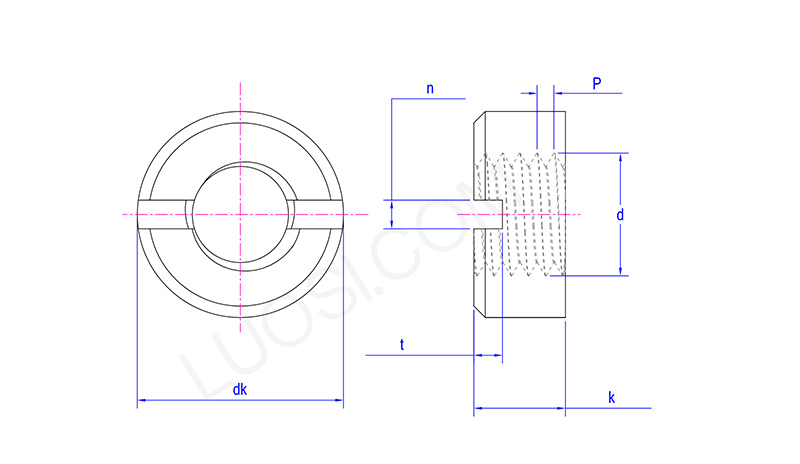
| Mon | M3.5 | M4 | M5 | M6 | M8 | M10 | M12 | M14 | M16 | M18 | M20 |
| P | 0.6 | 0.7 | 0.8 | 1 | 1.25 | 1.5 | 1.75 | 2 | 2 | 2.5 | 2.5 |
| dk max | 7 | 8 | 9 | 11 | 14 | 18 | 21 | 24 | 26 | 29 | 32 |
| dk min | 6.64 | 7.64 | 8.64 | 10.57 | 13.57 | 17.57 | 20.48 | 23.48 | 25.48 | 28.48 | 31.38 |
| k max | 3 | 3.5 | 4.2 | 5 | 6.5 | 8 | 10 | 11 | 12 | 13 | 14 |
| k min | 2.75 | 3.2 | 3.9 | 4.7 | 6.14 | 7.64 | 9.64 | 10.57 | 11.57 | 12.57 | 13.57 |
| n min | 1.46 | 1.46 | 2.06 | 2.56 | 3.06 | 3.57 | 4.07 | 4.07 | 4.07 | 4.07 | 5.07 |
| n max | 1.71 | 1.71 | 2.31 | 2.81 | 3.31 | 3.87 | 4.37 | 4.37 | 4.37 | 4.37 | 5.37 |
| t min | 1 | 1.2 | 15 | 2 | 2.5 | 3.2 | 3.8 | 3.8 | 3.8 | 4.8 | 4.8 |
| t max | 1.40 | 1.60 | 1.90 | 2.4 | 3 | 3.7 | 4.3 | 4.3 | 4.3 | 5.5 | 5.5 |
Detailed Explanation of Key Parameters
When choosing the size of the Bearing lock nut, please pay particular attention to the following key parameters:
(1)Thread specification (D×P): This indicates the nominal diameter (D) and pitch (P) of the thread.
For example, in M16×1.5, M16 represents the nominal diameter of 16mm, and 1.5 represents the pitch of 1.5mm.
(2)Outer Diameter (dk): The maximum external dimension of the nut, which determines the minimum space required for installation.
(3)Thickness (m): The axial height of the nut, which affects the locking force arm and strength.
(4)Number of slots (n) / Slot width (b) / Slot depth (t): Geometric parameters for slotting, which must match the dimensions of the corresponding professional tools (hooked wrench and opening pins/retaining washers).
Common Specifications Quick Reference
Here are some commonly used standard specification data:
Take GB/T 812-1988 Bearing lock nut, (Metric) as an example:
| Thread specification: D×P | Outer diameter: dk (mm) | Thickness: m (mm) | Number of slots: n | Slot depth: t (mm) |
| M10*1 | 22 | 8 | 4 | 2.6 |
| M12*1.25 | 25 | 8 | 4 | 2.6 |
| M14*1.5 | 28 | 8 | 4 | 2.6 |
| M16*1.5 | 30 | 8 | 4 | 3.1 |
| M18*1.5 | 32 | 8 | 4 | 3.1 |
| M20*1.5 | 35 | 8 | 4 | 3.1 |
Selection and Usage
(1)Thread consistency: All Bearing lock nut are equipped with fine-threaded screws. Please verify the pitch to avoid confusion with coarse-threaded screws.
(2)Supplementary tools: The disassembly and assembly process requires the use of a special hook-shaped wrench.
(3)Anti-loosening accessories: To achieve the locking effect, they must be used in conjunction with stop washers (such as GB/T 858) or open pins.
(4)Technical drawings: When designing, please always refer to the latest version of the corresponding standard technical drawings or product specifications.
Hot Tags: Bearing Lock Nut, China, Manufacturer, Supplier, Factory
Related Category
Hexagon Nut
Square Nut
Hexagon Flange Nut
Lock Nut
Cap Nut
Hexagon Slotted Nut
Hand Screw The Nut
Round Nut
Hubs Nuts
T-nut
Reed Nut
Other Nuts
Send Inquiry
Please Feel free to give your inquiry in the form below. We will reply you in 24 hours.