- English
- Español
- Português
- русский
- Français
- 日本語
- Deutsch
- tiếng Việt
- Italiano
- Nederlands
- ภาษาไทย
- Polski
- 한국어
- Svenska
- magyar
- Malay
- বাংলা ভাষার
- Dansk
- Suomi
- हिन्दी
- Pilipino
- Türkçe
- Gaeilge
- العربية
- Indonesia
- Norsk
- تمل
- český
- ελληνικά
- український
- Javanese
- فارسی
- தமிழ்
- తెలుగు
- नेपाली
- Burmese
- български
- ລາວ
- Latine
- Қазақша
- Euskal
- Azərbaycan
- Slovenský jazyk
- Македонски
- Lietuvos
- Eesti Keel
- Română
- Slovenski
- मराठी
- Srpski језик

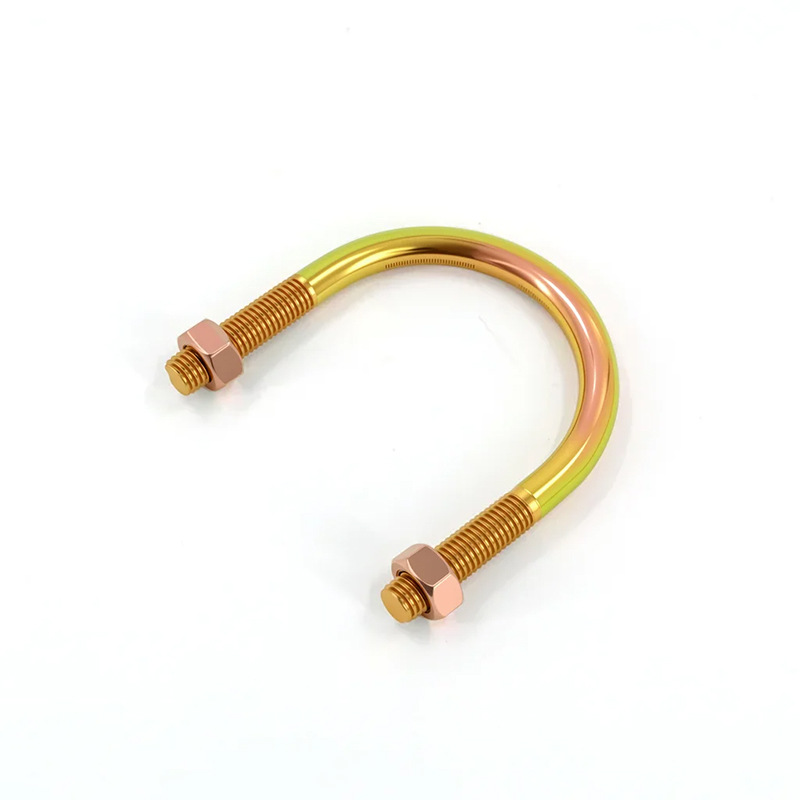
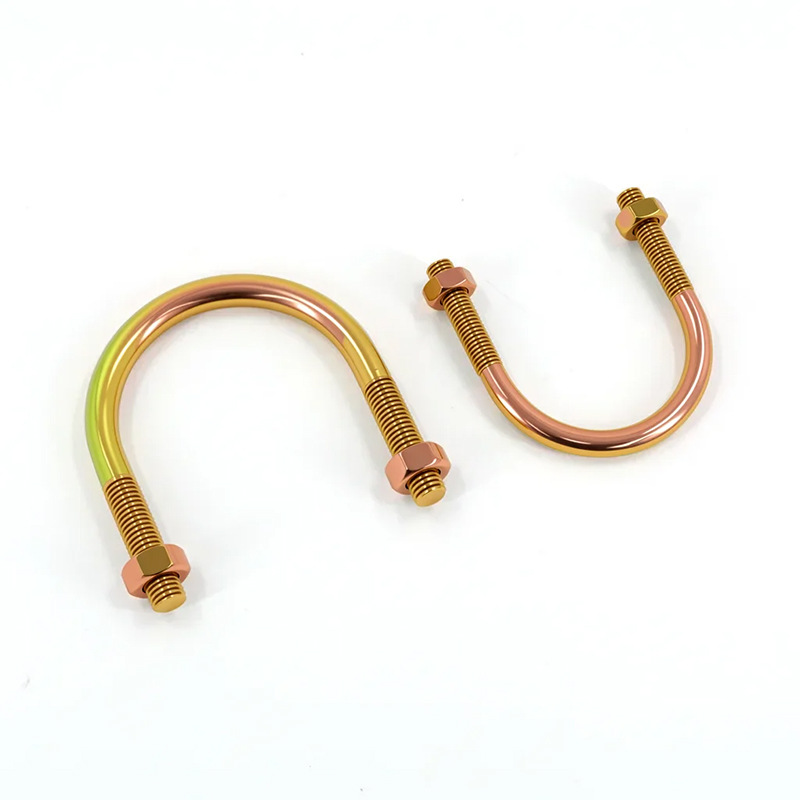
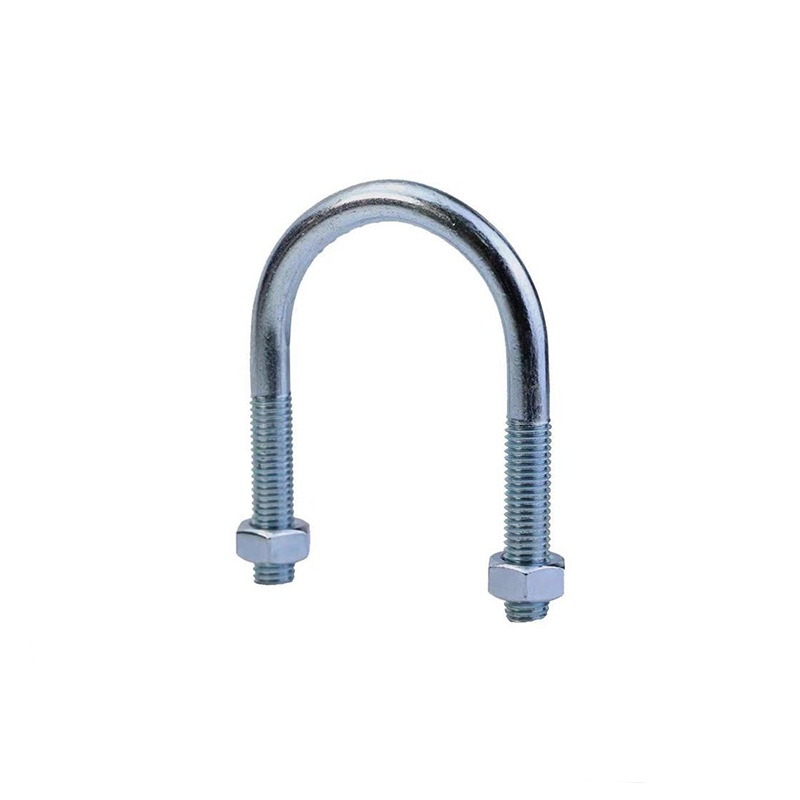
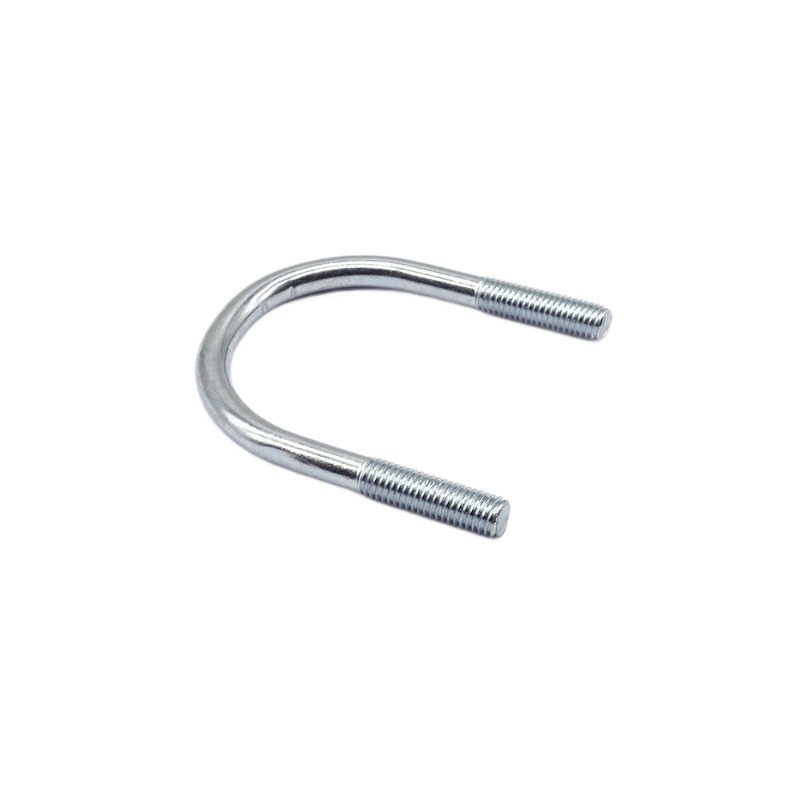
Suspension U Bolt
The Xiaoguo® suspension U bolt made in China has become the standard choice in numerous fields. The market demand is continuously increasing, and it is applied in areas such as construction, automobiles, energy, and agriculture. We hope that our durable suspension U-bolt can be of assistance to your industry.
Send Inquiry
Product Description
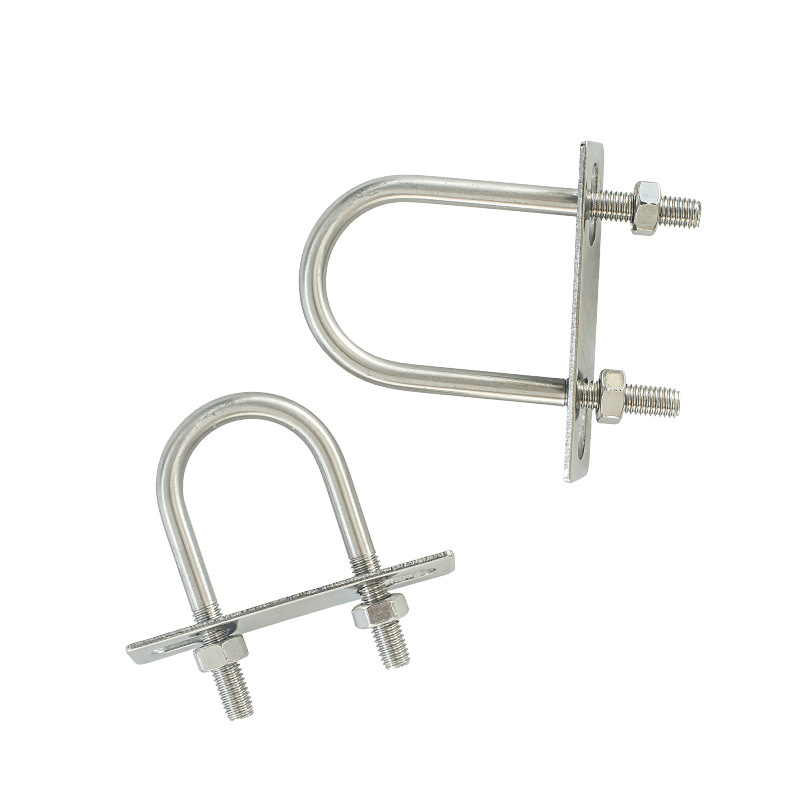
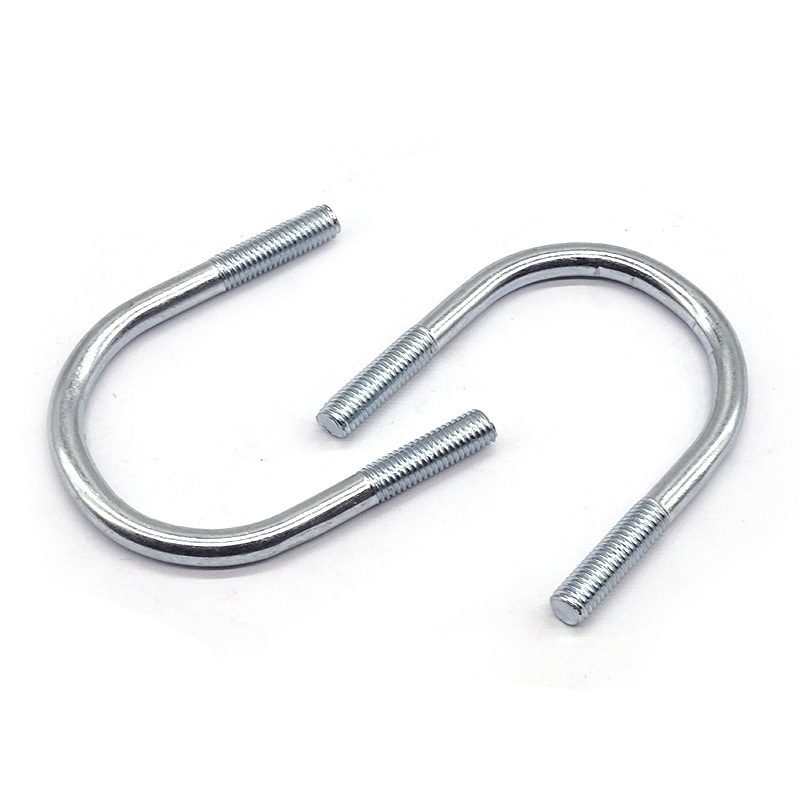
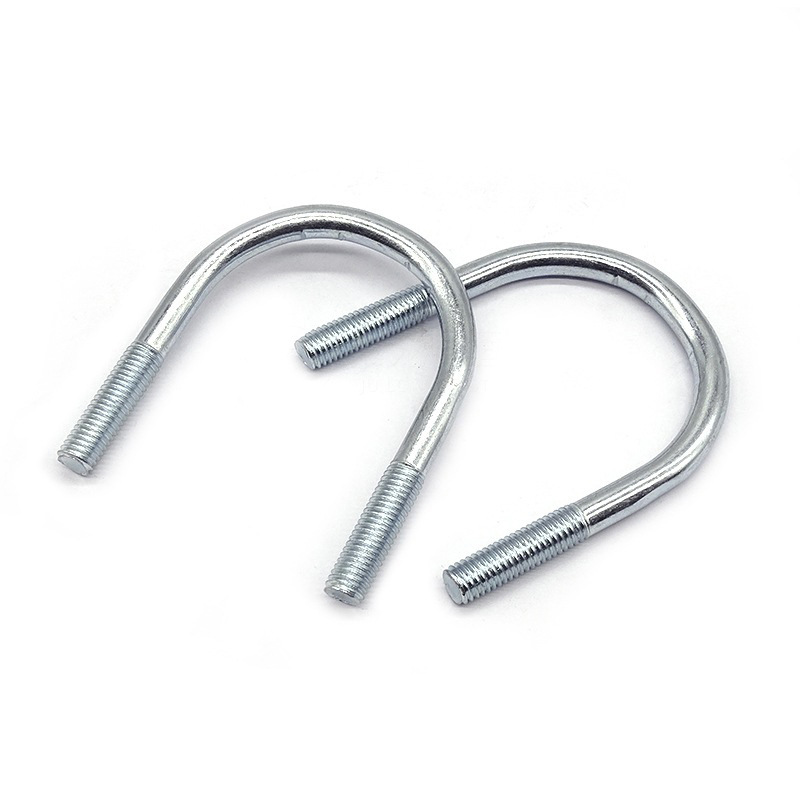
suspension U bolt, also known as steel spring U-bolt or horseback bolt, is unique in its shape resembling the letter "U". The U-shaped curved part at both ends is machined with threads, which can be customized as coarse or fine teeth according to your needs, including full threads and non-full threads. The product can be fixed together with nuts and washers.
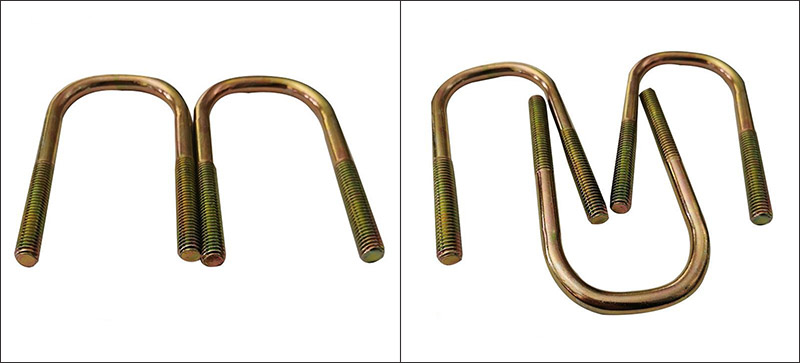
Product type
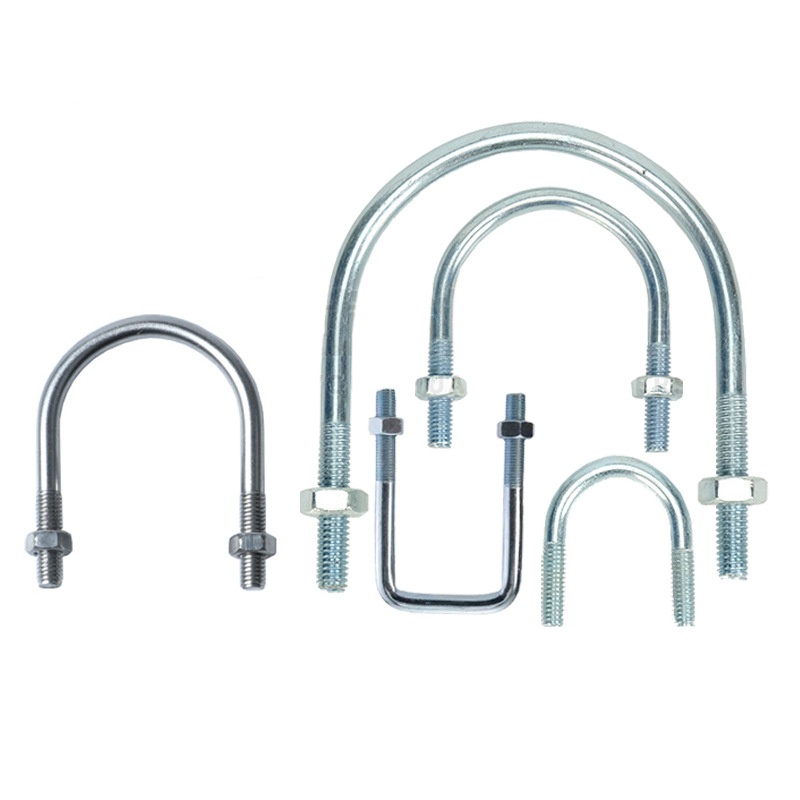
Depending on the different shapes of the curves, they can be mainly classified into the following types:
Round Bend: The bent part is in a circular arc shape, which is the most common type and is suitable for most steel spring suspension systems.
Square Bend: The bent part is in the form of a right-angled rectangle, suitable for installation scenarios where additional clearance is required or when fitting with square components.
Parallel U-Bolt: The diameters of the legs are consistent, the strength is uniform, and it is suitable for heavy-duty applications. It is a common choice for heavy trucks and trailers.
Aperted U-Bolt: One end is wider and the other end is narrower, precisely matching the contour of the leaf spring, providing more accurate axle positioning, and is commonly used in OEM factory configurations.
Core function
In the vehicle suspension system, the U-bolt serves as a crucial fastening component. Its main function is to firmly secure the axle and the leaf spring pack together, ensuring that during vehicle operation, the axle and the suspension maintain precise alignment.
Applicable vehicle models and application scenarios
suspension U bolt are widely used in various commercial vehicles and special vehicles:
Light Trucks: Urban logistics vehicles, pickup trucks, small vans
Heavy-duty trucks: Long-distance tractor trucks, dump trucks, concrete mixer trucks
Trailers: Semi-trailers, Full trailers, Flatbed trailers
Buses: Urban buses, tourist buses, school buses
Off-road Vehicles: Off-road vehicles, 4x4 modified vehicles, military vehicles
Construction machinery and agricultural machinery: Excavators, loaders, tractors, harvesters
Furthermore, in industrial sectors such as mining equipment, construction machinery, and railway vehicles, U-bolts can also withstand high-intensity vibrations and impact loads.
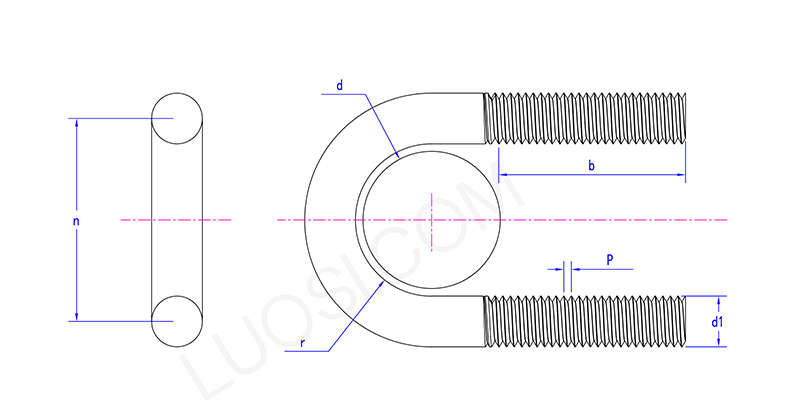
| Mon | Φ60 | Φ76 | Φ83 | Φ89 | Φ102 | Φ108 | Φ114 | Φ133 | Φ140 | Φ159 | Φ165 |
| d1 | M12 | M12 | M12 | M12 | M16 | M16 | M16 | M16 | M16 | M16 | M16 |
| n | 76 | 92 | 98 | 104 | 122 | 128 | 134 | 154 | 160 | 180 | 186 |
| P | 1.75 | 1.75 | 1.75 | 1.75 | 2 | 2 | 2 | 2 | 2 | 2 | 2 |
| r | 32 | 40 | 43 | 46 | 53 | 56 | 59 | 69 | 72 | 82 | 85 |
Replacement and Installation Precautions
The suspension U bolt is a high-stress component. Over time, it may lose its preload due to fatigue, stretching or corrosion. Therefore, new U-bolts must be replaced in the following situations:
After each disassembly: After each disassembly of the leaf spring or suspension components, a new U-bolt must be replaced. Reusing the old U-bolt will result in a significant decrease in clamping force (up to 55% or more reduction).
When upgrading the suspension: When installing the lift kit or replacing the thickened leaf springs, U-bolts of the appropriate length and span must be replaced.
Regular inspection: It is recommended to check the torque of the U-bolt after a certain mileage has been covered, and perform preventive replacement based on the vehicle's service life.
During installation, it is essential to use a torque wrench to tighten the screws in accordance with the specified values in a step-by-step and symmetrical manner. After a certain mileage has been driven, re-tighten the screws again to ensure that the clamping force meets the requirements.
Hot Tags: Suspension U Bolt, China, Manufacturer, Supplier, Factory
Related Category
Hexagon Head Bolt
Hexagon Head Flange Bolt
Square Head Bolt
Round Head Bolt
Countersunk Bolt
Knuckle Bolt
T-bolt
U Bolt
Foundation Bolts
Anchor Bolt
Hub Bolt
Hexalobular Socket Pan Head Bolt
Twelve Angle Bolt
Send Inquiry
Please Feel free to give your inquiry in the form below. We will reply you in 24 hours.