- English
- Español
- Português
- русский
- Français
- 日本語
- Deutsch
- tiếng Việt
- Italiano
- Nederlands
- ภาษาไทย
- Polski
- 한국어
- Svenska
- magyar
- Malay
- বাংলা ভাষার
- Dansk
- Suomi
- हिन्दी
- Pilipino
- Türkçe
- Gaeilge
- العربية
- Indonesia
- Norsk
- تمل
- český
- ελληνικά
- український
- Javanese
- فارسی
- தமிழ்
- తెలుగు
- नेपाली
- Burmese
- български
- ລາວ
- Latine
- Қазақша
- Euskal
- Azərbaycan
- Slovenský jazyk
- Македонски
- Lietuvos
- Eesti Keel
- Română
- Slovenski
- मराठी
- Srpski језик

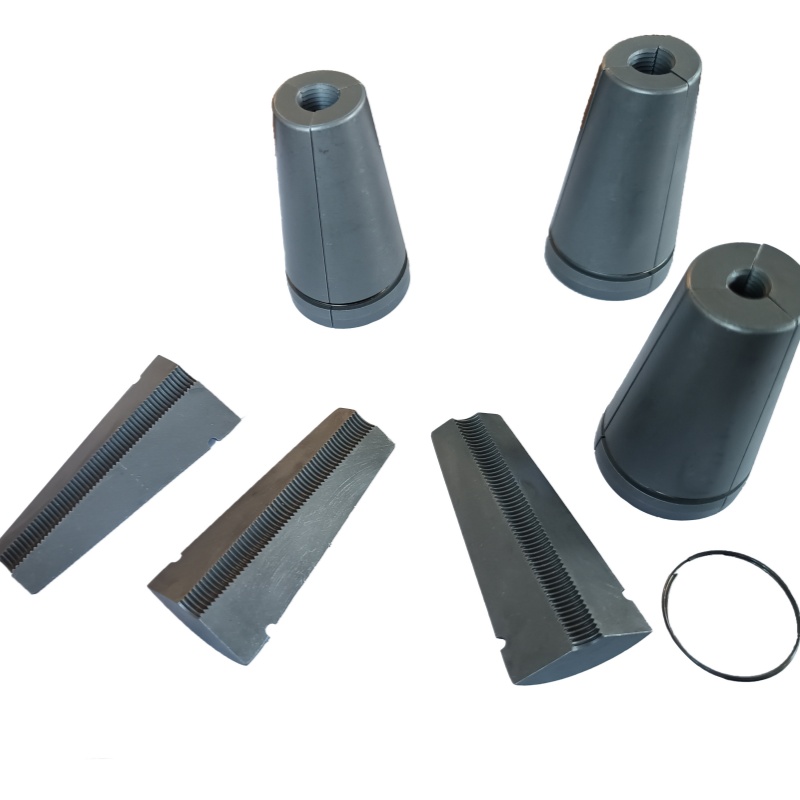
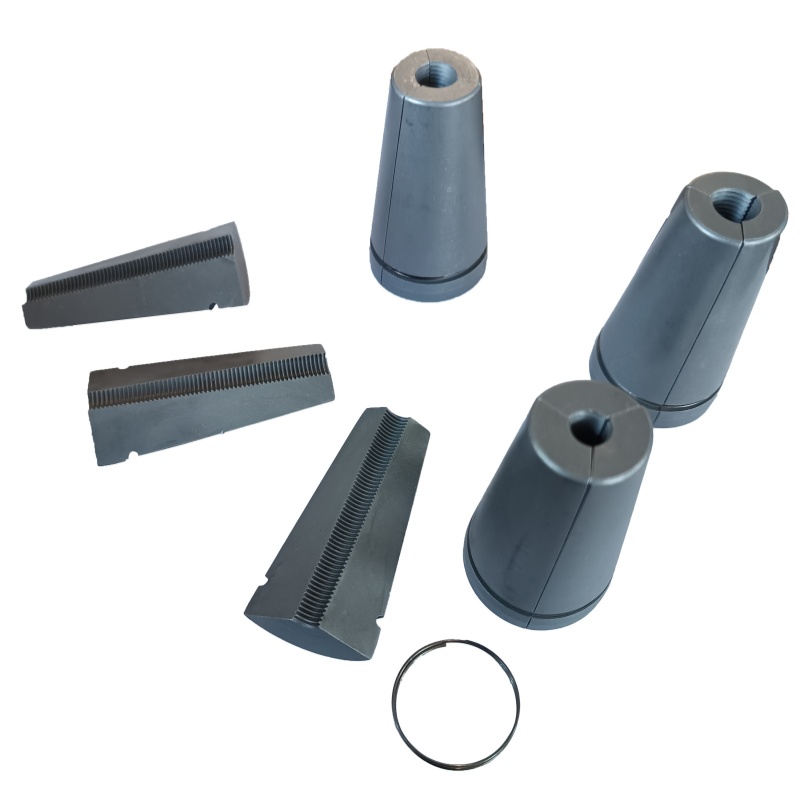
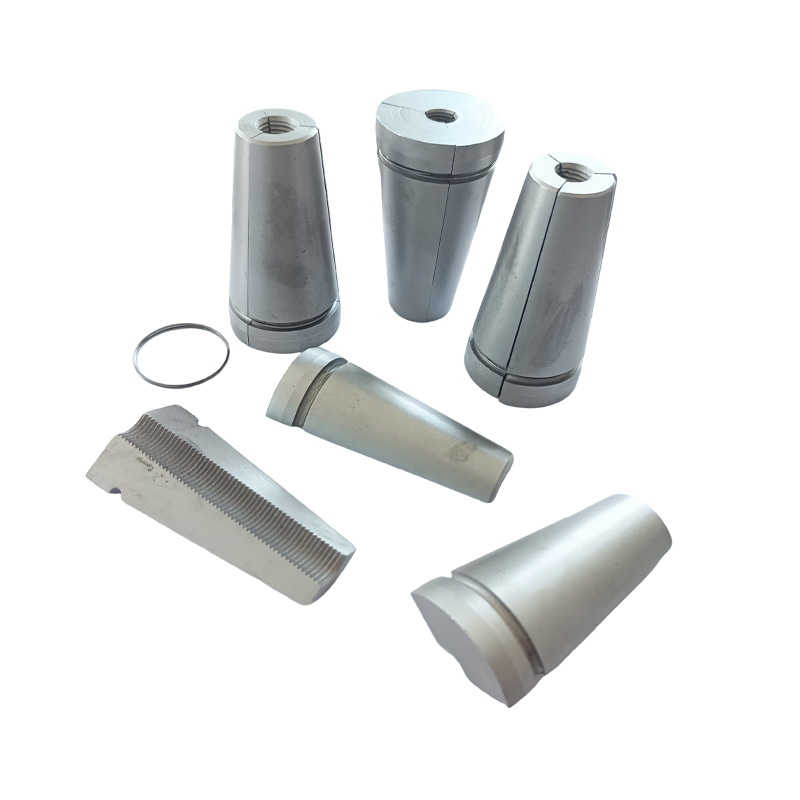
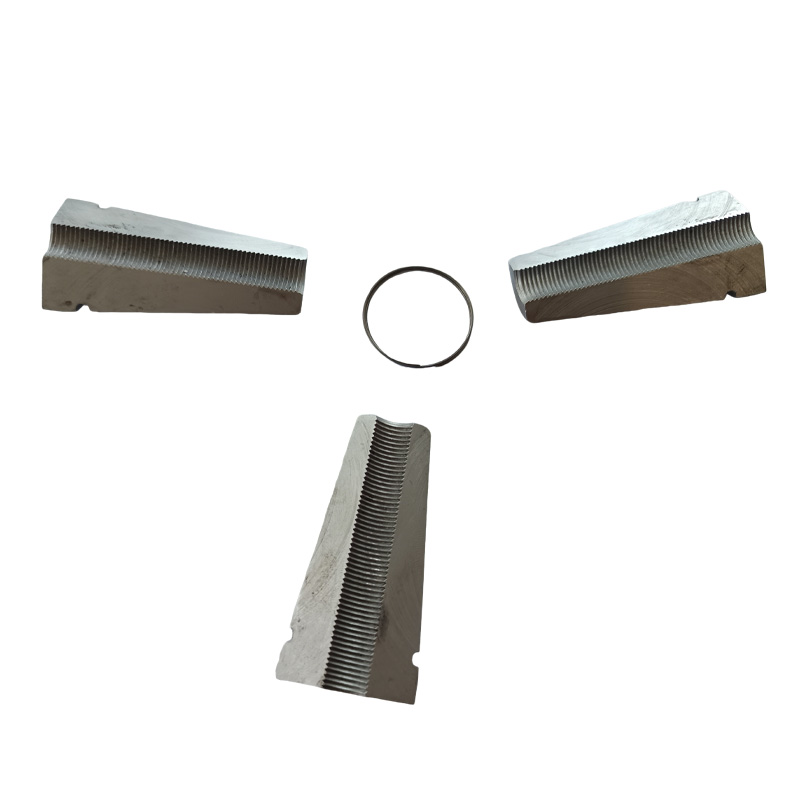
Anchor Wedges for Post Tension Griping
For bulk purchase of Xiaoguo® Anchor Wedges for Post Tension Griping, we offer non-standard sizes, laser-engraved brand logos, and customized packaging. We can provide matching products ranging from single holes to 55 holes of anchor blocks, meeting all the specific requirements of various engineering projects.
Send Inquiry
Product Description
Working Principle
The working principle of Anchor Wedges for Post Tension Griping is based on two mechanisms: Wedge Self-locking and frictional force transmission.
(1)System composition
A complete anchoring system usually consists of:
Steel strands (pre-stressing tendons): They bear the tension force.
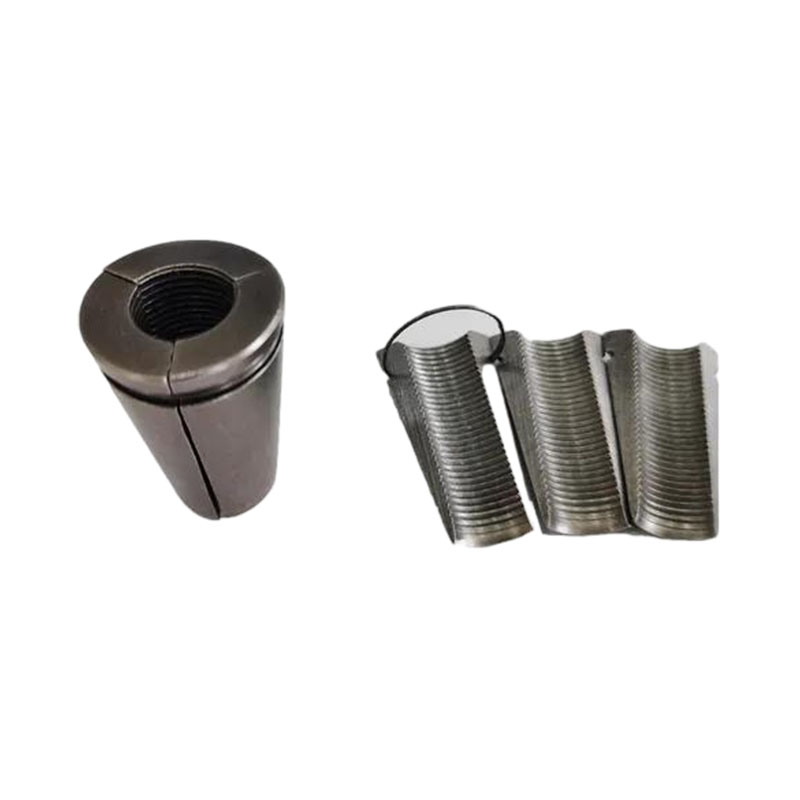
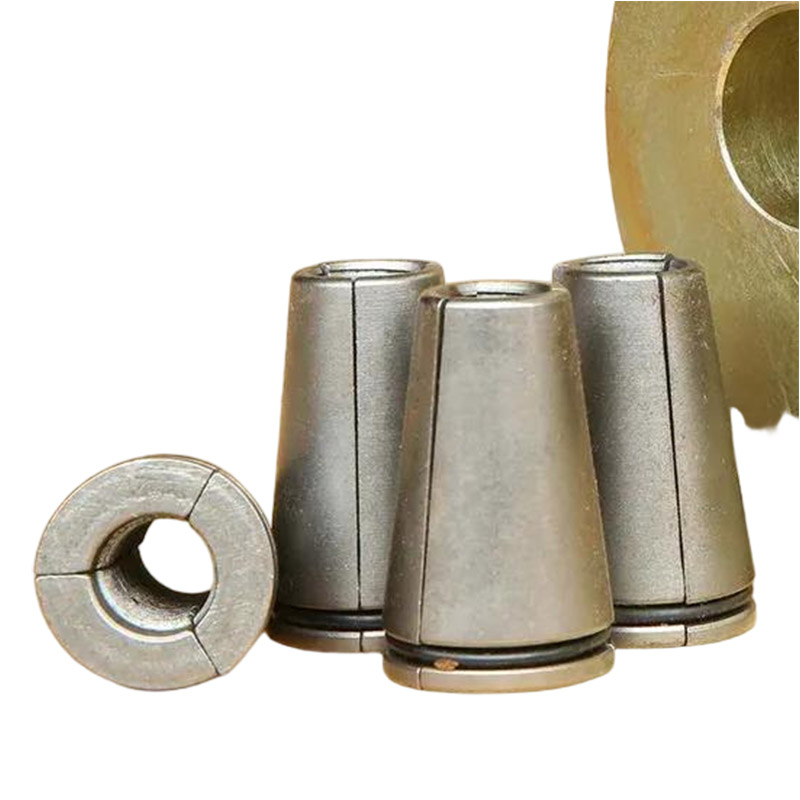
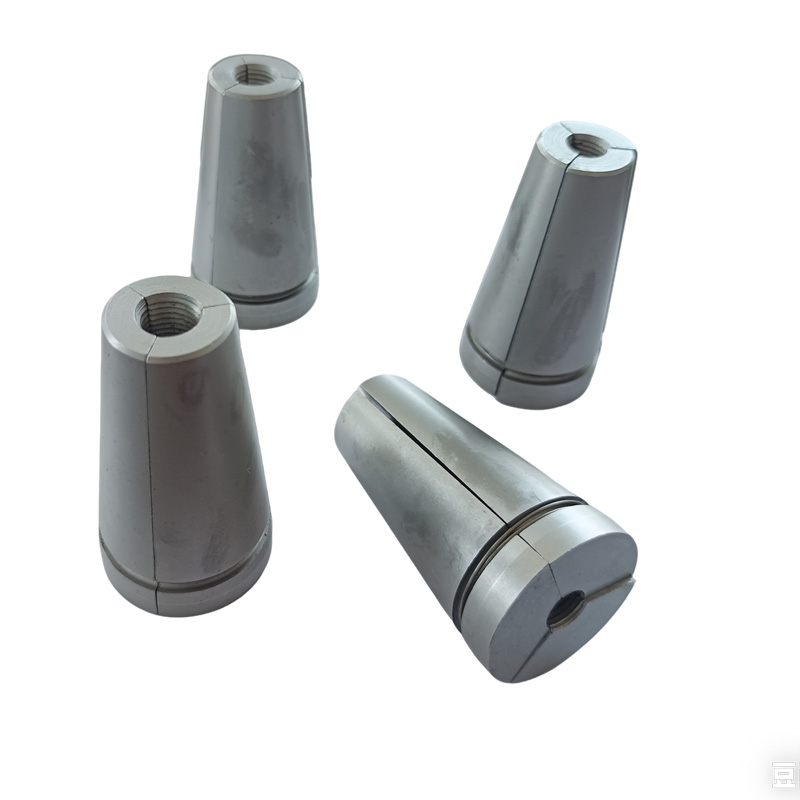
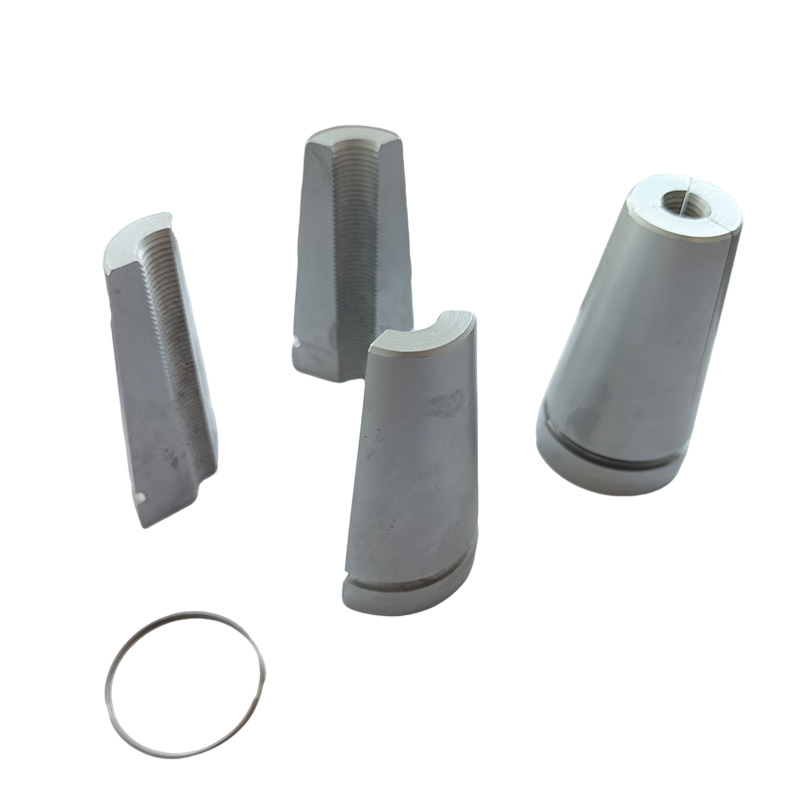
Wedges (clamping plates): Composed of two or three pieces, forming a conical clamping unit, with ridges on the inner surface.
Anchor plates: With conical holes, the hole cone angle matching the outer cone angle of the wedge (typically about 6°55′).
Anchor pads: Transfer the pressure to the concrete and play a local bearing role.
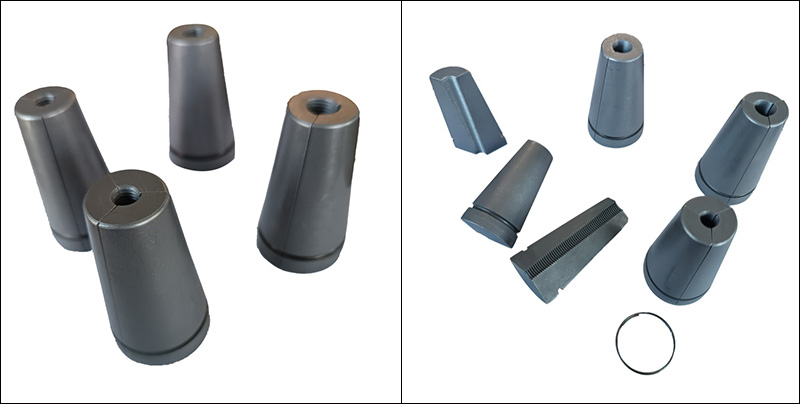
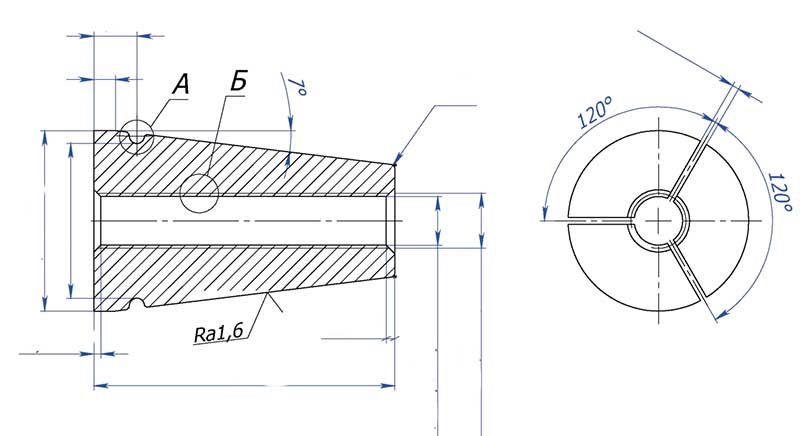
(2)Work Process
Tensioning Stage: The tensioning jack stretches the steel strands. At this point, the Anchor Wedges for Post Tension Griping is not yet fully wedged in, and the steel strands can move freely.
Fixation stage: Once the designed tension force is reached, the hydraulic jack retracts to unload. Due to the contact between the outer conical surface of the wedge block and the inner wall of the anchor plate's conical hole, a positive pressure is generated.
Self-locking formation: The contraction force of the steel strand causes the pressure between the wedge block and the conical hole wall to increase sharply. When the friction force is equal to or greater than the contraction force of the steel strand, a static balance is formed between the wedge block and the steel strand, as well as between the wedge block and the anchor plate. The steel strand is then securely locked.
Prestress retention: Subsequently, the tension of the steel strands is entirely transferred to the concrete member through the Anchor Wedges for Post Tension Griping - anchor plate - anchor pad.
(3)Self-locking condition
Whether the wedge can achieve reliable self-locking depends on the relationship between the wedge angle (cone angle) and the friction coefficient. Theoretically, the self-locking condition is:
Half of the cone angle (α/2) ≤ arctan(μ)
Where μ is the friction coefficient between the wedge and the cone hole of the anchor plate.
(4)Function of the Tooth Pattern
The sharp tooth patterns on the inner surface of the wedge block are one of the key designs. During the tensioning and anchoring processes, the tooth patterns will embed into the tiny pits on the surface of the steel strands, resulting in mechanical interlocking.
Hot Tags: Anchor Wedges for Post Tension Griping, China, Manufacturer, Supplier, Factory
Related Category
Hot Dip Galvanized Billet Steel Wire
Galvanized Steel Wire For Optical Cables
Steel Strands
Round Wire Rope
Aircraft Steel Wire Rope
Stainless Steel Wire Rope
Gripper Wedge
Anchorage Gripper
Send Inquiry
Please Feel free to give your inquiry in the form below. We will reply you in 24 hours.