- English
- Español
- Português
- русский
- Français
- 日本語
- Deutsch
- tiếng Việt
- Italiano
- Nederlands
- ภาษาไทย
- Polski
- 한국어
- Svenska
- magyar
- Malay
- বাংলা ভাষার
- Dansk
- Suomi
- हिन्दी
- Pilipino
- Türkçe
- Gaeilge
- العربية
- Indonesia
- Norsk
- تمل
- český
- ελληνικά
- український
- Javanese
- فارسی
- தமிழ்
- తెలుగు
- नेपाली
- Burmese
- български
- ລາວ
- Latine
- Қазақша
- Euskal
- Azərbaycan
- Slovenský jazyk
- Македонски
- Lietuvos
- Eesti Keel
- Română
- Slovenski
- मराठी
- Srpski језик

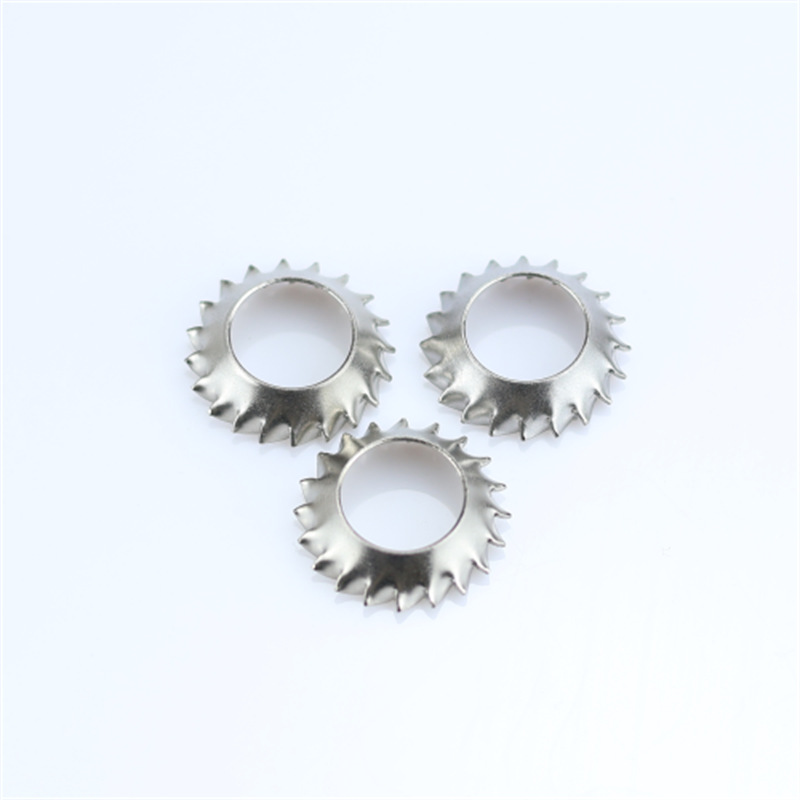
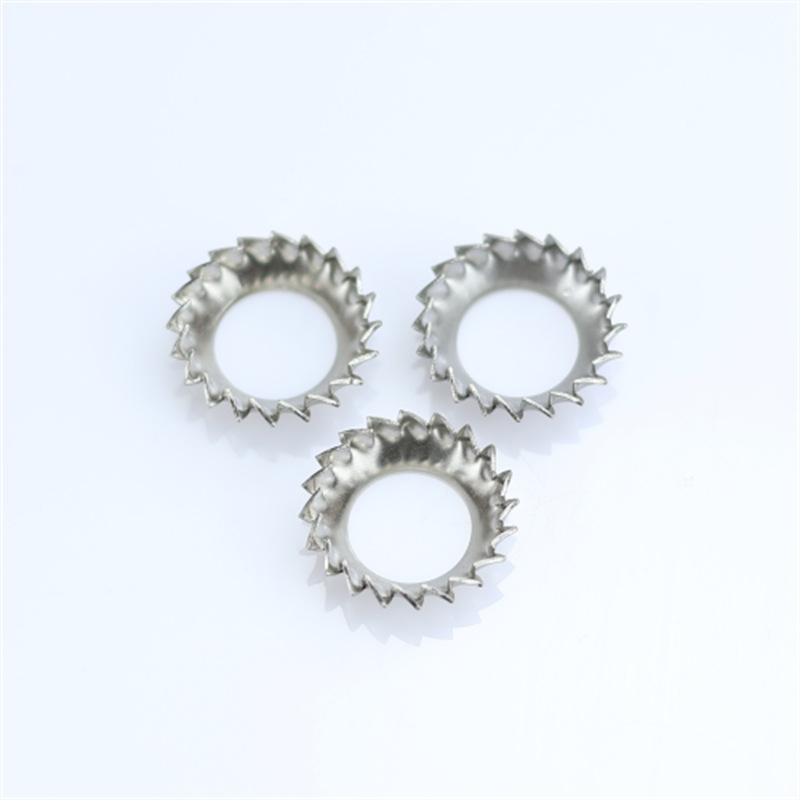
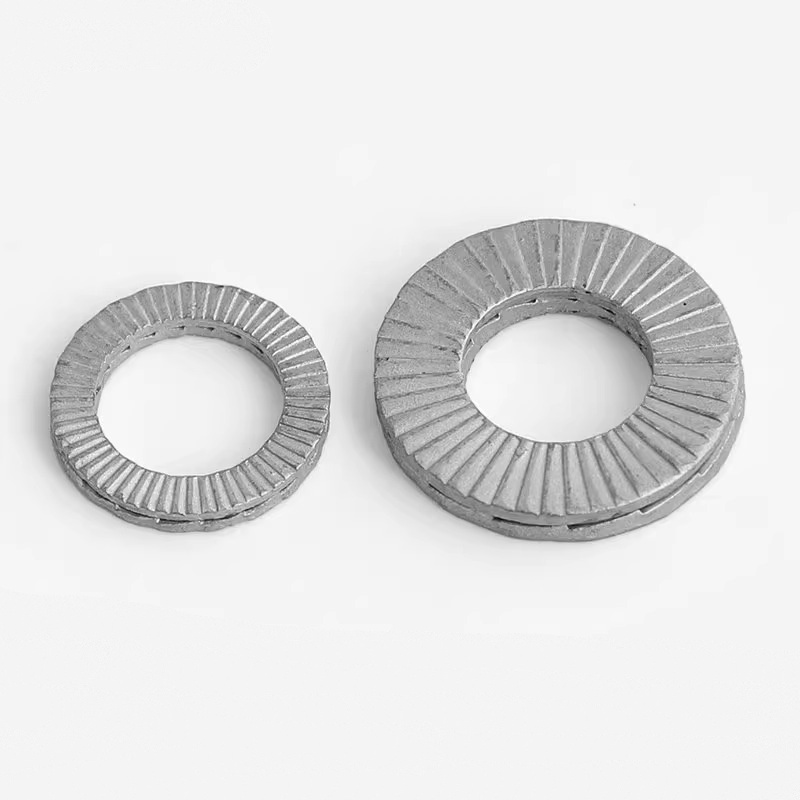
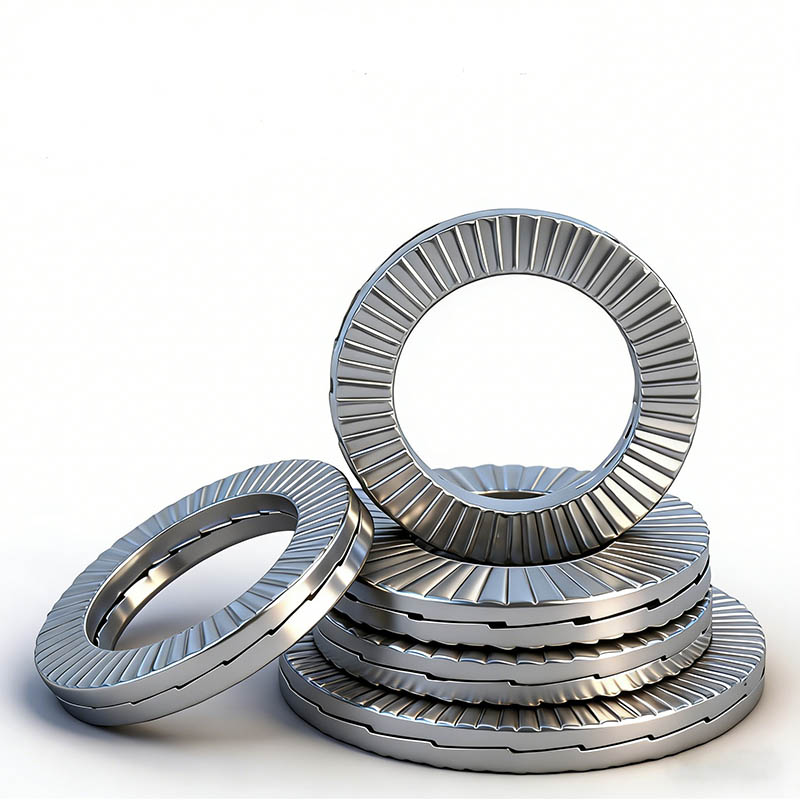
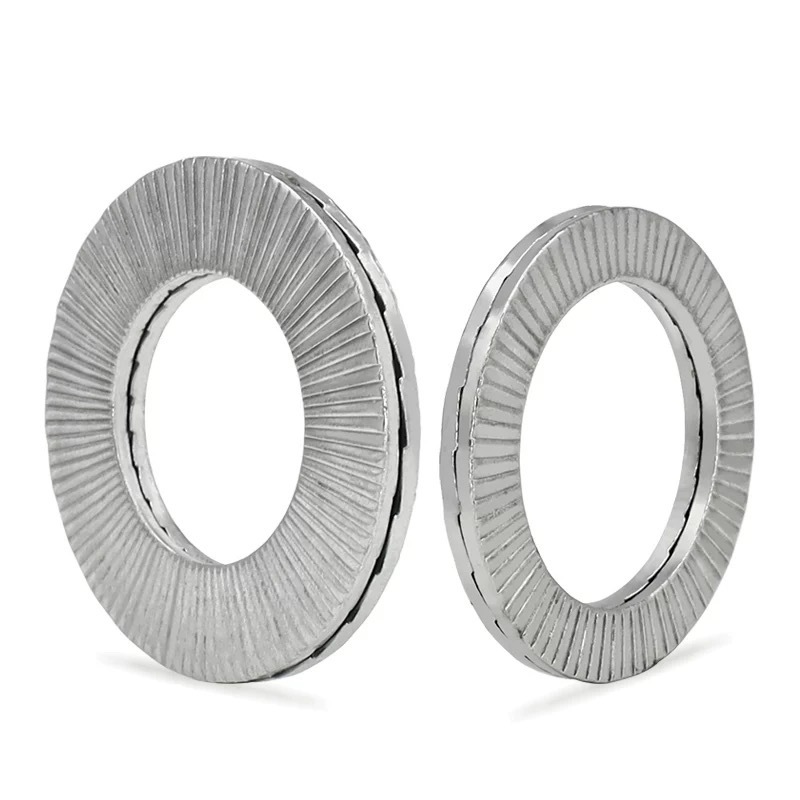
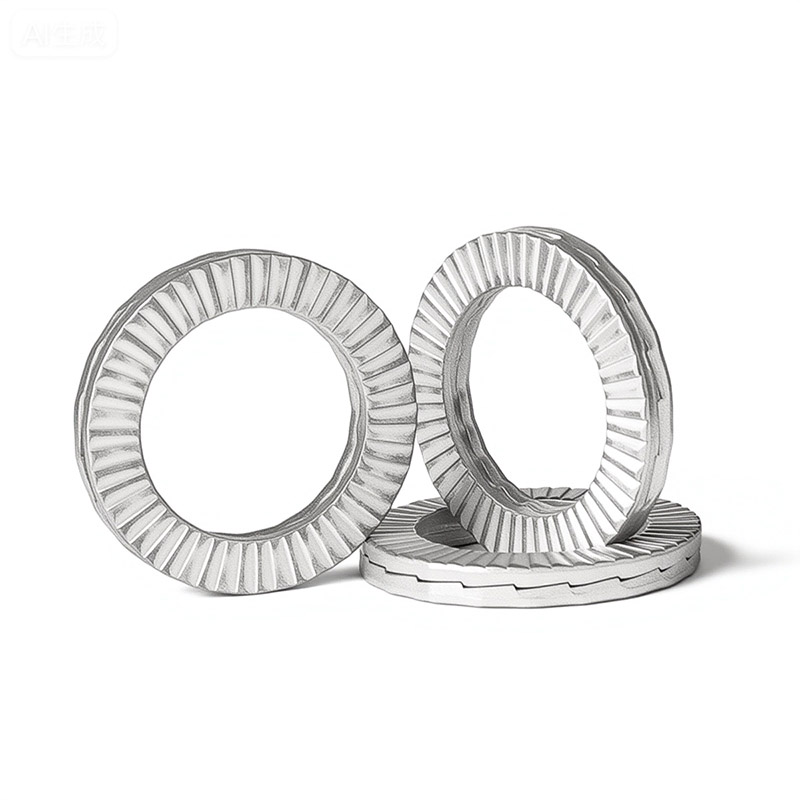
Toothed Lock washers With Countersunk
The Toothed lock washers with countersunk produced by Xiaoguo® factory are specially designed to match the standard countersunk screws. They are highly suitable for use in conjunction with countersunk screws.
Send Inquiry
Product Description
The structure of this type of Toothed lock washers with countersunk can be understood by its core features. Each part works together to achieve smooth installation, elastic pre-tightening, and strong anti-loosening.
Countersunk Profile
The inner hole of the Toothed lock washers with countersunk is machined with a 45° standard countersunk chamfer, matching the conical angle of the standard countersunk screws. It is suitable for countersunk cross-head and countersunk hexagonal screws.
During installation, the washer is fully inserted into the countersunk hole of the workpiece, allowing the screw head to be flush with or slightly lower than the surface of the workpiece.
Function: To ensure that the assembly surface is flat and smooth, without any protrusions, and does not cause discomfort when touched, nor interfere with other components.
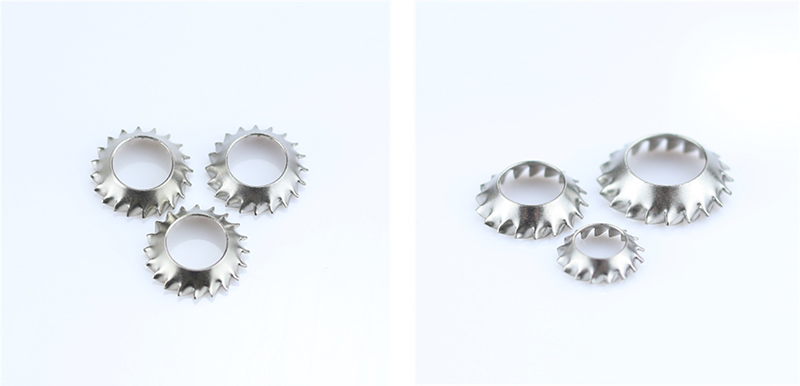
Conical / Dished Body
The Toothed lock washers with countersunk has a conical umbrella-like structure in the free state (with the middle being higher and the edges being lower, or the middle being lower and the edges being higher, depending on the specific design), and it has the inherent ability to deform elastically.
When the screw is tightened, the conical structure is flattened, generating a continuous axial rebound force.
Function: Provides elastic preload, compensates for the gaps caused by thermal expansion, wear or material deformation, and prevents the bolt from loosening.
External Serrated Teeth
On the outer circumference of the Toothed lock washers with countersunk, there is a uniform arrangement of a row of sharp radial teeth. The tooth shape is sharp and regular, with the tooth tips pointing outward.
When tightening, the teeth bite into the surface of the workpiece (or the contacting metal plane), forming multiple points of mechanical locking, significantly increasing the friction resistance and preventing the screw from rotating and loosening from its root cause.
Function: To resist rotational loosening caused by vibration or impact.
The teeth can pierce the paint, oxide layer or coating, thereby creating an electrical grounding path.
Integrated closed-loop body structure
The entire piece has no openings or joints, and is formed through a single stamping process. It is evenly stressed and unlikely to break. It has strong structural stability even under long-term vibration conditions.
Flat supporting base surface
The bottom surface that is in contact with the workpiece is a smooth plane without burrs. It will not scratch sheet metal, aluminum, painted parts, or plastic parts, and is suitable for precise and appearance assembly.
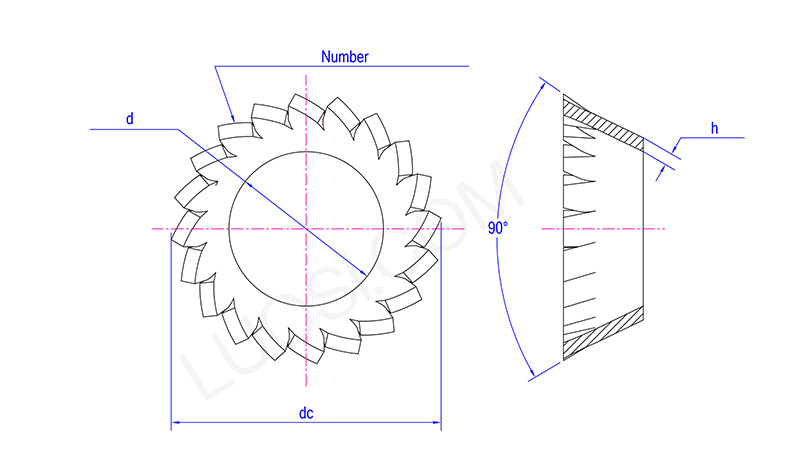
| Mon | φ2.5 | φ3 | φ3.5 | φ4 | φ5 | φ6 | φ8 | φ10 | φ12 | φ14 | φ 16 |
| d min | 2.7 | 3.2 | 3.7 | 4.3 | 5.3 | 6.4 | 8.4 | 10.5 | 13 | 15 | 17 |
| d max | 2.84 | 3.38 | 3.88 | 4.48 | 5.48 | 6.62 | 8.62 | 10.77 | 13.27 | 15.27 | 17.27 |
| dc | 5.1 | 6 | 7 | 8 | 9.8 | 11.8 | 15.3 | 19 | 23 | 26.2 | 30.2 |
| h | 0.2 | 0.2 | 0.25 | 0.25 | 0.3 | 0.4 | 0.4 | 0.5 | 0.5 | 0.6 | 0.6 |
| Number of Number of teeth min | 10 | 12 | 12 | 14 | 14 | 16 | 18 | 20 | 26 | 28 | 30 |
Hot Tags: Toothed Lock washers With Countersunk, China, Manufacturer, Supplier, Factory
Related Category
Send Inquiry
Please Feel free to give your inquiry in the form below. We will reply you in 24 hours.