- English
- Español
- Português
- русский
- Français
- 日本語
- Deutsch
- tiếng Việt
- Italiano
- Nederlands
- ภาษาไทย
- Polski
- 한국어
- Svenska
- magyar
- Malay
- বাংলা ভাষার
- Dansk
- Suomi
- हिन्दी
- Pilipino
- Türkçe
- Gaeilge
- العربية
- Indonesia
- Norsk
- تمل
- český
- ελληνικά
- український
- Javanese
- فارسی
- தமிழ்
- తెలుగు
- नेपाली
- Burmese
- български
- ລາວ
- Latine
- Қазақша
- Euskal
- Azərbaycan
- Slovenský jazyk
- Македонски
- Lietuvos
- Eesti Keel
- Română
- Slovenski
- मराठी
- Srpski језик

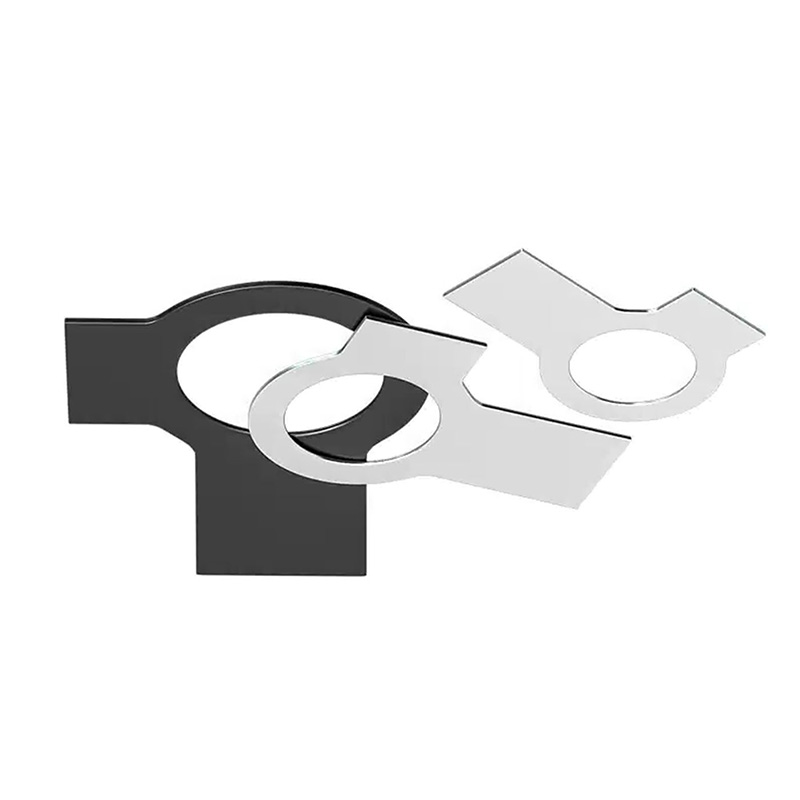
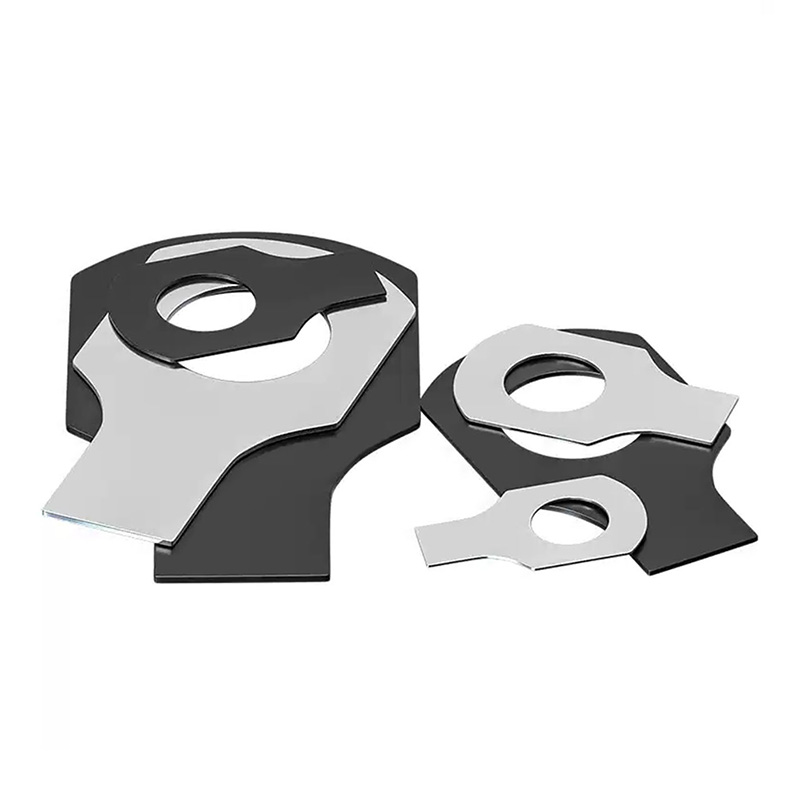
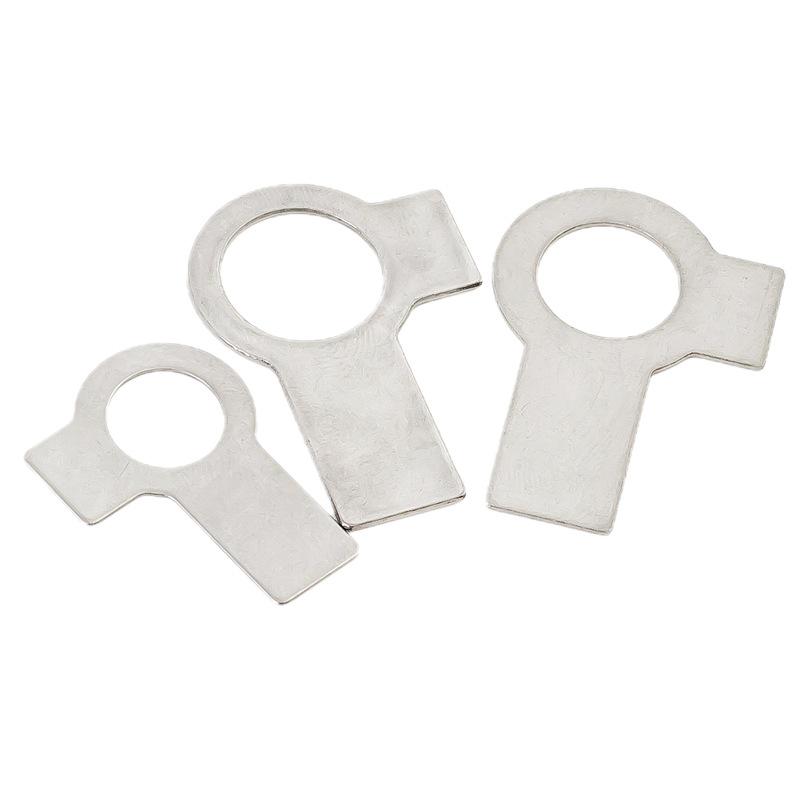
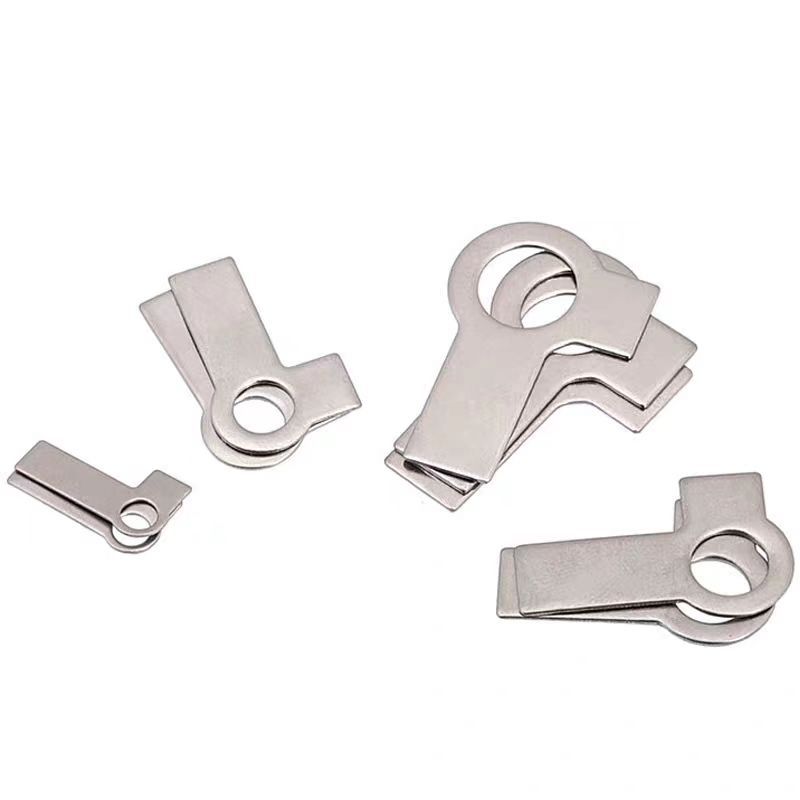
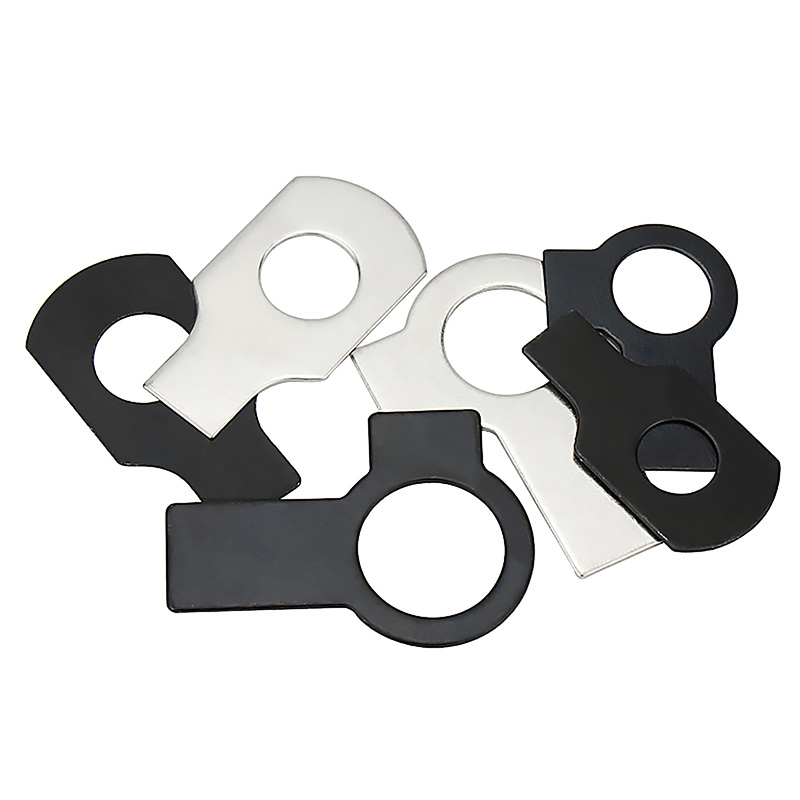
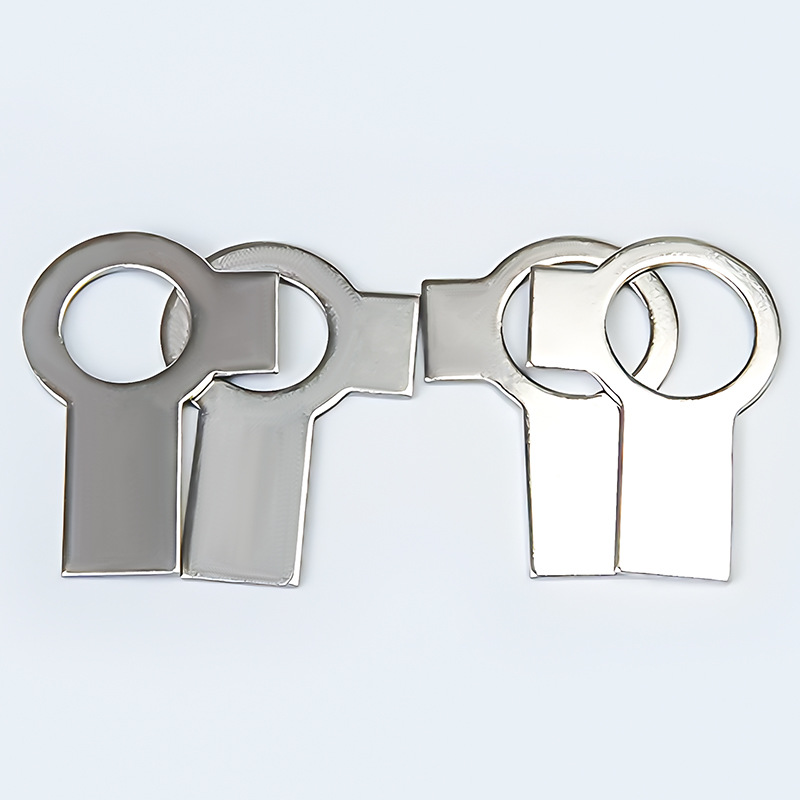
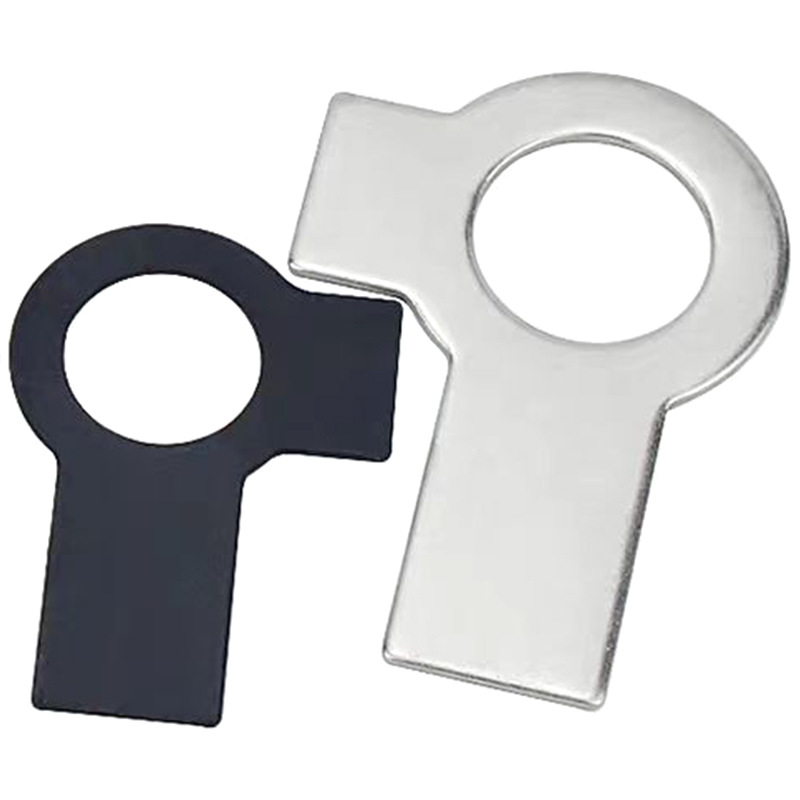
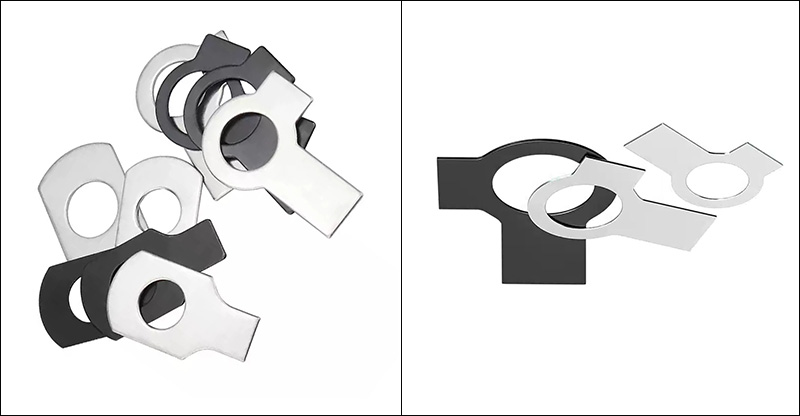
Tab Washers With Long Tab And Wings
The Tab Washers with Long Tab and Wings produced by the Xiaoguo® factory have extremely high reliability in terms of anti-loosening function. Even under continuous vibration and impact conditions, they can maintain a good locking state.
Send Inquiry
Product Description
The working principle of Tab Washers with Long Tab and Wings are based on pure mechanical locking, rather than friction or elasticity.The core mechanism is to bend the two ear pieces, thereby physically preventing the nut (or bolt head) from rotating relative to the workpiece.
【1】Specific work process
(1)Normal installation, with ear tabs reserved
Place the Tab Washers with Long Tab and Wings on the bolt, then tighten the nut. At this point, both ear tabs remain straight and have not been bent.
(2)Bend the short ears and lock the nuts
Use pliers to bend the short ears upwards, making them tightly adhere to one side of the nut. The short ears should rest against the plane of the nut to prevent it from rotating.
(3)Bend the long ears and fix the Tab Washers with Long Tab and Wings
Bend the long ears downward or to the side, so that they can grip the edge of the workpiece, insert into the slot holes on the workpiece or rest against the fixed protrusion.
【2】Final effect determination
Long ear fixed the washer onto the workpiece, ensuring that the washer could not rotate.
The short ears lock the nut and the washer together, and the nut cannot rotate either.
Since no relative motion can occur between the washer and the nut, the bolt connection is completely locked.
【3】The difference from friction-based anti-loosening mechanisms
Friction lock: It prevents rotation by creating resistance. Vibration may overcome this resistance and cause loosening.
Tab Washers with Long Tab and Wings: By means of direct physical interference, as long as the ear piece is not bent or damaged, the nut will absolutely not rotate. This locking mechanism is not affected by vibration, lubrication, or temperature changes.
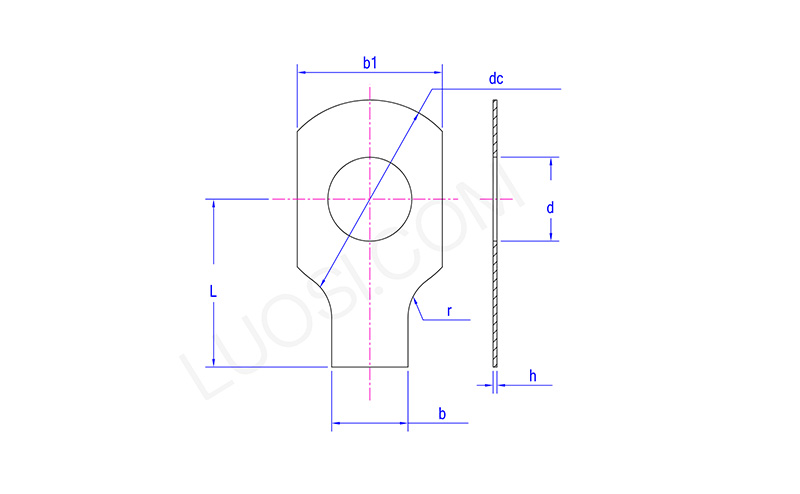
| Mon | φ3 | φ 4 | φ5 | φ6 | φ8 | φ10 | φ12 | φ14 | φ16 | φ18 | φ20 |
| d max | 3.5 | 4.5 | 5.6 | 6.76 | 8.76 | 10.93 | 13.43 | 15.43 | 17.43 | 19.52 | 21.52 |
| d min | 3.2 | 4.2 | 5.3 | 6.4 | 8.4 | 10.5 | 13 | 15 | 17 | 19 | 21 |
| dc max | 10 | 14 | 17 | 19 | 22 | 26 | 32 | 32 | 40 | 45 | 45 |
| dc min | 9.64 | 13.57 | 16.57 | 18.48 | 21.48 | 25.48 | 31.38 | 31.38 | 39.38 | 44.38 | 44.38 |
| L min | 11.65 | 13.65 | 15.65 | 17.65 | 19.58 | 21.58 | 27.58 | 27.58 | 31.5 | 35.5 | 35.5 |
| L max | 12.35 | 14.35 | 16.35 | 18.35 | 20.42 | 22.42 | 28.42 | 28.42 | 32.5 | 36.5 | 36.5 |
| h | 0.4 | 0.4 | 0.5 | 0.5 | 0.5 | 0.5 | 1 | 1 | 1 | 1 | 1 |
| b1 | 7 | 9 | 11 | 12 | 16 | 19 | 21 | 25 | 32 | 38 | 38 |
| r | 2.5 | 2.5 | 2.5 | 4 | 4 | 6 | 10 | 10 | 10 | 10 | 10 |
FAQ
(1)What temperature range can they handle?
Carbon steel: -50°C to +200°C. Stainless steel: -160°C to +500°C.
(2)What sizes do you offer?
DIN 463 covers M3 up to M45. Other sizes can be custom made.
(3)Do you have a salt spray test report?
Yes, for zinc flake coating we can provide 1000+ hours reports; for regular zinc plating, 72 hours.
(4) Can you make custom tab washers?
Yes, based on your drawing or sample. Tell us size, thickness, material, and tab dimensions.
Hot Tags: Tab Washers With Long Tab And Wings, China, Manufacturer, Supplier, Factory
Related Category
Send Inquiry
Please Feel free to give your inquiry in the form below. We will reply you in 24 hours.