- English
- Español
- Português
- русский
- Français
- 日本語
- Deutsch
- tiếng Việt
- Italiano
- Nederlands
- ภาษาไทย
- Polski
- 한국어
- Svenska
- magyar
- Malay
- বাংলা ভাষার
- Dansk
- Suomi
- हिन्दी
- Pilipino
- Türkçe
- Gaeilge
- العربية
- Indonesia
- Norsk
- تمل
- český
- ελληνικά
- український
- Javanese
- فارسی
- தமிழ்
- తెలుగు
- नेपाली
- Burmese
- български
- ລາວ
- Latine
- Қазақша
- Euskal
- Azərbaycan
- Slovenský jazyk
- Македонски
- Lietuvos
- Eesti Keel
- Română
- Slovenski
- मराठी
- Srpski језик

Home > Products > Self Drilling And Wood Screws > Slotted Tapping Screw > Slotted Countersunk Flat Head Screw
Slotted Countersunk Flat Head Screw
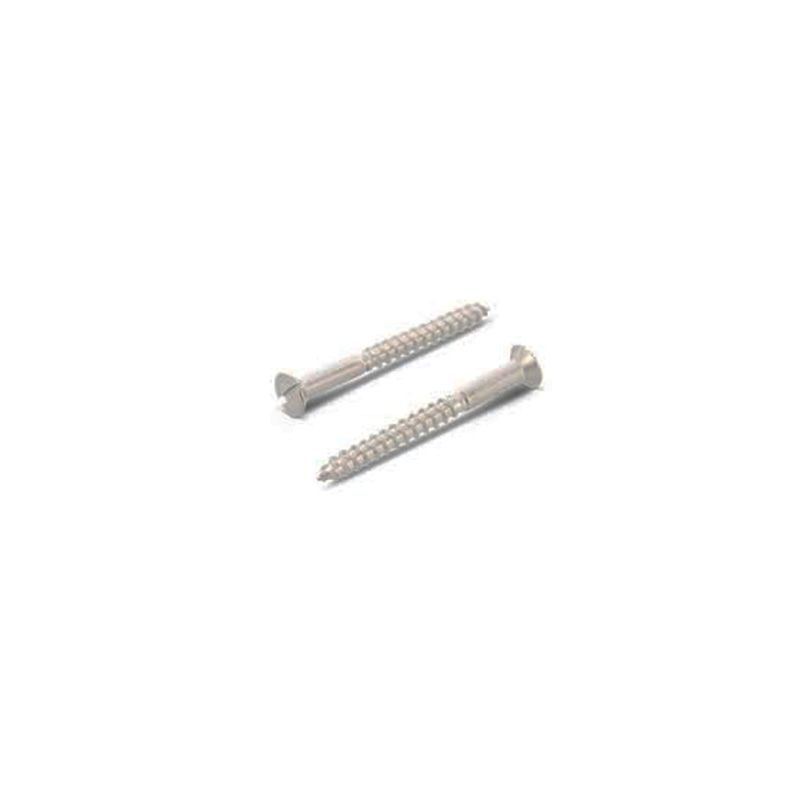
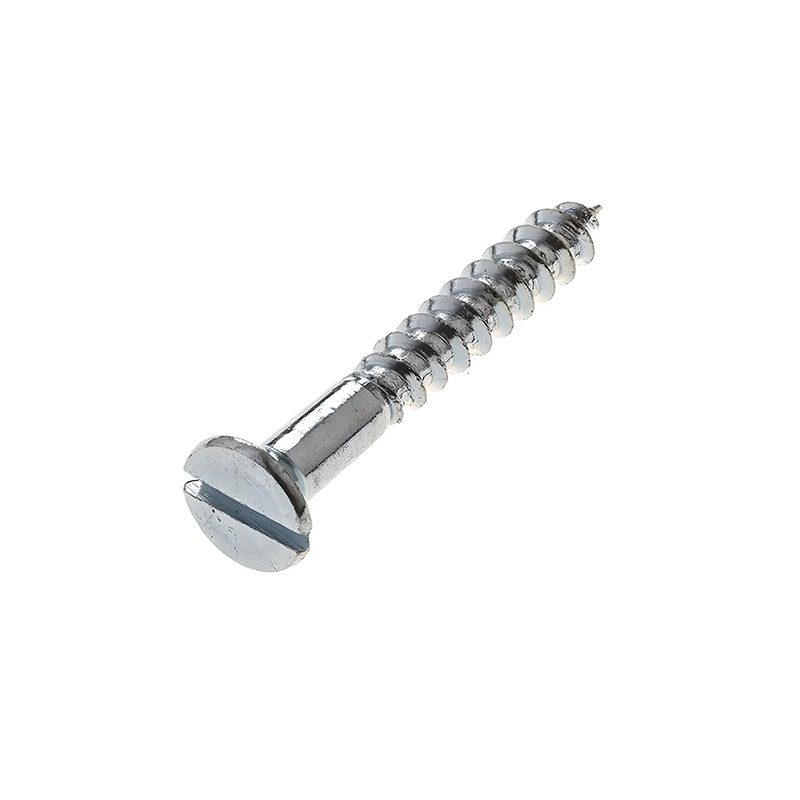
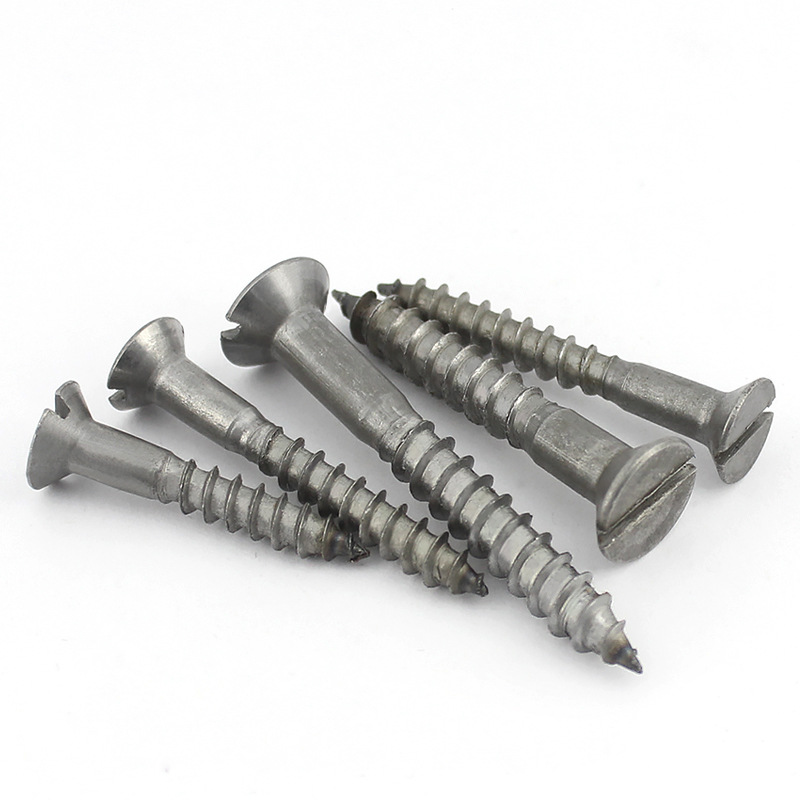
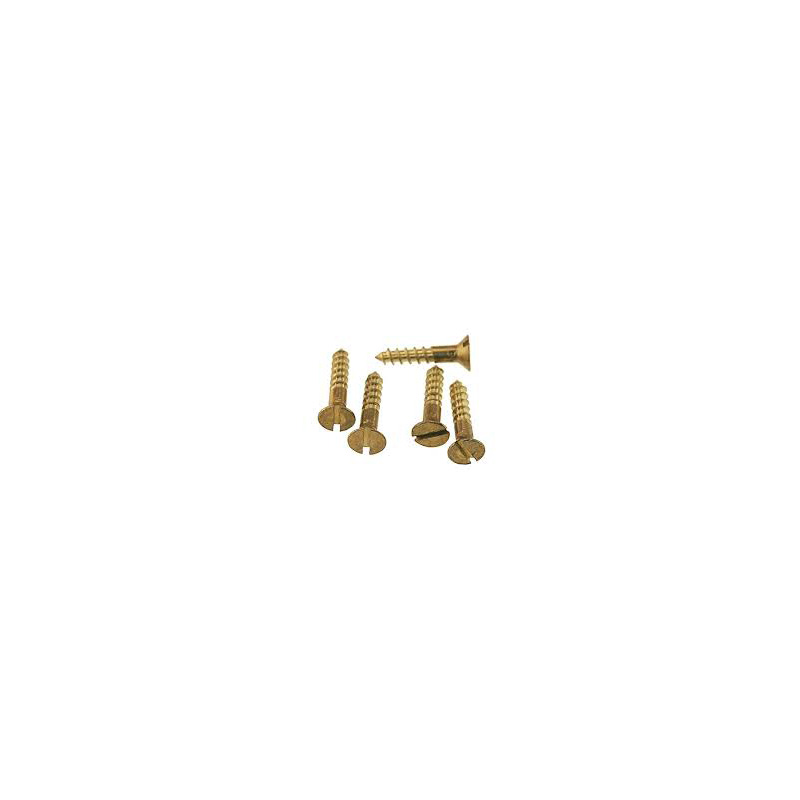
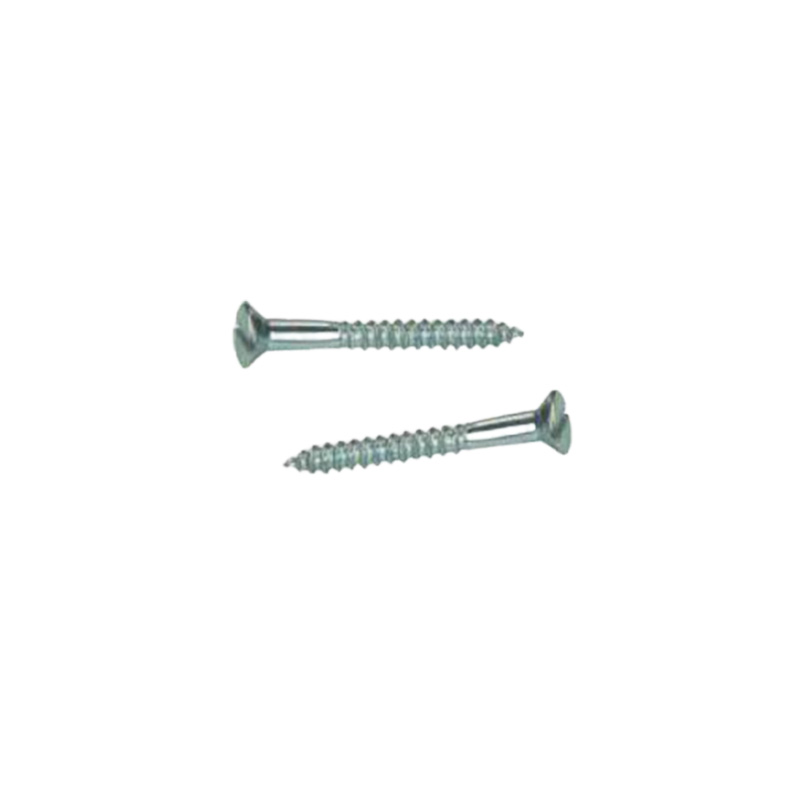
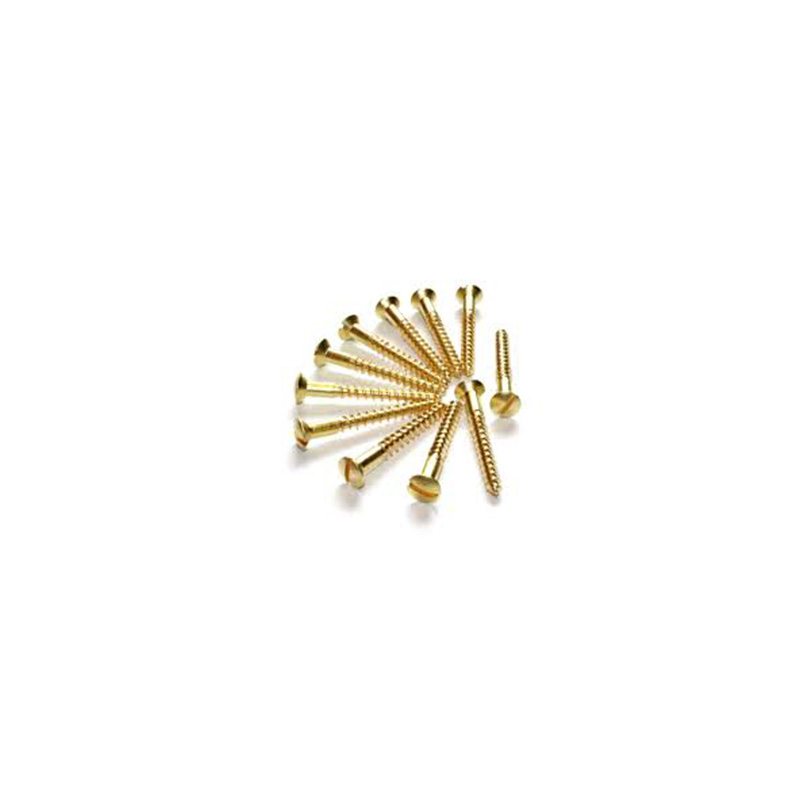
Xiaoguo®factory Slotted Countersunk Flat Head Screw come in full thread and half thread types. They fit different usage situations well and can meet most buyers' common demands.
Send Inquiry
Product Description
The commonly used materials for Slotted Countersunk Flat Head Screw is mainly three types: carbon steel, stainless steel and brass.
1.Carbon steel
Carbon steel is the most common material for Slotted Countersunk Flat Head Screw on the market. It has sufficient strength and is relatively inexpensive. However, carbon steel itself is prone to rust, so surface treatment is necessary.
Application scenarios: Indoor furniture, cabinet bodies, decoration, wood product processing. No problem in dry environments, but high anti-corrosion treatment is required in humid environments or outdoors.
2.Stainless Steel
Stainless steel has chromium inside, and it forms a natural oxide layer on the surface. It can stop rust without extra surface coating. It is a little harder than carbon steel, yet costs more.
It works well for outdoor wooden frames, balcony parts, garden furniture, seaside items and food related equipment.
It keeps original metal silver tone with no extra finish. Passivation treatment can be done to get better rust resistance if needed.
3.Brass
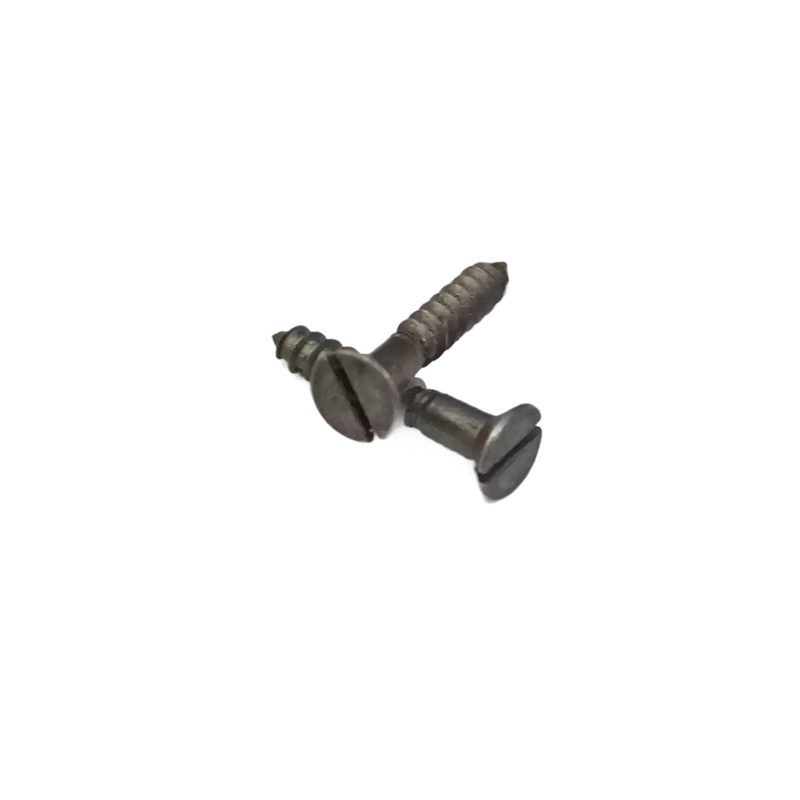
These Slotted Countersunk Flat Head Screw is made from copper zinc alloy with yellow gold look, good for decoration use. They are not as strong as carbon steel, but have practical perks.
They do not rust easily and have no magnetism, fit places that cannot accept magnetic influence. They will not create sparks, safe for explosion proof areas. They also conduct electricity well for wood joint electric connection use.
Common uses include high grade furniture, old furniture repair, decorative fittings, boat interior parts and electric grounding installation.
FAQ
(1)Can the Slotted Countersunk Flat Head Screw be reused?
OK, but please check the condition: the slot is intact, the threads are not severely worn, and the head is not deformed and can be reused.
(2)How to process blind holes?
Use a 90° blind hole drill bit to pre-drill conical blind holes on the wood surface. The depth should be such that the screw head can fully sink into the hole and be level with the surface. It is recommended to conduct a trial drill to determine the depth.
(3)The slot of the screwdriver is prone to break. What should I do?
Make sure the size of the screwdriver matches the screw. Keep the screwdriver perpendicular to the screw and apply force evenly. Do not use the high-speed gear of the power tool. If the slot is damaged, you can use a broken wire removal tool or drill a hole with an electric drill and then remove the wire.
(4)What kind of screwdriver is needed for Slotted Countersunk Flat Head Screw?
Use a flat-head screwdriver. The width of the screwdriver head should be as close as possible to the length of the slot, and the thickness should be able to fit into the bottom of the slot. An incompatible screwdriver head is prone to slip out and damage the slot.
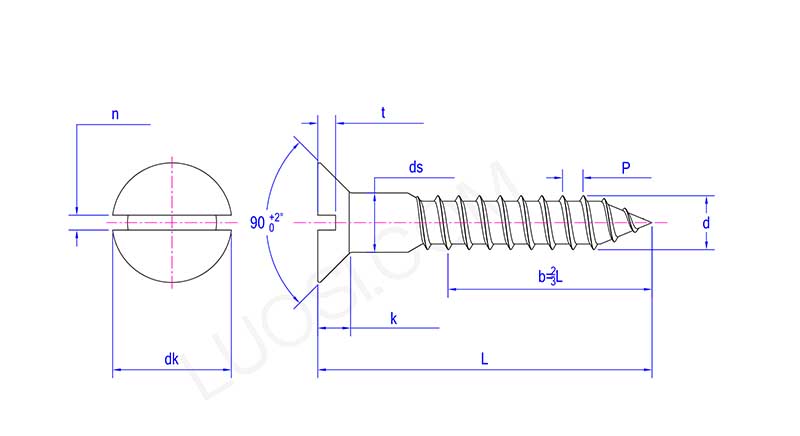
| Mon | 2.5 | 3 | 3.5 | 4 | 4.5 | 5 | 5.5 | 6 | 7 | 8 | 10 |
| P | 1 | 1.2 | 1.4 | 1.6 | 1.8 | 2 | 2.2 | 2.5 | 2.8 | 3 | 3.5 |
| ds min | 2.25 | 2.75 | 3.2 | 3.7 | 4.2 | 4.7 | 5.2 | 5.7 | 6.64 | 7.64 | 9.64 |
| ds max | 2.5 | 3 | 3.5 | 4 | 4.5 | 5 | 5.5 | 6 | 7 | 8 | 10 |
| dk max | 5 | 6 | 7 | 8 | 9 | 10 | 11 | 12 | 14 | 16 | 20 |
| dk min | 4.7 | 5.7 | 6.64 | 7.64 | 8.64 | 9.64 | 10.57 | 11.57 | 13.57 | 15.57 | 19.48 |
| k max | 1.4 | 1.7 | 2 | 2.2 | 2.7 | 3 | 3.2 | 3.5 | 4 | 4.5 | 5.8 |
| n min | 0.6 | 0.8 | 0.9 | 1 | 1.2 | 1.2 | 1.4 | 1.6 | 18 | 2 | 2.5 |
| n max | 0.85 | 1.05 | 1.15 | 1.35 | 1.55 | 1.55 | 1.75 | 1.95 | 2.15 | 2.35 | 2.85 |
| t max | 0.96 | 1.11 | 1.35 | 1.45 | 1.7 | 1.94 | 2.04 | 2.19 | 2.55 | 2.8 | 3.5 |
| t min | 0.64 | 0.79 | 0.95 | 1.05 | 1.3 | 1.46 | 1.56 | 1.71 | 1.95 | 2.2 | 2.9 |
The application scenarios of half threads and full threads
Slotted Countersunk Flat Head Screw is divided into half-threaded and full-threaded types. What are their respective applications? Here is the detailed introduction.
(1)half-threaded
The characteristic of a half-threaded screw is that the section near the head is a smooth shaft, while only the tail part has threads.
Typical Scenario 1: Connection of the crossbars of wooden tables and chairs
Typical Scenario 2: Assembly of Wooden Door Frames
Typical Scenario 3: Fixing the furniture panel to the frame
Typical Scenario 4: Installation of Hinges for Wooden Doors and Windows
(2)full-threaded
The threads of the full-threaded screws extend all the way from the top down to the tip.
Typical Scenario 1: Screws are only inserted into one layer of wood (such as for installing hinges and handles)
Typical Scenario 2: Requires the Maximum Pull-Out Resistance (Load-bearing, Suspended Structures)
Typical Scenario 3: Inserting into Hardwood or Man-made Board (MDF, Plywood)
Typical Scenario 4: Thin Plate Connection (The first plate is very thin)
Typical Scenario 5: Requires deep insertion into wood (long screws)
Hot Tags: Slotted Countersunk Flat Head Screw, China, Manufacturer, Supplier, Factory
Related Category
Slotted Tapping Screw
Cross Grooved Tapping Screws
Self Drilling Screws
Hexagonal Self-Drilling Screws With Groove
Hexagonal Head Self-Drilling Screws
Hexagonal And Square Groove Self-Drilling Screws
Quince-Grooved Self-Tapping Screws
Composite Grooved Self Tapping Screws
Triangle Locking Self-Extruding Screw
Automatic Quick Tooth Drilling Screws
Send Inquiry
Please Feel free to give your inquiry in the form below. We will reply you in 24 hours.