- English
- Español
- Português
- русский
- Français
- 日本語
- Deutsch
- tiếng Việt
- Italiano
- Nederlands
- ภาษาไทย
- Polski
- 한국어
- Svenska
- magyar
- Malay
- বাংলা ভাষার
- Dansk
- Suomi
- हिन्दी
- Pilipino
- Türkçe
- Gaeilge
- العربية
- Indonesia
- Norsk
- تمل
- český
- ελληνικά
- український
- Javanese
- فارسی
- தமிழ்
- తెలుగు
- नेपाली
- Burmese
- български
- ລາວ
- Latine
- Қазақша
- Euskal
- Azərbaycan
- Slovenský jazyk
- Македонски
- Lietuvos
- Eesti Keel
- Română
- Slovenski
- मराठी
- Srpski језик

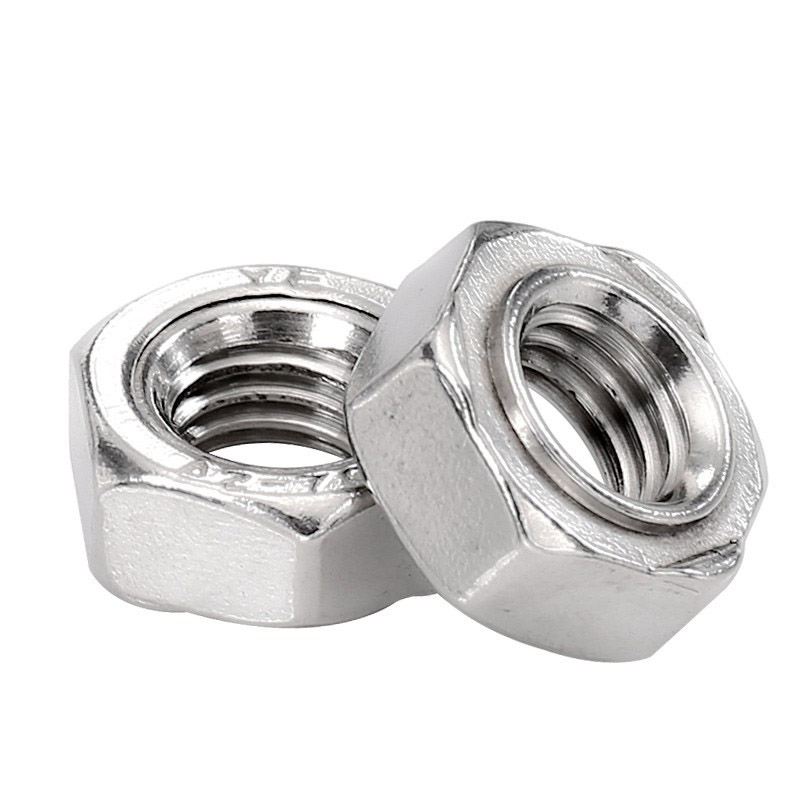
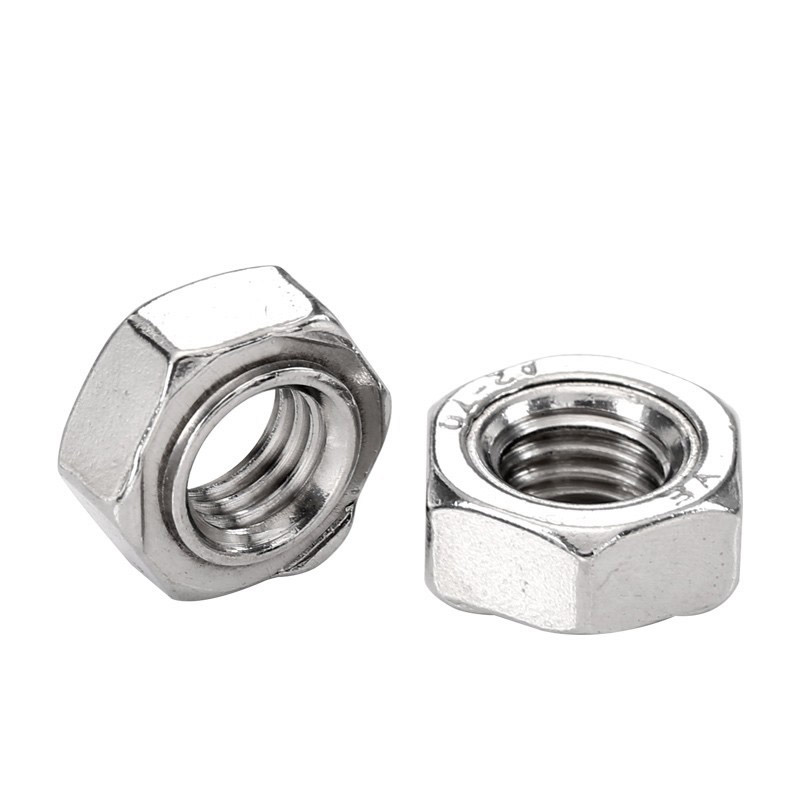
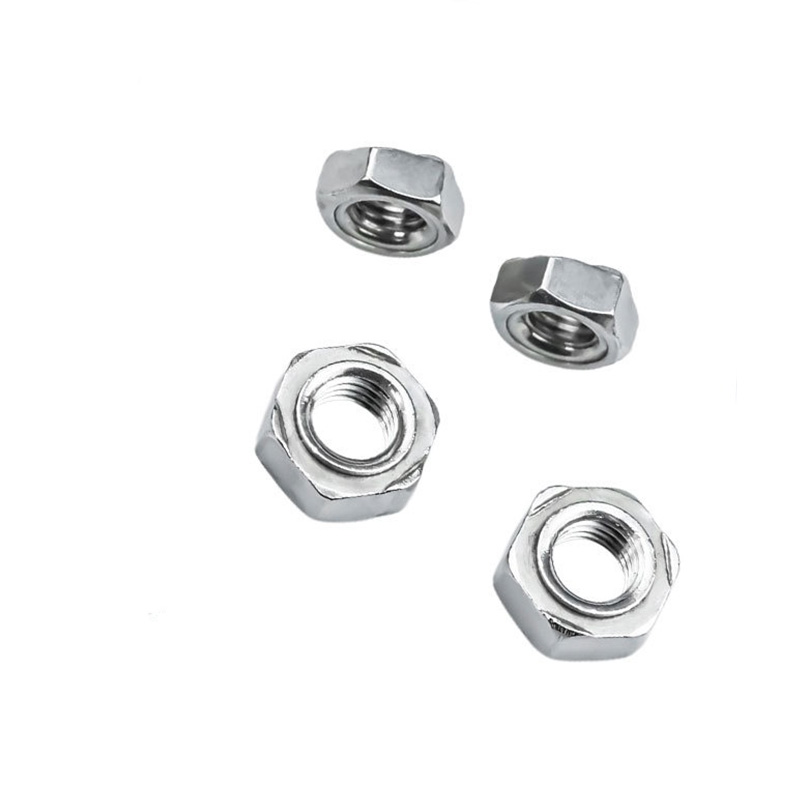
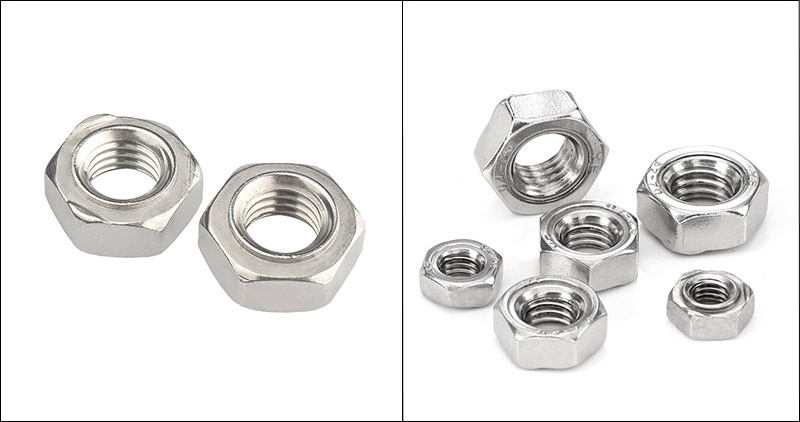
DIN 929 Hexagon Weld Nuts
As a China supplier, Xiaoguo® is always to bring premium quality DIN 929 Hexagon Weld Nuts with extremely high connection strength and a sturdy structure. The welding points will not loosen due to vibration and are suitable for equipment with frequent vibrations. Before purchasing, you can apply to receive free samples for testing.
Model:JIS B1196-1.1-1982
Send Inquiry
Product Description
The standard defined by DIN 929 for DIN 929 Hexagon Weld Nuts specifies the coarse and fine thread specifications for M3 to M16, and clearly defines key dimensions including the edge width and the nut height. These nuts are mostly of grade A precision and are typically made of steel with a carbon content of no more than 0.25%. They can be used in conjunction with bolts of various performance grades.
(1)Metric coarse thread size table (unit: mm)
| Thread specification d1 | Pitch P | Maximum width of opposite sides s (max) | Maximum height of nut m (max) | Minimum diagonal width e (min) | Weight per thousand pieces (kg) |
| M3 | 0.5 | 7.5 | 3 | 8.15 | 0.78 |
| M4 | 0.7 | 9 | 3.5 | 9.83 | 1.13 |
| M5 | 0.8 | 10 | 4 | 10.95 | 1.73 |
| M6 | 1 | 11 | 5 | 12.02 | 2.5 |
| M8 | 1.25 | 14 | 6.5 | 15.38 | 5.27 |
| M10 | 1.5 | 17 | 8 | 18.74 | 9.58 |
| M12 | 1.75 | 19 | 10 | 20.91 | 13.7 |
(2)Fine thread specification
For applications requiring more precise adjustments, DIN 929 Hexagon Weld Nuts also supports metric fine-threaded screws, with specifications ranging from a diameter of 8mm to 16mm. The following are the combinations of diameters and pitches for the selectable fine-threaded screws:
M8: The pitch of the fine thread is 1mm (the standard coarse thread has a pitch of 1.25mm).
M10: The pitch of the fine thread can be 1mm or 1.25mm (the standard coarse thread is 1.5mm).
M12: The pitch of the fine thread can be selected as 1.25mm or 1.5mm (the standard coarse thread is 1.75mm).
M14 / M16: Provide 1.5mm fine pitch threads.
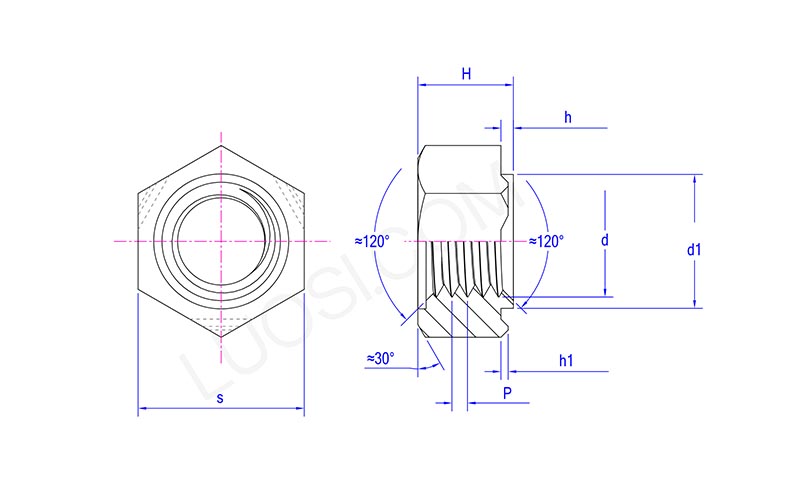
| Mon | M4 | M5 | M6 | M8 | M10 | M12 |
| P | 0.7 | 0.8 | 1 | 1|1.25 | 1.25|1.5 | 1.25|1.75 |
| s max | 11 | 11 | 13 | 15 | 17 | 19 |
| s min | 10.57 | 10.57 | 12.57 | 14.57 | 16.57 | 18.48 |
| H max | 5 | 5 | 6 | 7.5 | 9 | 11 |
| H min | 4.7 | 4.7 | 5.7 | 7.14 | 8.64 | 10.57 |
| d1 max | 6.9 | 6.9 | 8.9 | 10.9 | 12.9 | 14.9 |
| d1 min | 6.7 | 6.7 | 8.7 | 10.7 | 12.7 | 14.7 |
| h max | 0.8 | 0.8 | 0.8 | 0.8 | 1.2 | 1.2 |
| h min | 0.6 | 0.6 | 0.6 | 0.6 | 1 | 1 |
| h1 max | 0.5 | 0.5 | 0.5 | 0.5 | 0.7 | 0.7 |
| h1 min | 0.3 | 0.3 | 0.3 | 0.3 | 0.5 | 0.5 |
Material selection
The choice of material for DIN 929 Hexagon Weld Nuts directly affects their welding performance, mechanical strength, corrosion resistance and cost.
(1)Welding performance
For resistance spot welding, the carbon content of the nut material should be ≤ 0.25%. Otherwise, cracks or brittle fractures are likely to occur in the welding heat affected zone.
Low-carbon steel is the best choice, as it has a wide welding window, less spatter, and stable weld nugget.
When welding medium-carbon steel/alloy steel (such as 35K, 40Cr), it is necessary to strictly control parameters (current, time, cooling rate). In case of necessity, preheating or slow cooling should be adopted.
The stainless steel has good welding performance, but it needs to be matched with stainless steel base material and specific electrodes should be used.
(2)Mechanical strength requirements
4.8 / 6.8 grade (low carbon steel): Suitable for general sheet metal connections and non-load-bearing areas.
8.8 / 10.9 grade (medium carbon steel/alloy steel): Suitable for structures that need to withstand significant tension or vibration (such as car chassis, seats).
A2-70 / A4-70 (Stainless Steel): The strength ranges between grade 6.8 and grade 8.8, capable of meeting most medium-load requirements.
(3)Corrosion-resistant environment
Indoor dry environment: Low-carbon steel + electro-galvanizing is sufficient.
Outdoor moisture resistance: Low-carbon steel + hot-dip galvanizing or Dacromet coating.
High salt spray / marine environment: Stainless steel 316 (A4-70) or 304 (A2-70) with passivation treatment.
Food/Health: Stainless steel 304 in its natural color.
(4)Cost Control
The cost of low-carbon steel is the lowest, while the cost of stainless steel is approximately 2 to 3 times that of low-carbon steel.
While meeting the performance requirements, low-carbon steel DIN 929 Hexagon Weld Nuts should be preferred to reduce the procurement cost.
Hot Tags: DIN 929 Hexagon Weld Nuts, China, Manufacturer, Supplier, Factory
Related Category
Hexagon Nut
Square Nut
Hexagon Flange Nut
Lock Nut
Cap Nut
Hexagon Slotted Nut
Hand Screw The Nut
Round Nut
Hubs Nuts
T-nut
Reed Nut
Other Nuts
Send Inquiry
Please Feel free to give your inquiry in the form below. We will reply you in 24 hours.