- English
- Español
- Português
- русский
- Français
- 日本語
- Deutsch
- tiếng Việt
- Italiano
- Nederlands
- ภาษาไทย
- Polski
- 한국어
- Svenska
- magyar
- Malay
- বাংলা ভাষার
- Dansk
- Suomi
- हिन्दी
- Pilipino
- Türkçe
- Gaeilge
- العربية
- Indonesia
- Norsk
- تمل
- český
- ελληνικά
- український
- Javanese
- فارسی
- தமிழ்
- తెలుగు
- नेपाली
- Burmese
- български
- ລາວ
- Latine
- Қазақша
- Euskal
- Azərbaycan
- Slovenský jazyk
- Македонски
- Lietuvos
- Eesti Keel
- Română
- Slovenski
- मराठी
- Srpski језик


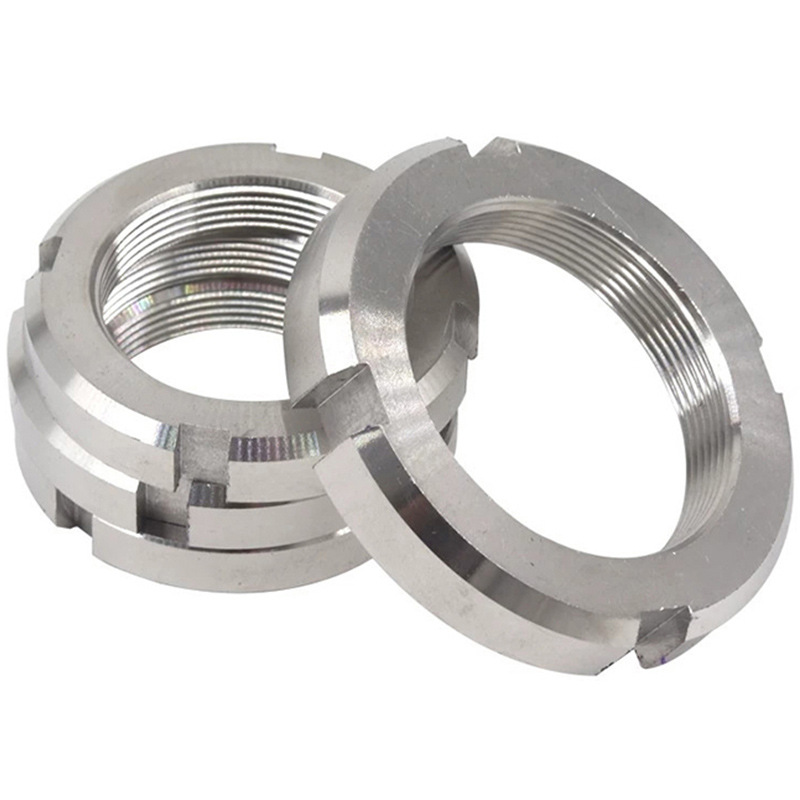
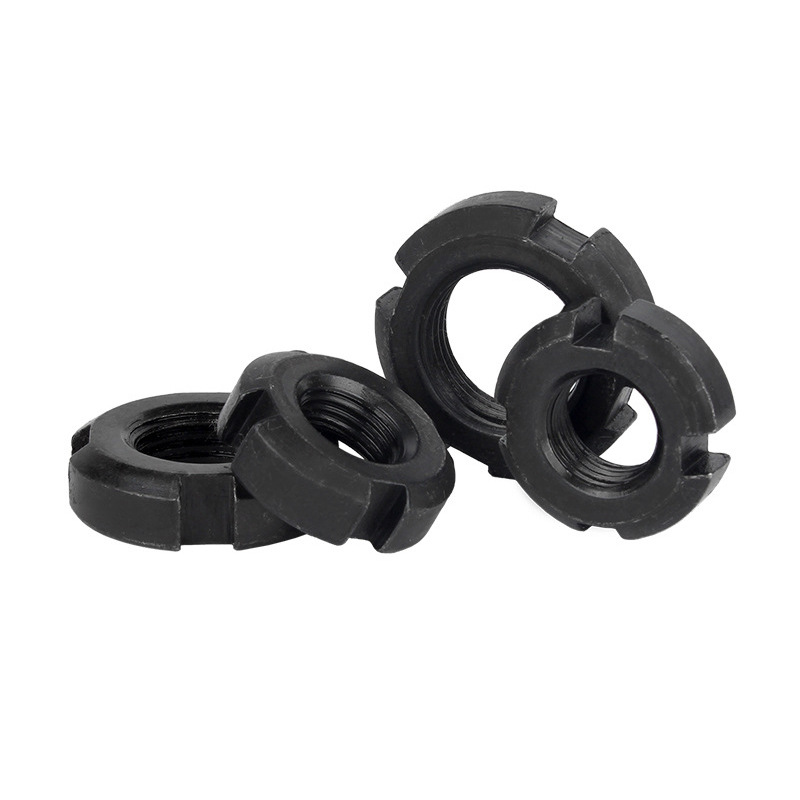
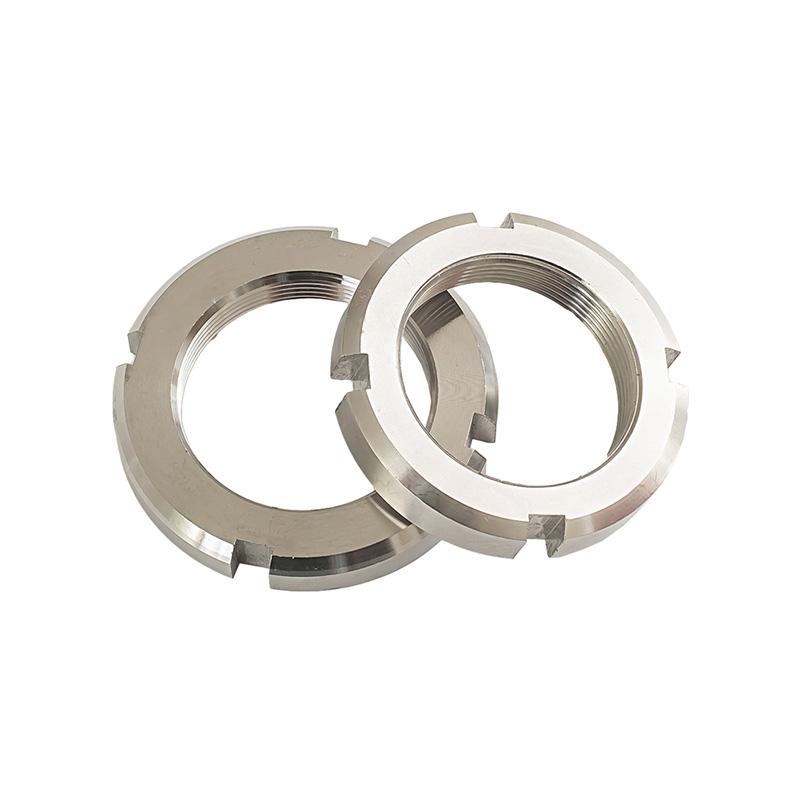
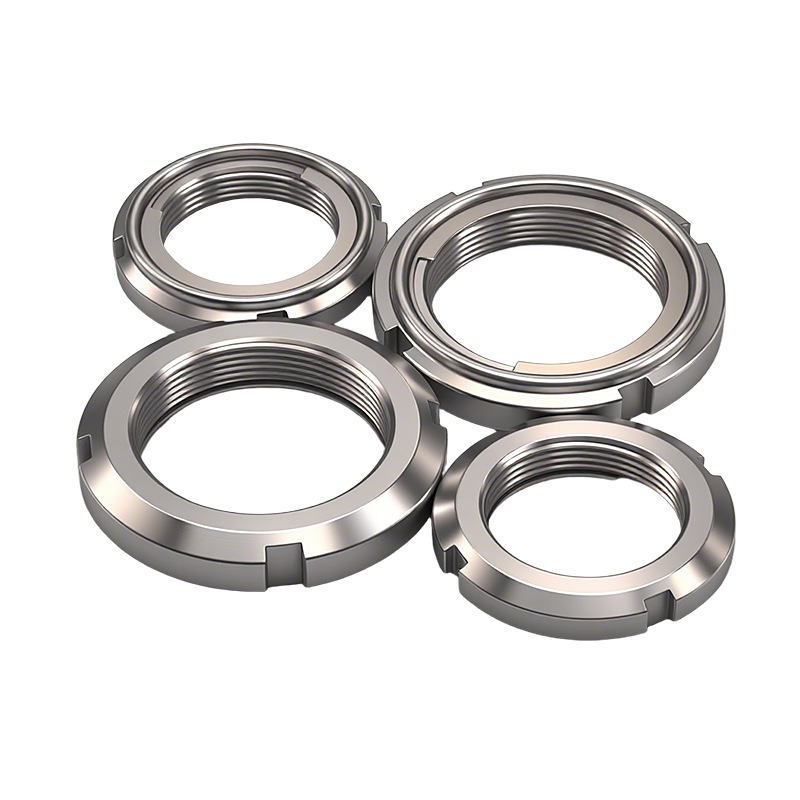
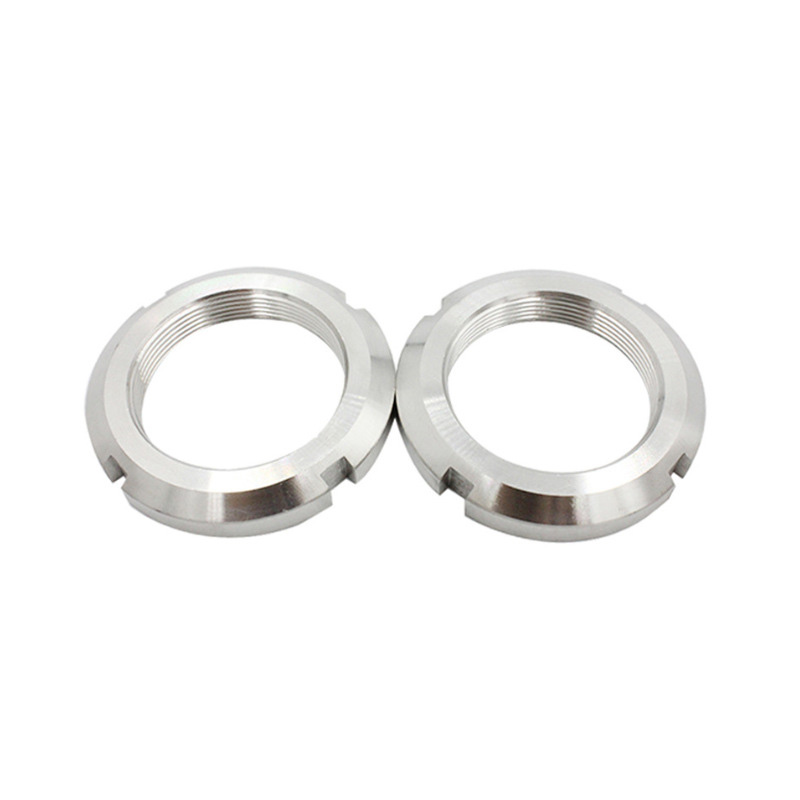
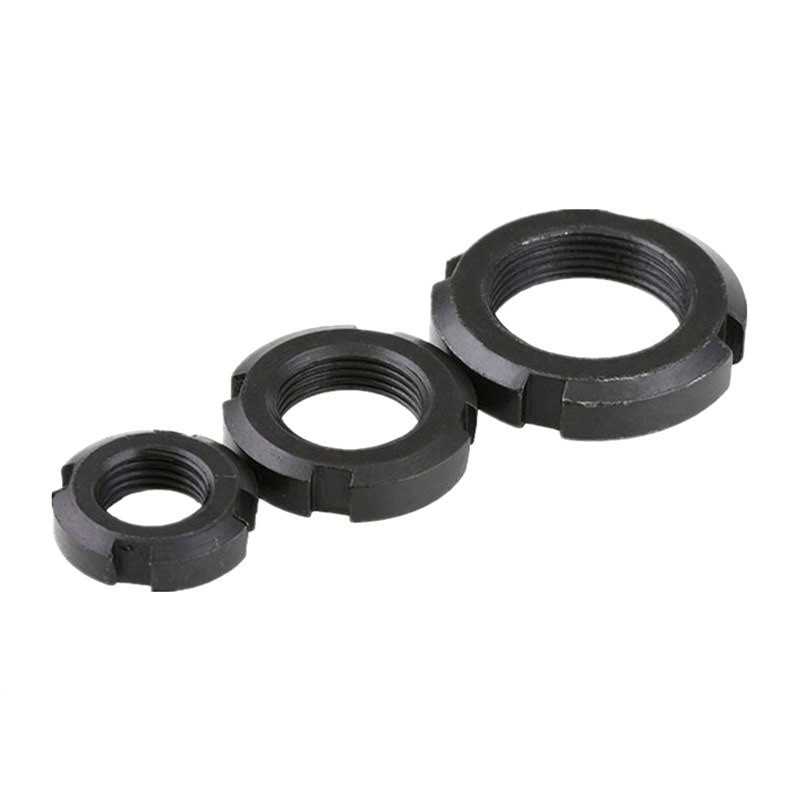
Single Side drilled Round Nut
Xiaoguo® single side drilled round nuts are round nuts that comply with the German industrial standard DIN 547-2006. Single side drilled round nuts are designed with precision holes on one side and are suitable for scenarios where they need to be fixed and prevented from loosening by pins or locking wires.
Model:DIN 547-2006
Send Inquiry
Product Description
Single side drilled round nuts are widely used in mechanical transmission, equipment assembly and high vibration environment. The single-sided drilling design allows single side drilled round nut to be double-fixed by inserting pins or locking wires, effectively preventing loosening caused by vibration or impact, and is suitable for dynamic load equipment.
Detailed drawings and parameters
Single side drilled round nuts are locked by pins in high-precision transmission systems such as gearboxes, transmission shafts and couplings to prevent axial displacement and ensure zero error in power transmission. The standard materials of single side drilled round nut include carbon steel (surface galvanized, phosphating) and stainless steel (A2/A4), which are highly corrosion-resistant and suitable for humid, high-temperature or chemically corrosive environments.


Market distribution
|
Market |
Revenue(Previous Year) |
Total Revenue (%) |
|
North America |
Confidential |
20 |
|
South America |
Confidential | 9 |
|
Eastern Europe |
Confidential |
21 |
|
Southeast Asia |
Confidential |
5 |
|
Mid East |
Confidential |
3 |
|
Eastern Asia |
Confidential |
10 |
|
Western Europe |
Confidential |
16 |
|
Central America |
Confidential |
5 |
|
South Asia |
Confidential |
6 |
|
Domestic Market |
Confidential |
5 |
Benefits of working with us
Our technical team can not only provide you with customized services, but also provide professional technical support in product selection, application design, etc. According to factors such as the vibration frequency, operating temperature, and stress conditions of the equipment, we recommend the most suitable single side drilled round nut specifications, materials, and anti-loosening solutions to ensure the reliability and stability of the connection.
Product surface treatment
The surface treatment of this fastener follows common industrial standards to meet daily use needs. We mainly use basic anti‑corrosion and anti‑rust treatments that work in normal working environments, including indoor equipment and outdoor installations. The treatment process is stable and does not use excessive materials or complicated procedures. It forms a thin protective layer on the surface to reduce oxidation and wear during long‑term use. The finish is even and consistent, without obvious defects. It can resist mild moisture and dust in regular working conditions. We choose surface treatments based on actual application scenarios, focusing on practical protection rather than decorative effects. Each product goes through simple inspection after treatment to ensure the layer is complete and functional. This treatment helps extend service life and keeps the part usable in various mechanical assembly and maintenance situations.
Hot Tags: Single Side drilled Round Nut, China, Manufacturer, Supplier, Factory
Product Tag
Related Category
Hexagon Nut
Square Nut
Hexagon Flange Nut
Lock Nut
Cap Nut
Hexagon Slotted Nut
Hand Screw The Nut
Round Nut
Hubs Nuts
T-nut
Reed Nut
Other Nuts
Send Inquiry
Please Feel free to give your inquiry in the form below. We will reply you in 24 hours.