- English
- Español
- Português
- русский
- Français
- 日本語
- Deutsch
- tiếng Việt
- Italiano
- Nederlands
- ภาษาไทย
- Polski
- 한국어
- Svenska
- magyar
- Malay
- বাংলা ভাষার
- Dansk
- Suomi
- हिन्दी
- Pilipino
- Türkçe
- Gaeilge
- العربية
- Indonesia
- Norsk
- تمل
- český
- ελληνικά
- український
- Javanese
- فارسی
- தமிழ்
- తెలుగు
- नेपाली
- Burmese
- български
- ລາວ
- Latine
- Қазақша
- Euskal
- Azərbaycan
- Slovenský jazyk
- Македонски
- Lietuvos
- Eesti Keel
- Română
- Slovenski
- मराठी
- Srpski језик

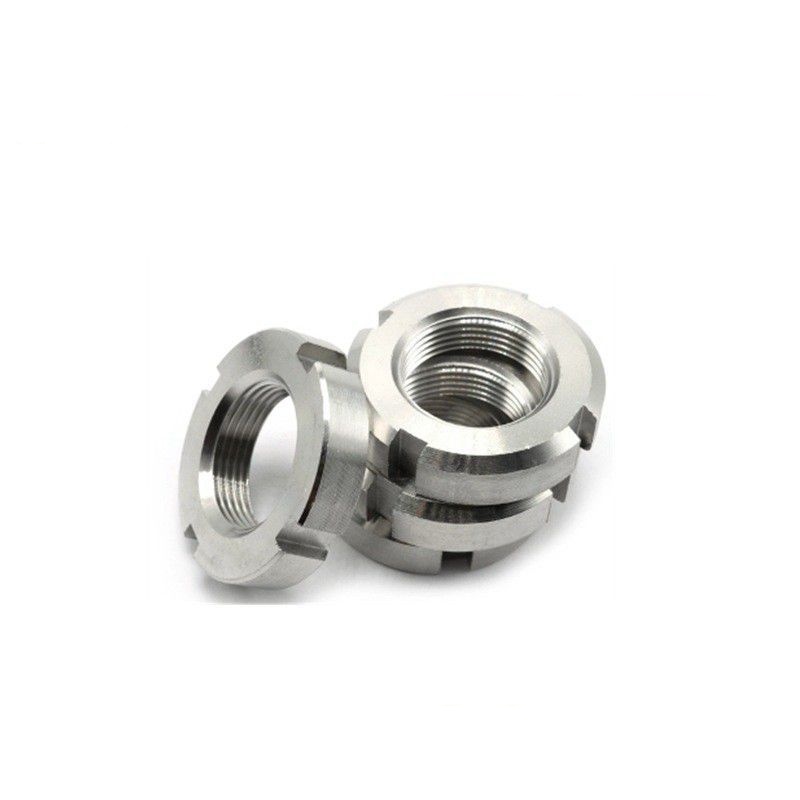
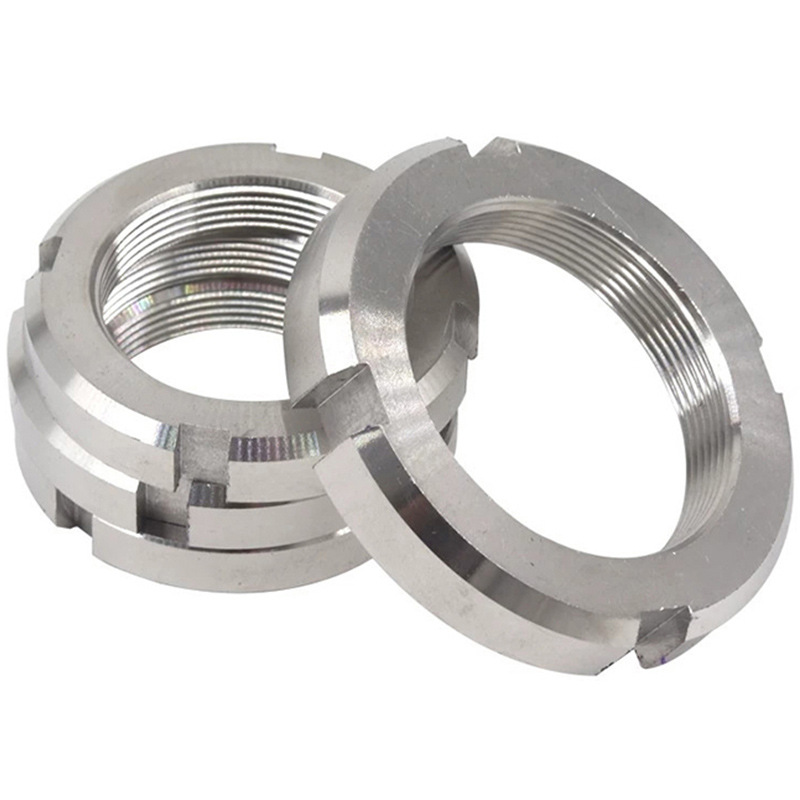
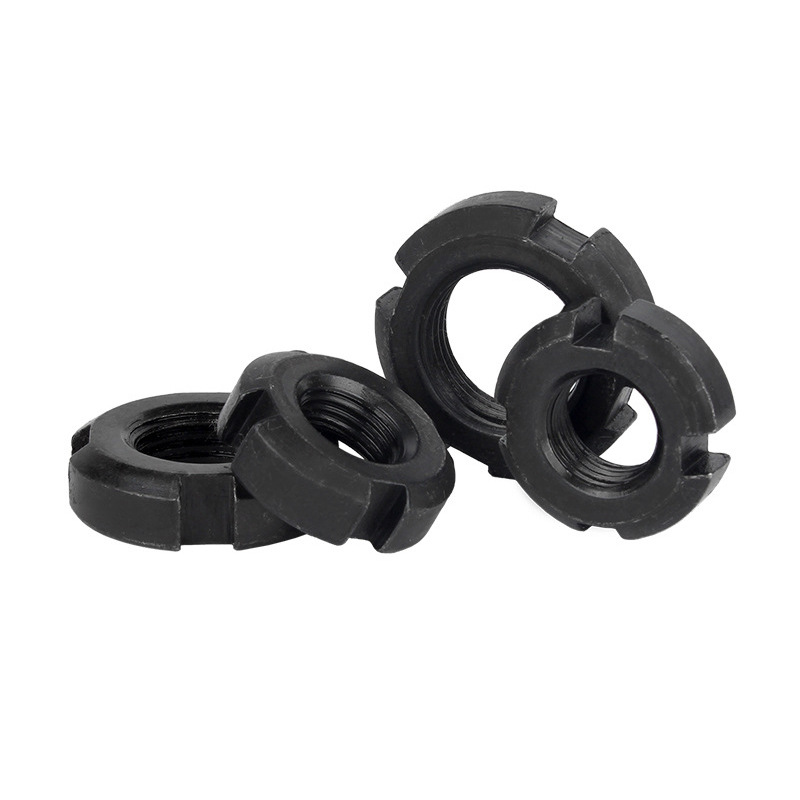
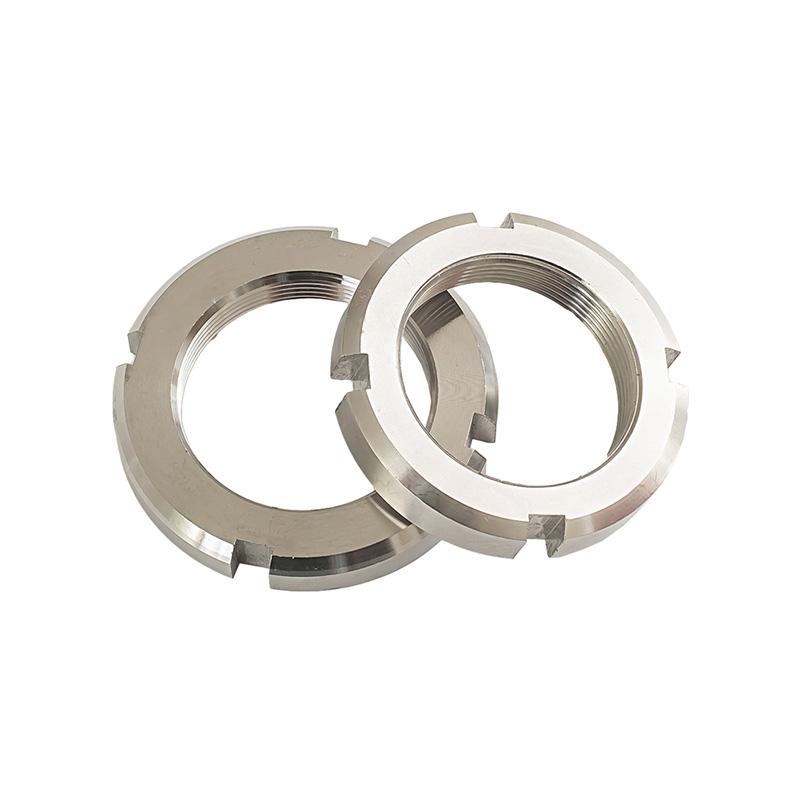
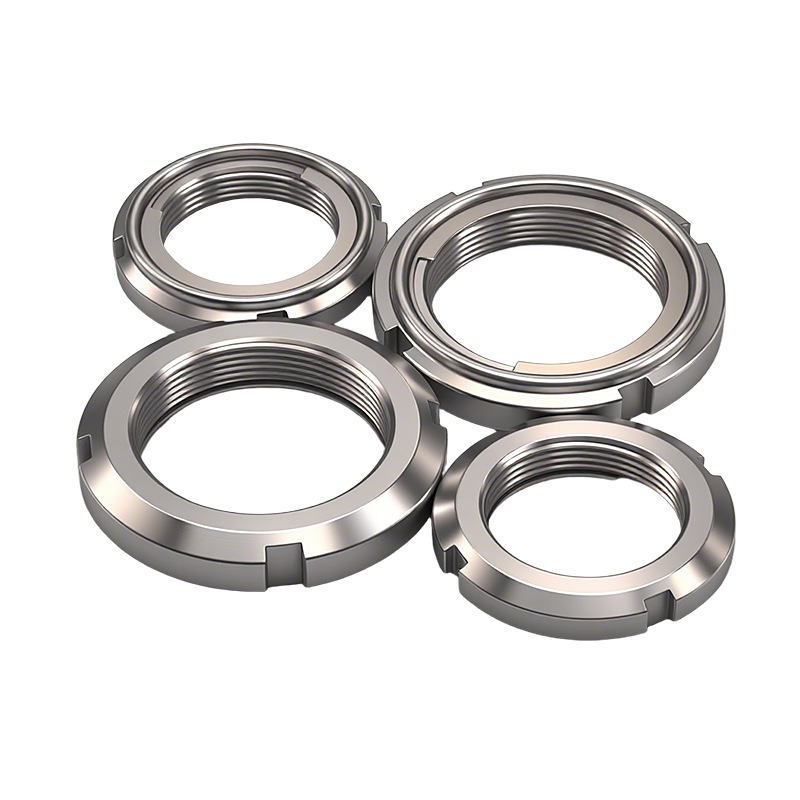
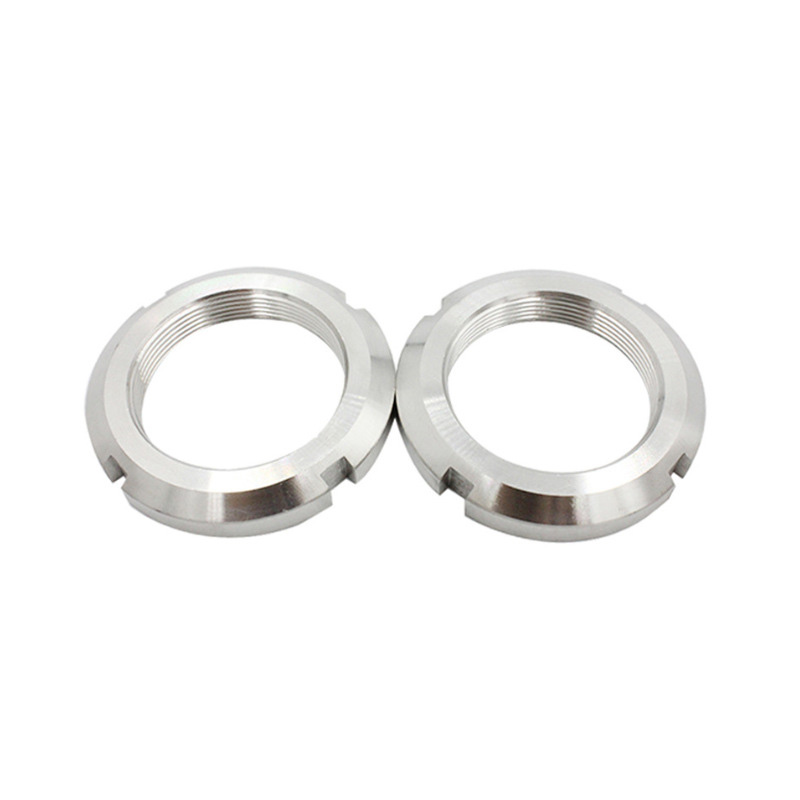
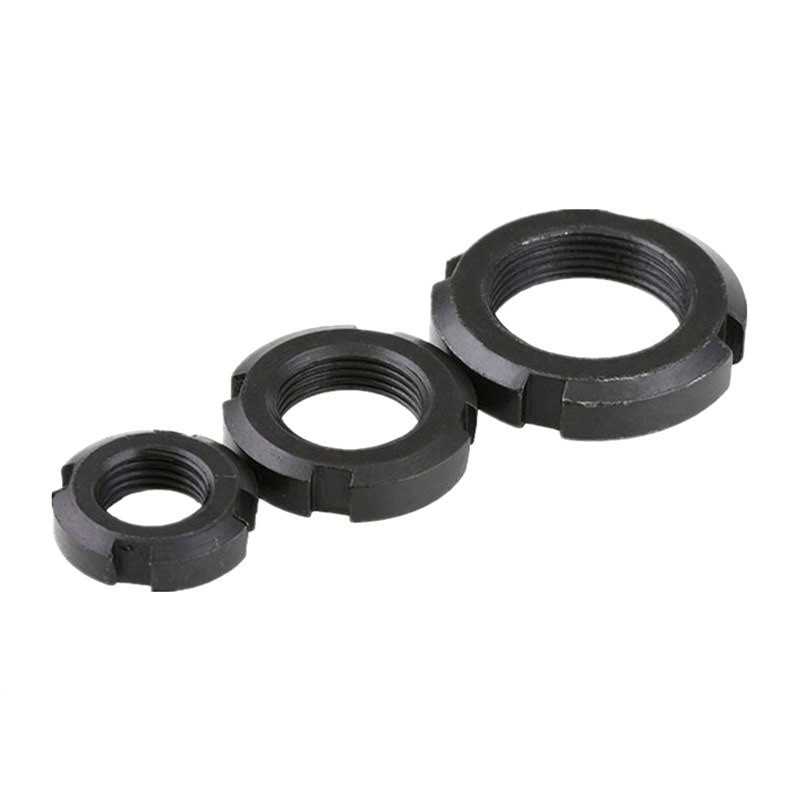
Rolling Shaft Slotted Lock Nuts
The main advantage of Rolling Shaft Slotted Lock Nuts is their ability to be tightened in confined spaces. If you collaborate with XIAOGUO, a supplier specializing in the production of round nut screws, you will achieve efficient inventory management.
Send Inquiry
Product Description
The specifications and parameters of the Rolling Shaft Slotted Lock Nuts are mostly set according to international standards (such as DIN 546). This standard covers nuts with nominal thread diameters ranging from M1 to M20. The product specifications are determined by key dimension details. For example, a specific M12x1.5 nut has a major diameter (d2) of 28 millimeters, a bearing surface diameter (d3) of 23 millimeters, and a height (h) of 6 millimeters. We also have other specifications available, such as the M35 X 1.5 thread size, whose diameter and thickness of the product also have corresponding size matching. The applicable standards ensure that these important dimensions remain consistent, and also set technical requirements for the product's grade.

Product quality control
We check the quality of Rolling Shaft Slotted Lock Nuts based on strict international standards that lay out full inspection and testing methods. Standards like ISO 9140 (for aerospace use) tell you how to test nuts with MJ threads. Procurement specs such as BS A 342 list the required features, quality check processes, and also say what surface flaws are allowed for these important fasteners. General size and technical rules are set by standards like DIN 546 and GB/T 817-1988. The latter one specifies inspection items—like thread accuracy (pitch, tooth angle) and dimensional precision—and we check these using thread gauges and coordinate measuring machines. Following these standards makes sure the nuts meet the mechanical and safety performance requirements they need to.
Q&A Session
Q:How does the slot work with a cotter pin for locking?
A:The slots on our Rolling Shaft Slotted Lock Nuts are made to line up with the hole in a bolt or stud once you’ve tightened the nut down. Then you push a cotter pin through the slot and the hole. This locks the slotted round nut in place physically, so it doesn’t come loose from vibration—and that’s really important for applications where safety is a must.
Hot Tags: Rolling Shaft Slotted Lock Nuts, China, Manufacturer, Supplier, Factory
Related Category
Hexagon Nut
Square Nut
Hexagon Flange Nut
Lock Nut
Cap Nut
Hexagon Slotted Nut
Hand Screw The Nut
Round Nut
Hubs Nuts
T-nut
Reed Nut
Other Nuts
Send Inquiry
Please Feel free to give your inquiry in the form below. We will reply you in 24 hours.