- English
- Español
- Português
- русский
- Français
- 日本語
- Deutsch
- tiếng Việt
- Italiano
- Nederlands
- ภาษาไทย
- Polski
- 한국어
- Svenska
- magyar
- Malay
- বাংলা ভাষার
- Dansk
- Suomi
- हिन्दी
- Pilipino
- Türkçe
- Gaeilge
- العربية
- Indonesia
- Norsk
- تمل
- český
- ελληνικά
- український
- Javanese
- فارسی
- தமிழ்
- తెలుగు
- नेपाली
- Burmese
- български
- ລາວ
- Latine
- Қазақша
- Euskal
- Azərbaycan
- Slovenský jazyk
- Македонски
- Lietuvos
- Eesti Keel
- Română
- Slovenski
- मराठी
- Srpski језик

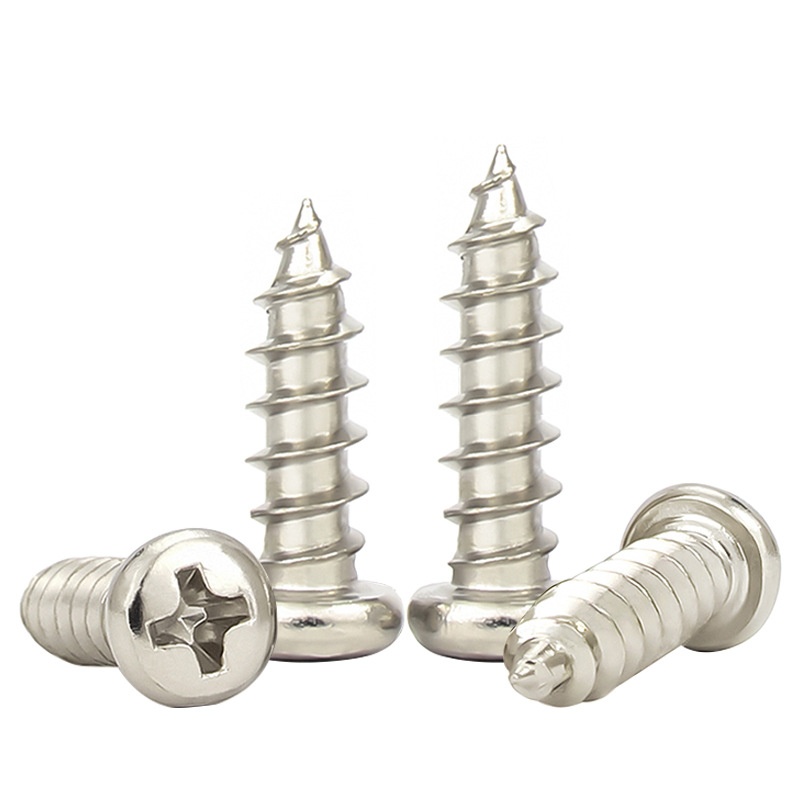
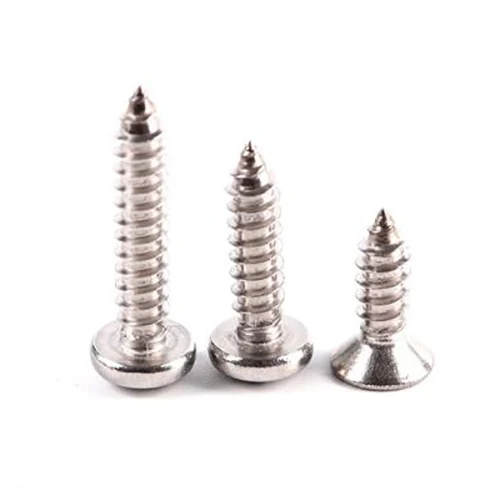
Home > Products > Self Drilling And Wood Screws > Cross Grooved Tapping Screws > ISO 7049 Pan Head Tapping Screws
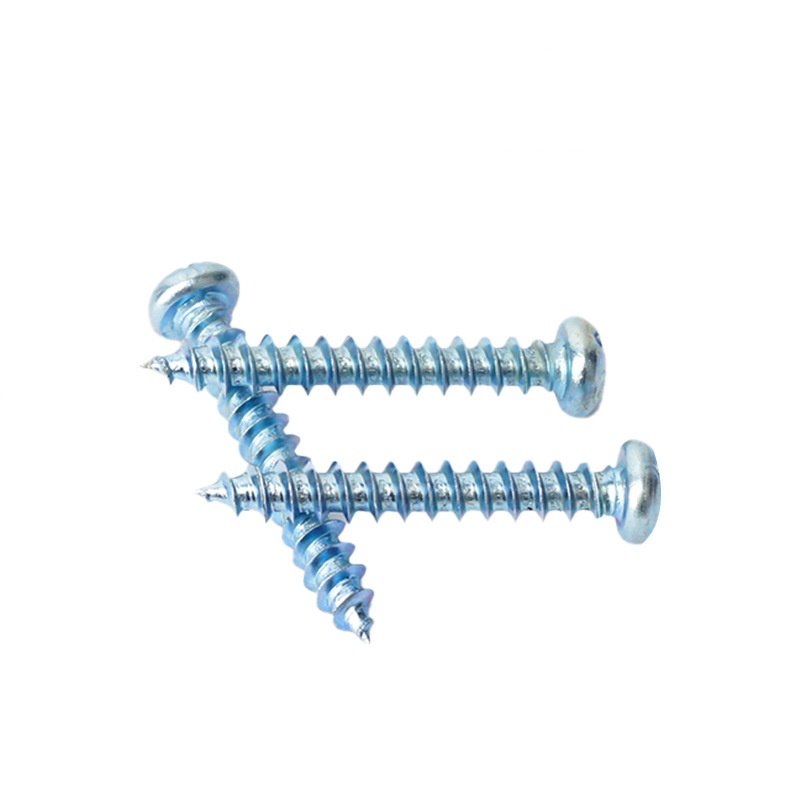
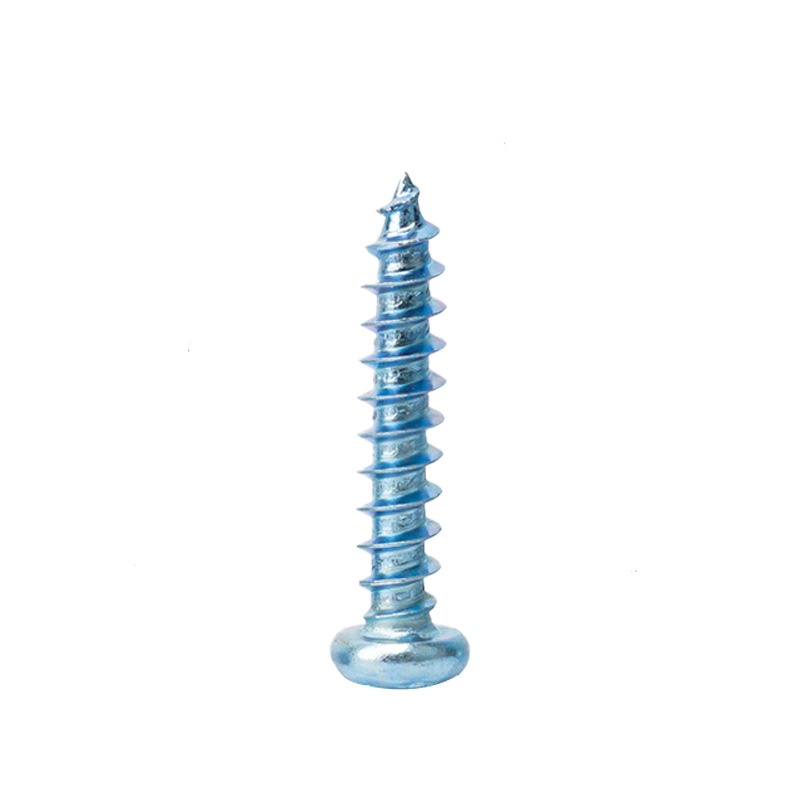
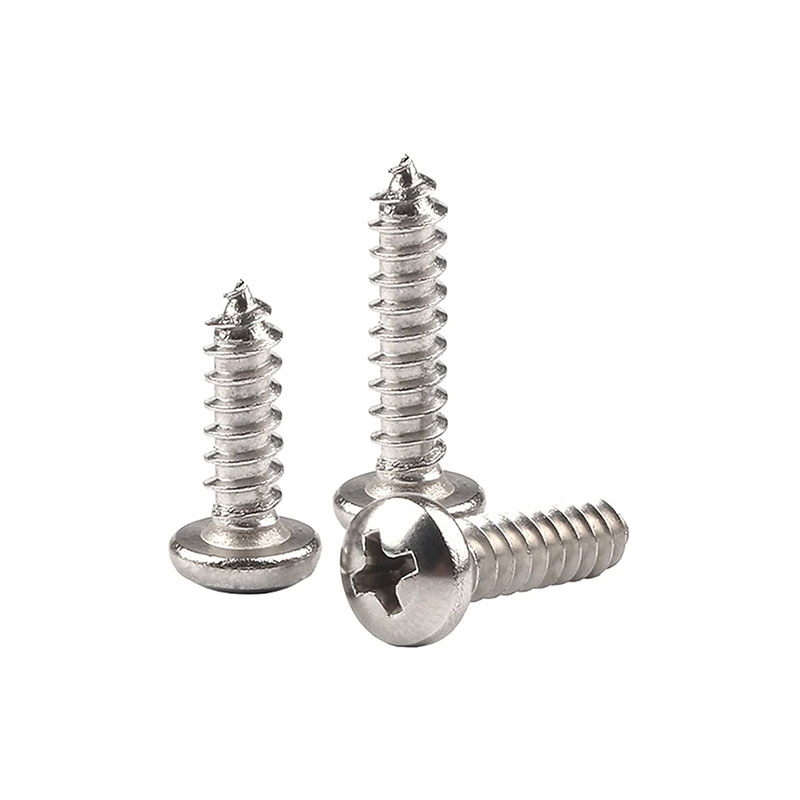
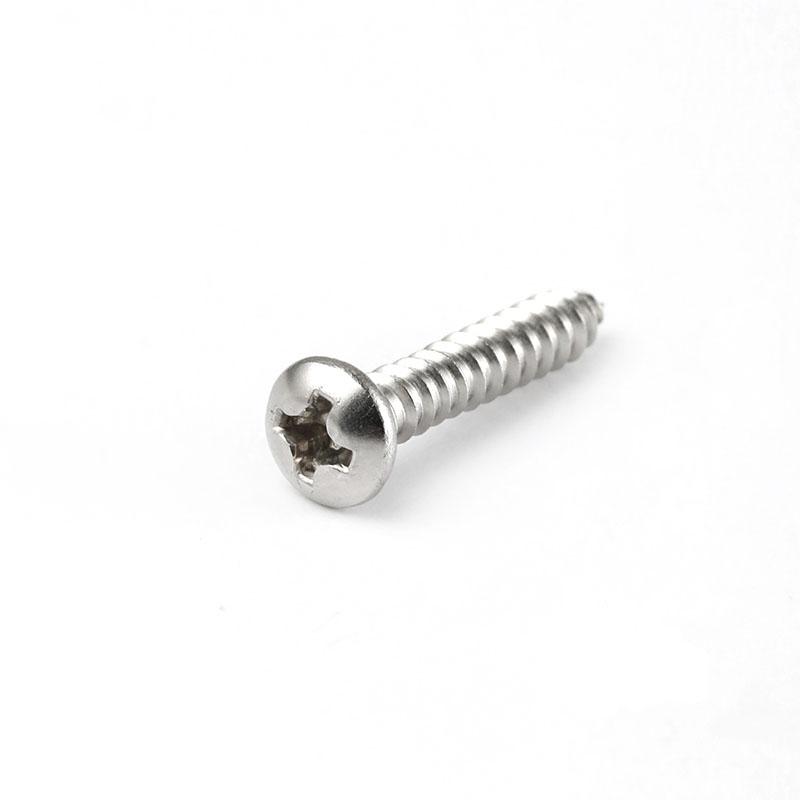
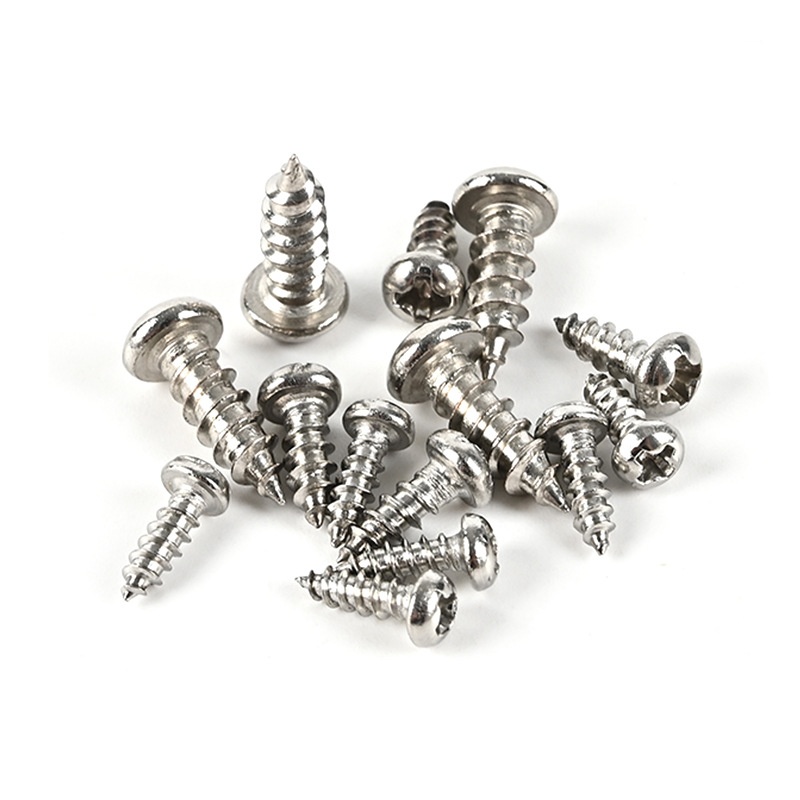
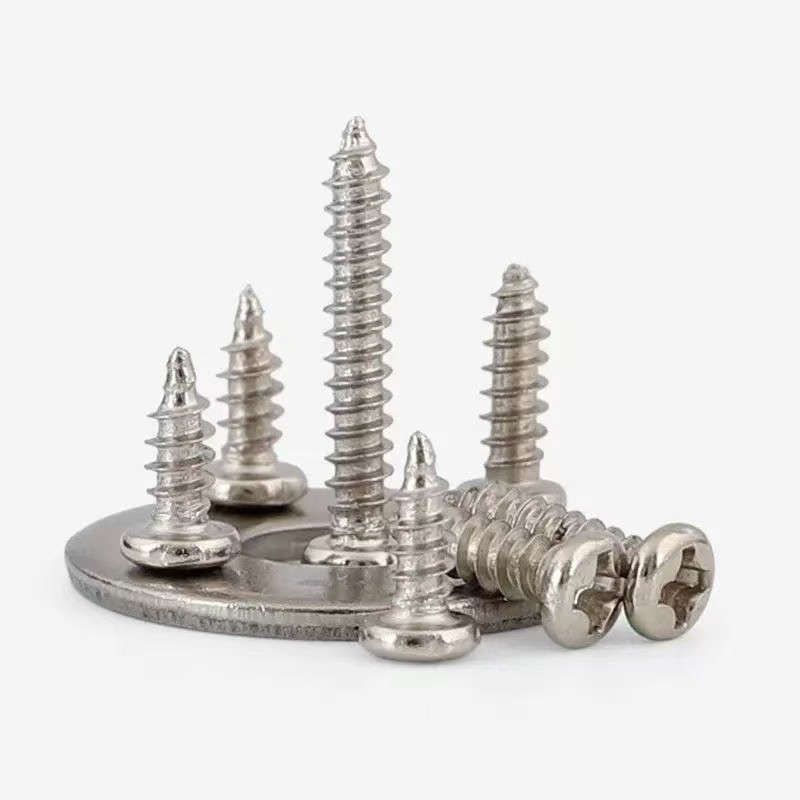
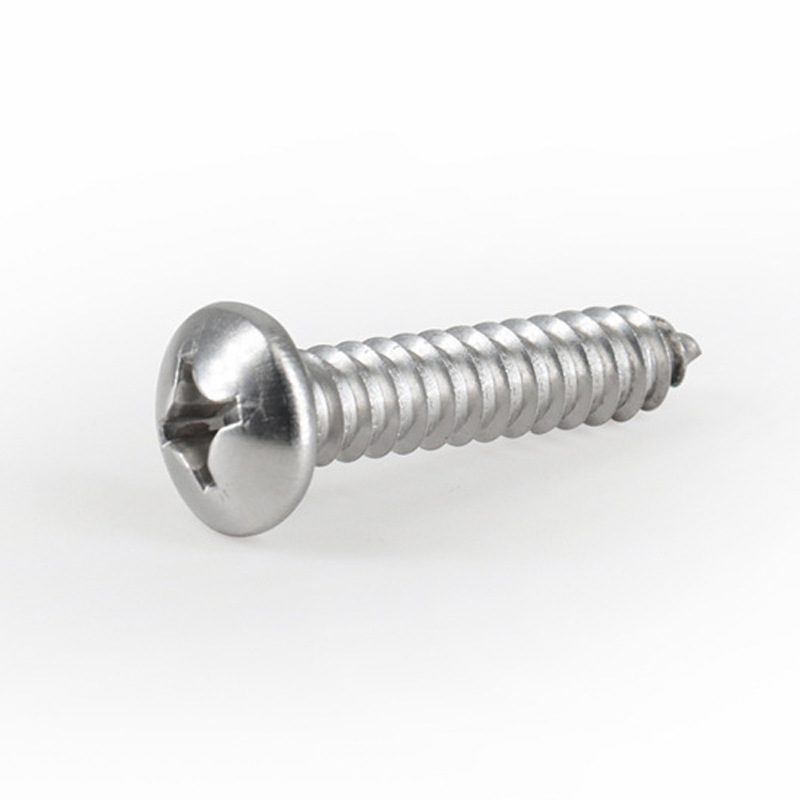
ISO 7049 Pan Head Tapping Screws
Streamline your assembly with Xiaoguo® ISO 7049 pan head tapping screws. No pre-tapping required for faster, reliable fastening. Manufactured from high-grade Carbon Steel & Stainless Steel 304 to withstand tough environments. Buy direct from the manufacturer to lock in the competitive factory price. Inquire now for technical catalog and instant quotes!
Send Inquiry
Product Description
ISO 7049 Pan Head Tapping Screws from Xiaoguo® supplier deliver full-lifecycle technical support beyond standard quality control, helping buyers resolve all selection, pre-production testing and on-site installation challenges. Backed by three core material options—carbon steel, stainless steel and case hardened steel—these ISO-standard pan head tapping screws are tailored for dry indoor, humid outdoor, coastal corrosive and high-torque frequent assembly scenarios.
In addition to the standard quality assurance, we place greater emphasis on providing you with timely and effective support for the ISO 7049 pan head tapping screws in actual use.
1.Selection and Sample Support
Which size should I choose?
You can provide the basic parameters (such as thickness, material, etc.), and we will recommend suitable screws for you.
What should I do if the installation is not proper?
We will send you samples for free so that you can use them for prenatal testing.
2.Problems encountered during installation
Excessive torque during installation
Adjust the size of the bottom hole and check the hardness of the ISO 7049 pan head tapping screws②The screws are prone to loosening.
Check the size of the bottom hole and verify whether the screws match the base material.
Cross-slot slipping
Use the appropriate type of screwdriver.
The surface of the screw is rusty.
Check the storage environment; Upgrade the surface treatment and choose Dacromet. Change to stainless steel material
3.Common materials
Based on the usage environment, strength requirements and corrosion resistance level of the ISO 7049 pan head tapping screws, the following three types of materials are mainly selected: carbon steel, stainless steel and surface-hardened steel.
Carbon Steel
Anti-rust treatment must be carried out. Common methods include galvanization (blue-white/yellow zinc), phosphating, blackening, and Dacromet coating.
The applicable scenario is an indoor dry environment, involving connections with ordinary metal sheets, plastic parts and wood.
Stainless Steel
The appearance is usually in its natural color, and it can also be polished by electrolysis.
The applicable scenarios include outdoor, humid, coastal, chemical, and food equipment.
Case Hardened Steel
The feature is that the surface is hard and wear-resistant.
The applicable scenarios involve frequent screwing operations or connections that require high torque.
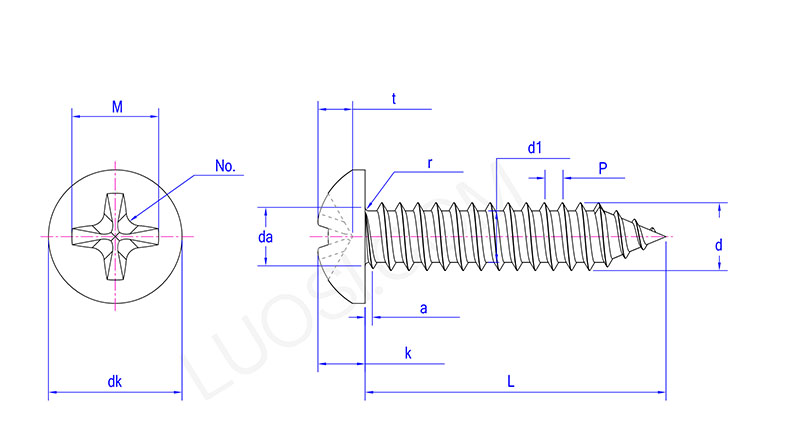
| Mon | ST2.2 | ST2.9 | ST3.5 | ST4.2 | ST4.8 | ST5.5 | ST6.3 | ST8 | ST9.5 |
| P | 0.8 | 1.1 | 1.3 | 1.4 | 1.6 | 1.8 | 1.8 | 2.1 | 2.1 |
| a max | 0.8 | 1.1 | 1.3 | 1.4 | 1.6 | 1.8 | 1.8 | 2.1 | 2.1 |
| da max | 2.8 | 3.5 | 4.1 | 4.9 | 5.6 | 6.3 | 7.3 | 9.2 | 10.7 |
| dk max | 4 | 5.6 | 7 | 8 | 9.5 | 11 | 12 | 16 | 20 |
| dk min | 3.7 | 5.3 | 6.64 | 7.64 | 9.14 | 10.57 | 11.57 | 15.57 | 19.48 |
| k max | 1.6 | 2.4 | 2.6 | 3.1 | 3.7 | 4 | 4.6 | 6 | 7.5 |
| k min | 1.4 | 2.15 | 2.35 | 2.8 | 3.4 | 3.7 | 4.3 | 5.6 | 7.1 |
| r min | 0.1 | 0.1 | 0.1 | 0.2 | 0.2 | 0.25 | 0.25 | 0.4 | 0.4 |
| No. | 0 | 1 | 2 | 2 | 2 | 3 | 3 | 4 | 4 |
| M | 1.9 | 3 | 3.9 | 4.4 | 4.9 | 6.4 | 6.9 | 9 | 10.1 |
| t min | 0.85 | 1.4 | 1.4 | 1.9 | 2.4 | 2.6 | 3.1 | 4.15 | 5.2 |
| t max | 1.2 | 1.8 | 1.9 | 2.4 | 2.9 | 3.1 | 3.6 | 4.7 | 5.8 |
| d1 max | 1.63 | 2.18 | 2.64 | 3.1 | 3.58 | 4.17 | 4.88 | 6.2 | 7.85 |
| d1 min | 1.52 | 2.08 | 2.51 | 2.95 | 3.43 | 3.99 | 4.7 | 5.99 | 7.59 |
| d max | 2.24 | 2.9 | 3.53 | 4.22 | 4.8 | 5.46 | 6.25 | 8 | 9.65 |
| d mn | 2.1 | 2.76 | 3.35 | 4.04 | 4.62 | 5.28 | 6.03 | 7.78 | 9.43 |
Hot Tags: ISO 7049 Pan Head Tapping Screws, China, Manufacturer, Supplier, Factory
Related Category
Slotted Tapping Screw
Cross Grooved Tapping Screws
Self Drilling Screws
Hexagonal Self-Drilling Screws With Groove
Hexagonal Head Self-Drilling Screws
Hexagonal And Square Groove Self-Drilling Screws
Quince-Grooved Self-Tapping Screws
Composite Grooved Self Tapping Screws
Triangle Locking Self-Extruding Screw
Automatic Quick Tooth Drilling Screws
Send Inquiry
Please Feel free to give your inquiry in the form below. We will reply you in 24 hours.