- English
- Español
- Português
- русский
- Français
- 日本語
- Deutsch
- tiếng Việt
- Italiano
- Nederlands
- ภาษาไทย
- Polski
- 한국어
- Svenska
- magyar
- Malay
- বাংলা ভাষার
- Dansk
- Suomi
- हिन्दी
- Pilipino
- Türkçe
- Gaeilge
- العربية
- Indonesia
- Norsk
- تمل
- český
- ελληνικά
- український
- Javanese
- فارسی
- தமிழ்
- తెలుగు
- नेपाली
- Burmese
- български
- ລາວ
- Latine
- Қазақша
- Euskal
- Azərbaycan
- Slovenský jazyk
- Македонски
- Lietuvos
- Eesti Keel
- Română
- Slovenski
- मराठी
- Srpski језик

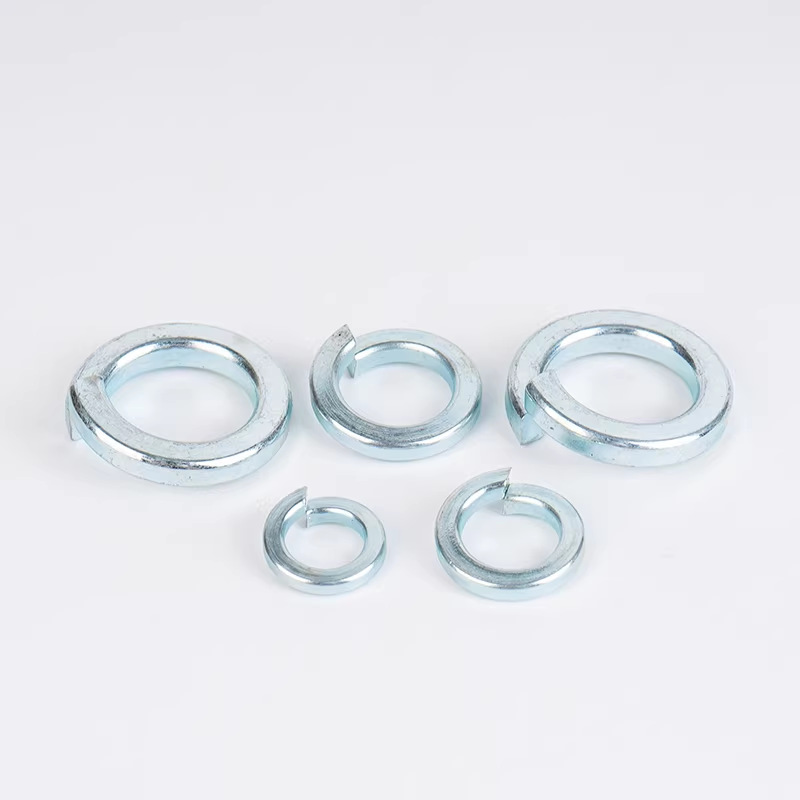
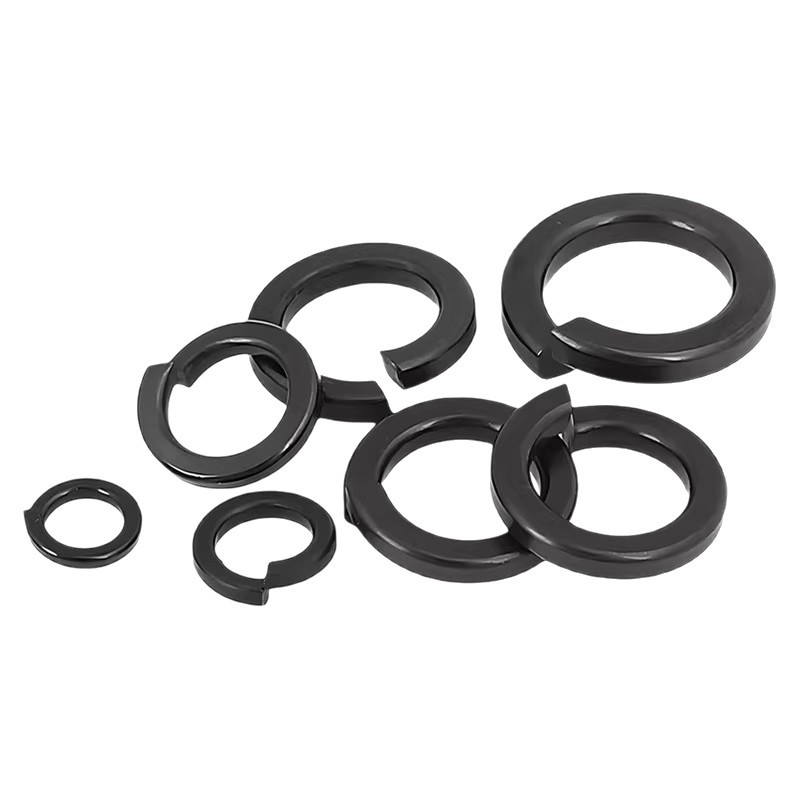
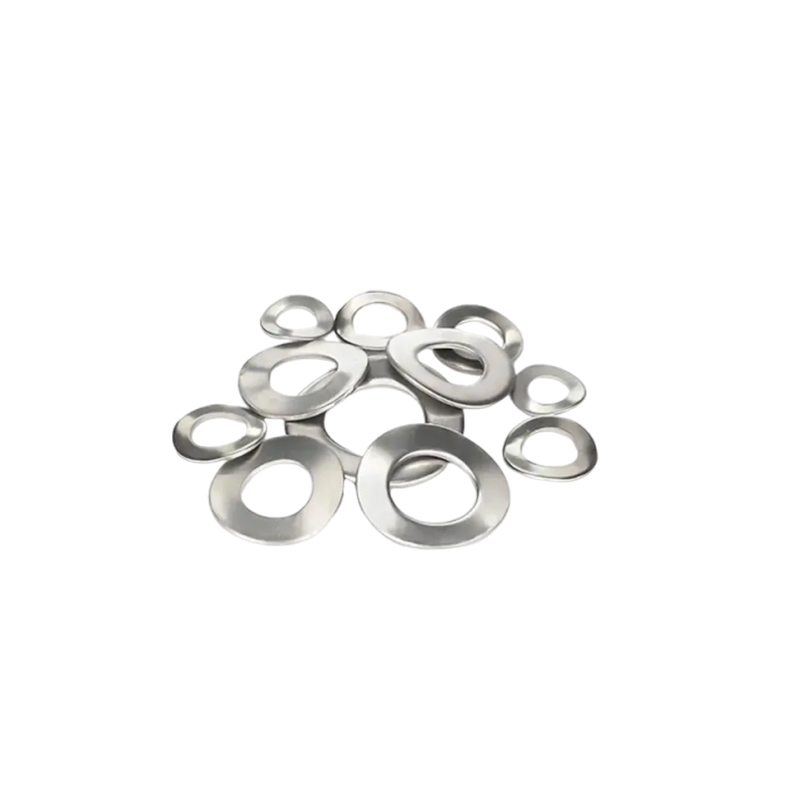
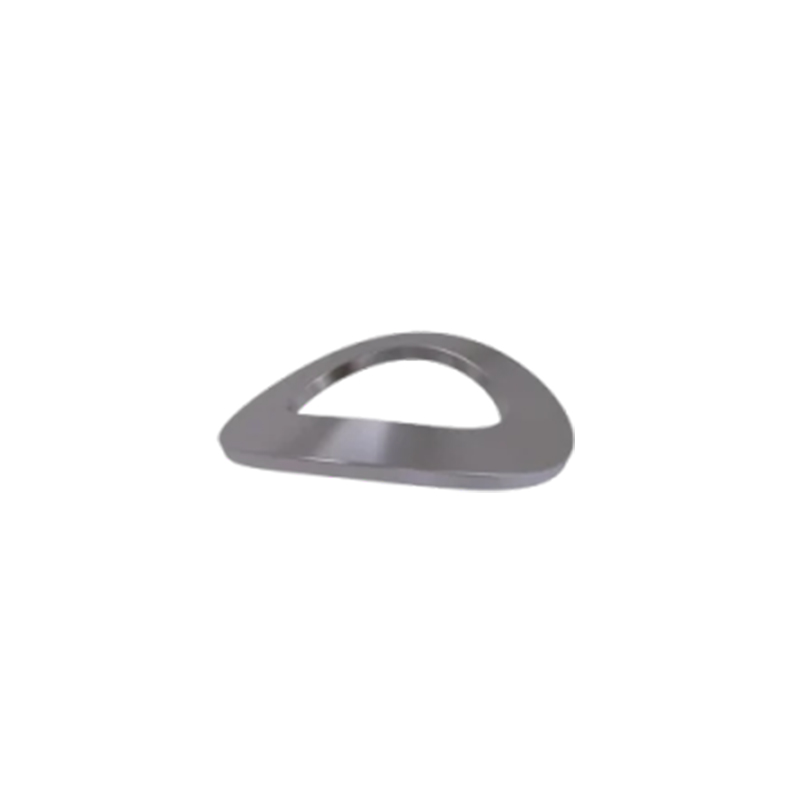
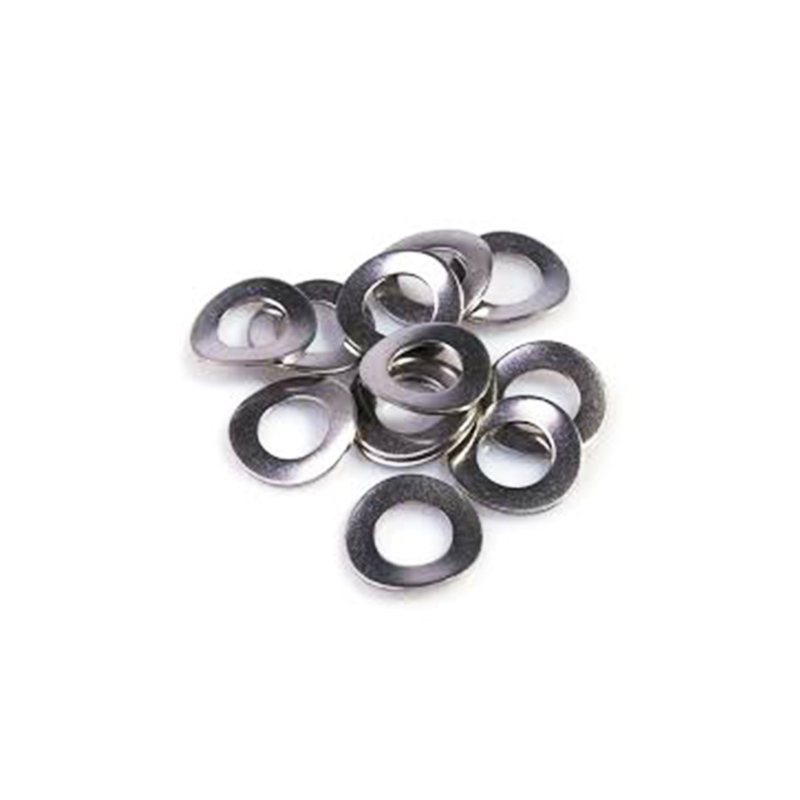
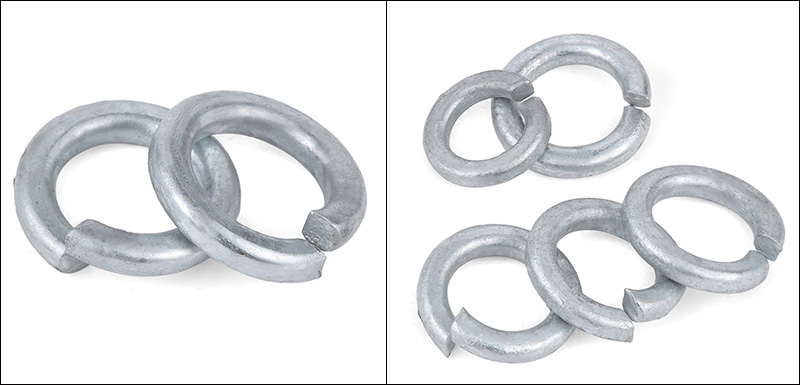
Heavy Split Lock Washers
The Heavy Split Lock Washers samples provided by Xiaoguo® can meet the different standards of each customer with corresponding specifications. The material is also optional, and they can be applied in most industries, with strong versatility.
Send Inquiry
Product Description
When choosing the material for Heavy Split Lock Washers, three main factors need to be considered: the usage environment (whether it is humid or corrosive), the strength grade of the bolt, and the cost.
(1)The most commonly used material: carbon steel (spring steel) + surface treatment
The standard material for Heavy Split Lock Washers is spring steel (such as 65Mn, 70 steel, C67S), which has good elasticity and high hardness (HRC 42–50). However, bare steel is prone to rusting, so almost all of them undergo surface treatment.
| Surface treatment | Suitable scenarios | Advantages |
| Galvanized (yellow zinc / blue-white zinc) | Indoor dry environment, general industry | The cheapest, with good versatility |
| Dacromet (zinc-aluminum coating) | Outdoor, vehicle chassis, high humidity and high salt environment | No hydrogen embrittlement, salt spray 500–1000+ hours |
| Mechanical galvanization | High-strength bolts (10.9/12.9 grade) | No hydrogen embrittlement, uniform coating |
| Black Oxide | Precise assembly, indoor drying, black in appearance | No hydrogen embrittlement, almost no change in dimensions |
| Phosphating | For applications requiring lubrication or coating | No hydrogen embrittlement, excellent oil storage capacity |
(2)Stainless steel material (priority for rust prevention)
If the Heavy Split Lock Washers will come into contact with water, humid air, chemicals or salt spray, simply choose stainless steel.
| Material | Corrosion Resistance | Applicable Environment | Cost |
| A2 (304 stainless steel) | General corrosion resistance | Common for damp environments, outdoors, and food equipment | Medium |
| A4 (316 Stainless Steel) | Resistant to chloride ions (salt water, seaside, chemical industry) | Offshore platforms, ships, chemical plants | High |
(3)Bolt strength grade
The hardness of the Heavy Split Lock Washers needs to match that of the bolt. A too soft washer will be crushed, while a too hard one might damage the bolt.
(4)Special environment
①At high temperatures (>300°C), regular spring steel loses its elasticity. In this case, use heat-resistant alloys (such as Inconel) or disc-shaped washers, or do not use washers at all.
②At extremely low temperatures (-50°C and below), conventional carbon steel becomes brittle. Therefore, stainless steel A2/A4 should be selected.
③Near strong magnetic fields, ferromagnetic materials (ordinary carbon steel) cannot be used. Instead, choose brass or stainless steel (with weak magnetism).
④For conductivity, choose the tooth-locking gasket (outer teeth/inner teeth), made of stainless steel or galvanized carbon steel.
⑤Food/medicine, stainless steel A2 or A4, passivation treatment
FAQ
(1)What are Heavy Split Lock Washers main advantages compared to the standard split lock washer?
The advantage lies in its greater load capacity and durability. Its outer diameter is larger, its thickness is thicker, and its bearing area is wider, enabling it to withstand higher tightening torque.
(2)Can it be used together with high-strength bolts of grade 10.9 and 12.9?
Yes, but there are limitations and it is not recommended.
(3)Can heavy washers be reused?
It is strongly advised against reusing. Because the heavy gasket has undergone significant deformation during its first installation, and its sharp edges have been worn and damaged.
(4)Why is it preferred to use it on high-vibration equipment?
Because it is specifically designed to withstand severe vibrations, shocks and high dynamic loads.
(5)Is it necessary to use the Flat Washer together when installing?
Generally, it is not necessary. The washer was originally designed to directly interlock the surfaces on both sides to achieve a locking effect. Inserting a flat washer in the middle would interfere with its normal interlocking and might cause it to loosen more easily.
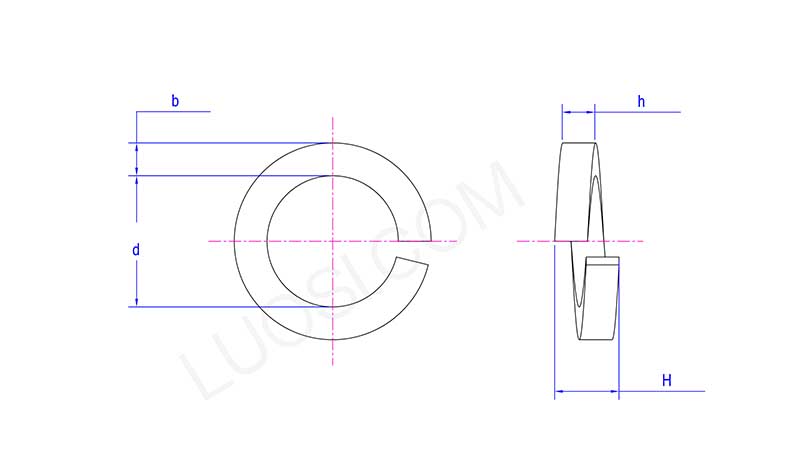
| Mon | φ18 | φ20 | φ22 | φ2 4 | φ27 | φ30 | φ33 | φ36 | φ39 | φ42 | φ45 |
| d min | 18.2 | 20.2 | 22.5 | 24.5 | 27.5 | 30.5 | 33.5 | 36.5 | 39.5 | 42.5 | 45.5 |
| d max | 19.04 | 21.04 | 23.34 | 25.5 | 28.5 | 31.5 | 34.7 | 37.7 | 40.7 | 43.7 | 46.7 |
| b min | 4.3 | 4.8 | 5.3 | 5.8 | 6.5 | 7.2 | 8.2 | 8.7 | 9.7 | 10.2 | 10.7 |
| b max | 4.7 | 5.2 | 5.7 | 6.2 | 7.1 | 7.8 | 8.8 | 9.3 | 10.3 | 10.8 | 11.3 |
| h min | 4.3 | 4.8 | 5.3 | 5.8 | 6.5 | 7.2 | 8.2 | 8.7 | 9.7 | 10.2 | 10.7 |
| h max | 4.7 | 5.2 | 5.7 | 6.2 | 7.1 | 7.8 | 8.8 | 9.3 | 10.3 | 10.8 | 11.3 |
| H min | 9 | 10 | 11 | 12 | 13.6 | 15 | 17 | 18 | 20 | 21 | 22 |
| H max | 11.25 | 12.5 | 13.75 | 15 | 17 | 18.75 | 21.25 | 22.5 | 25 | 26.25 | 27.5 |
Hot Tags: Heavy Split Lock Washers, China, Manufacturer, Supplier, Factory
Related Category
Send Inquiry
Please Feel free to give your inquiry in the form below. We will reply you in 24 hours.