- English
- Español
- Português
- русский
- Français
- 日本語
- Deutsch
- tiếng Việt
- Italiano
- Nederlands
- ภาษาไทย
- Polski
- 한국어
- Svenska
- magyar
- Malay
- বাংলা ভাষার
- Dansk
- Suomi
- हिन्दी
- Pilipino
- Türkçe
- Gaeilge
- العربية
- Indonesia
- Norsk
- تمل
- český
- ελληνικά
- український
- Javanese
- فارسی
- தமிழ்
- తెలుగు
- नेपाली
- Burmese
- български
- ລາວ
- Latine
- Қазақша
- Euskal
- Azərbaycan
- Slovenský jazyk
- Македонски
- Lietuvos
- Eesti Keel
- Română
- Slovenski
- मराठी
- Srpski језик

Home > Products > Riveting Parts > Pull Riveted Nuts And Screws > Self Clinching Press Riveting Screw
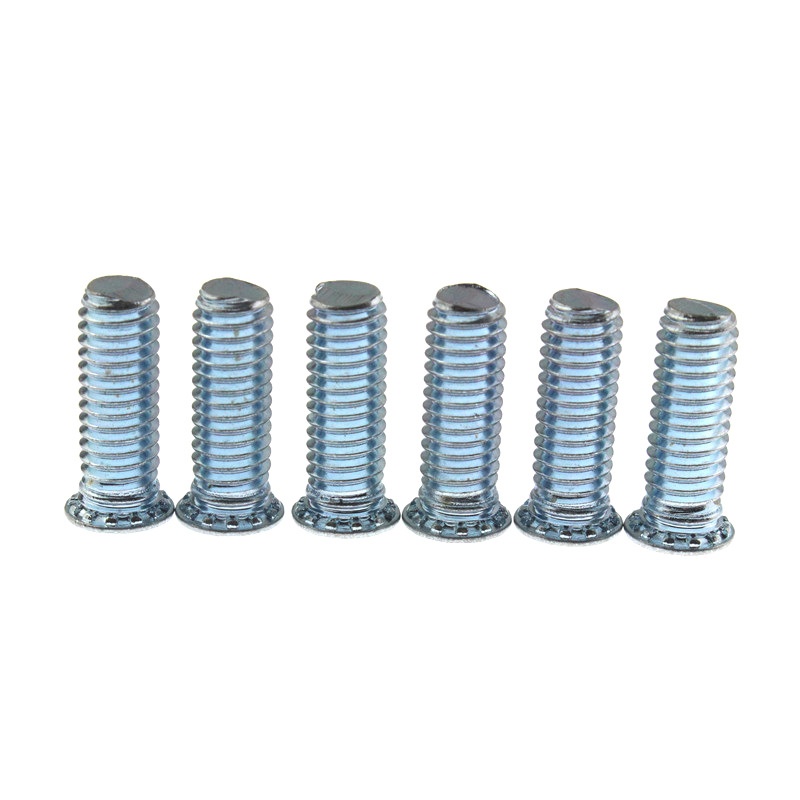
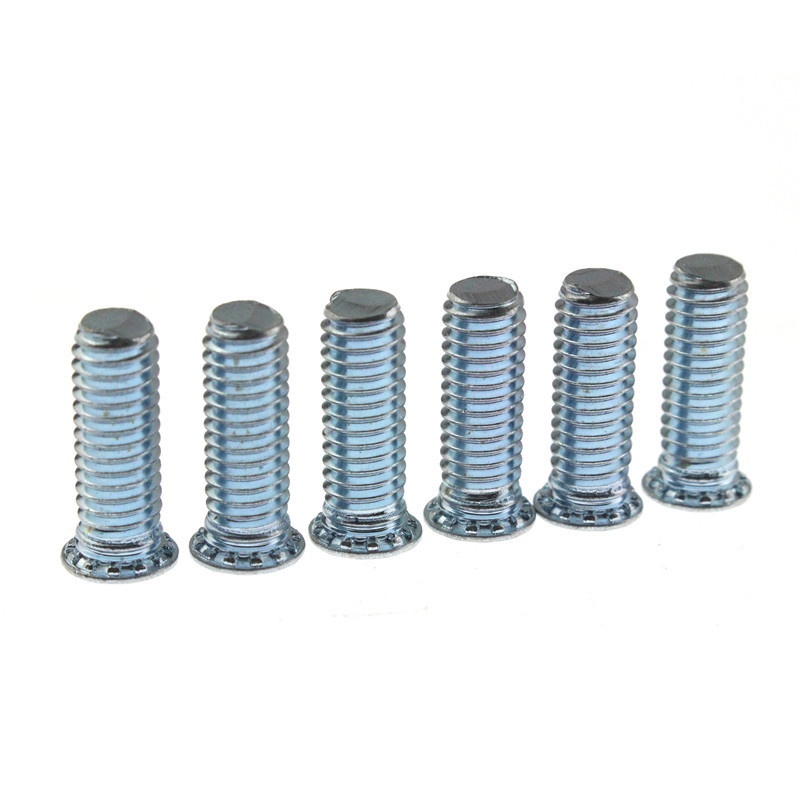
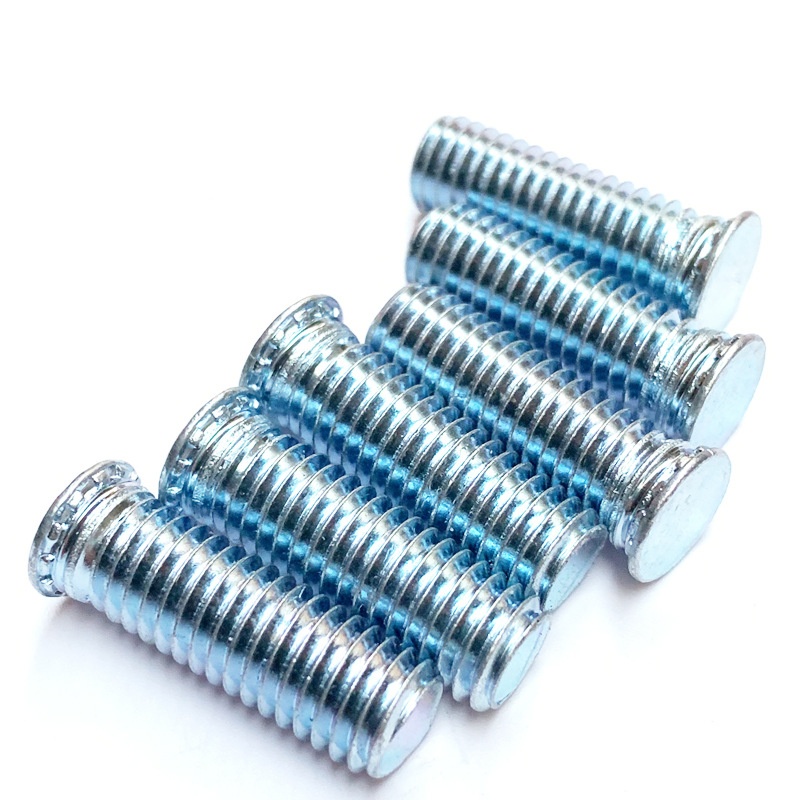
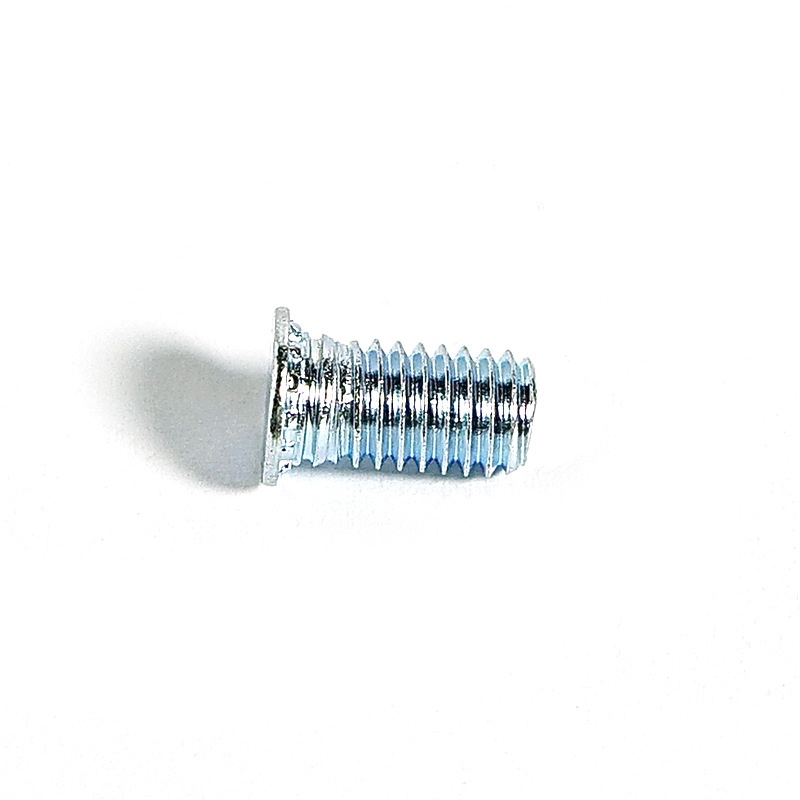
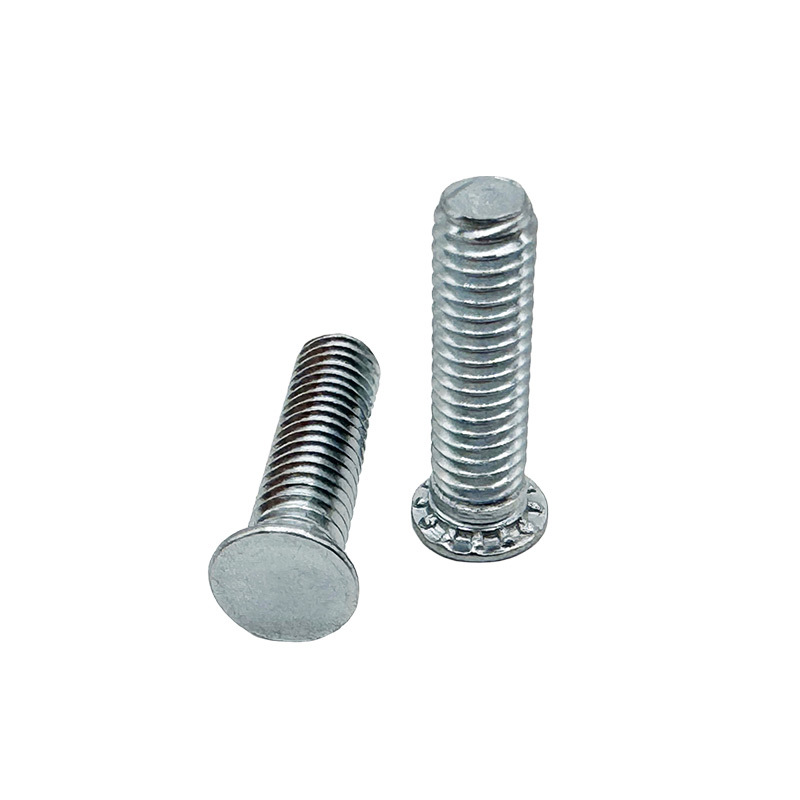
Self Clinching Press Riveting Screw
Looking for high-efficiency fasteners? Xiaoguo Company's advanced Self Clinching Press Riveting Screw support single-sided installation and can create secure threads on metal plates. As a reliable Chinese supplier of self-locking press rivet screws for the automotive and electronics industries, we offer top-tier solutions.
Send Inquiry
Product Description
irstly, you need to drill a suitable hole in the metal plate according to the Self Clinching Press Riveting Screw size. Check the size chart to obtain the correct aperture - do not make it too large or too small, otherwise it will not hold well.Clean out any debris in the hole with a brush or air blower; leftover bits might affect the installation.
Then put the screw straight into the hole, making sure its head sits flush against the sheet. Use a riveting machine (or a small hydraulic press) with a matching die. Align the mold with the screw head and apply stable pressure. Hold for 2-3 seconds, then slowly release the pressure.
Don’t use a hammer—this won’t lock the screw into the metal properly. Also, control the pressure: too much might crack the sheet, too little will make the screw loose. Self Clinching Press Riveting Screw works best on thin metal sheets; just follow these simple steps, and it’ll stay fixed firmly.
Product Packaging
We use simple packaging to ensure the safety of screws during transportation. For small orders, they’re packed in clear plastic bags—100 or 200 pieces per bag. Each bag has a label with basic info: size, material, and batch number. It’s easy to open and store, good for small workshops or DIY use.
Bulk orders go into sturdy cartons. Each carton holds 5000 to 10000 pieces, depending on the screw size. We put foam or bubble wrap inside to prevent them from scratching or jostling around. The cartons are marked with handling signs, like “keep dry” or “no heavy stacking.”

If you need custom packaging—like your own logo on bags or specific quantity per pack—just let us know when ordering. No extra fancy stuff, just practical packaging to get the screws to you in good shape. Self Clinching Press Riveting Screw comes in these standard options, which work for most shipping and storage needs.
Q&A Session
What materials can self-locking rivet screws be used with?
A: It is most suitable for thin metal plates, typically with a thickness of 0.8mm to 3mm. Common options such as cold-rolled steel, aluminum plates, and stainless steel plates are suitable. But it is not recommended to use it on non-metallic materials such as thick metal plates, plastics, or wood - they will not be firmly fixed.You just need to drill a proper-sized hole first, and it can fasten well without extra nuts, which is handy for sheet metal assembly jobs.

| Screw Threadd | 2# | 4# | 6# | 8# | 10# | 10# | 1/4 | 5/16 | M2.5 | M3 | M3.5 | M4 | M5 | M6 | M8 | |
| P | / | / | / | / | / | 1 | / | 0.45 | 0.5 | 0.6 | 0.7 | 0.8 | 1 | 1.25 | ||
| PP | 56 | 40 | 32 | 32 | 24 | 32 | 20 | 18 | 1 | / | / | / | / | / | ||
| dk | Nominal Size | 0.144 | 0.176 | 0.206 | 0.237 | 0.256 | 0.256 | 0.337 | 0.376 | 4.1 | 4.6 | 5.3 | 5.9 | 6.5 | 8.2 | 9.6 |
| max | 0.159 | 0.191 | 0.221 | 0.252 | 0.271 | 0.271 | 0.352 | 0.391 | 4.5 | 5.7 | 6.3 | 6.9 | 8.6 | 10 | ||
| min | 0.129 | 0.161 | 0.191 | 0.222 | 0.241 | 0.241 | 0.322 | 0.361 | 3.7 | 4.2 | 4.9 | 5.5 | 6.1 | 7.8 | 9.2 | |
| s | max | 0.075 | 0.085 | 0.090 | 0.090 | 0.100 | 0.100 | 0.135 | 0.160 | 1.95 | 2.1 | 225 | 2.4 | 2.7 | 3 | 3.7 |
| Sheet Thickness | min | 0.040 | 0.040 | 0.040 | 0.040 | 0.040 | 0.040 | 0.082 | 0.093 | 1 | 1 | 1 | 1 | 1 | 1.6 | 2.4 |
| Rocommend Hole Size | min=nominal size | 0.085 | 0.111 | 0.137 | 0.163 | 0.189 | 0.189 | 0.249 | 0.311 | 2.5 | 3 | 3.5 | 4 | 5 | 6 | 8 |
| max | 0.088 | 0.114 | 0.140 | 0.166 | 0.192 | 0.192 | 0.252 | 0.314 | 2.58 | 3.0B | 3.58 | 4.08 | 5.08 | 6.0B | 8.08 | |
| Code | steel | FH | FH | FH | FH | FH | FH | FH | FH | FH | FH | FH | FH | FH | FH | FH |
| stainless steel | FHS | FHS | FHS | FHS | FHS | FHS | FHS | FHS | FHS | FHS | FHS | FHS | FHS | FHS | FHS | |
| aluminum | / | FHA | FHA | FHA | FHA | FHA | FHA | FHA | FHA | FHA | FHA | FHA | FHA | 1 | ||
Hot Tags: Self Clinching Press Riveting Screw, China, Manufacturer, Supplier, Factory
Related Category
Solid Rivet
Hollow And Semi-Hollow Rivet Screws
Cored Rivet
Pull Riveted Nuts And Screws
Riveted Nuts And Screws
Plastic Rivet
Send Inquiry
Please Feel free to give your inquiry in the form below. We will reply you in 24 hours.